


Listen To This Post
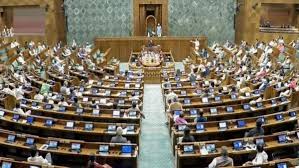
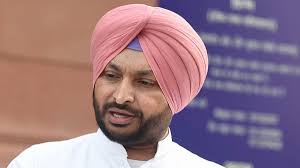
New Delhi/Chandigarh: In a politically significant and unexpected shift, Union Minister of State for Railways and Food Processing Industries Ravneet Singh Bittu on Tuesday publicly supported the grant of interim parole to jailed Khadoor Sahib MP Amritpal Singh, who is currently lodged in Dibrugarh Central Jail in Assam under the National Security Act (NSA).
Bittu’s remarks, made to reporters outside Parliament during the ongoing Winter Session, mark a sharp departure from his earlier hardline stance against the 32-year-old radical preacher and chief of the ‘Waris Punjab De’ outfit. The development comes amid visible churn within Punjab’s political landscape and renewed debate over representation, security, and democratic rights.
Amritpal Singh was arrested in April 2023 after a month-long search by the Punjab Police on charges of inciting violence, promoting separatism and causing public disorder. Despite his incarceration, he contested the 2024 Lok Sabha elections as an Independent. He won from Khadoor Sahib, securing over four lakh votes — a victory that sent ripples across Punjab’s political spectrum. In June 2024, he was granted a four-hour parole to take the oath as an MP, during which he reiterated his vision of a “Khalsa state,” triggering sharp reactions from central and state security agencies.
Bittu Targets AAP Over Parole Denial
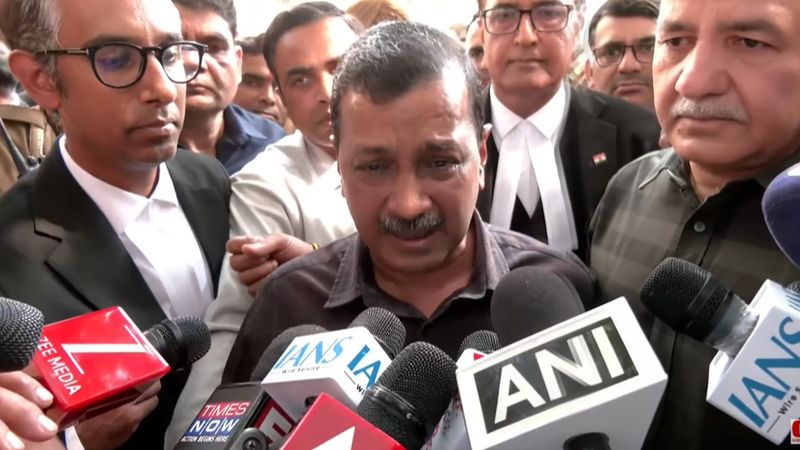
Bittu squarely blamed the AAP-led Punjab government for stalling Singh’s latest parole application, which was submitted for the second time in two weeks to allow him to attend parliamentary proceedings. “The Punjab government is deliberately denying parole to an elected representative. If Engineer Rashid from Jammu and Kashmir can be granted custody parole to attend Parliament despite facing serious terror charges, why is the same facility being denied to Amritpal Singh? Who will raise the voice of Khadoor Sahib in the House?” Bittu asked. He was referring to Engineer Rashid, the Baramulla MP, who has been allowed to attend Parliament on interim bail while facing terror-financing charges.
BJP Distances itself from the NSA Decision
In an apparent effort to insulate the BJP-led central government from the controversy, Bittu emphasised that decisions under the NSA lie with the state government, not the Centre. “The Centre is not holding Amritpal Singh in jail. It is the responsibility of the Punjab government. Allegations against the BJP are baseless. We respect the democratic mandate, but security also cannot be compromised,” he said.
This statement appeared aimed at deflecting criticism directed at the Union Home Ministry, which oversees the broader implementation of the NSA, even as opposition parties argue that Amritpal’s detention was the result of joint central and state action.
A Marked Shift from Bitter Past
Bittu’s backing of Amritpal Singh’s parole marks a dramatic contrast to his earlier public hostility toward the radical preacher. During the 2024 Lok Sabha campaign from Ludhiana, Bittu had branded Singh as a threat to peace in Punjab, declaring: “People like Amritpal Singh will not let peace-loving people live in Punjab.”
A product of Punjab’s turbulent political history, Bittu is the grandson of former Chief Minister Beant Singh, who was assassinated in 1995 by a Khalistani militant. Over the years, Bittu has consistently positioned himself as a strong opponent of separatist politics. In July 2024, he had also mounted a vigorous defence of the NSA in the Lok Sabha after Congress MP Charanjit Singh Channi questioned its usage in Punjab, asserting that the law was essential to curb “radical forces.” At the same time, Bittu has earlier supported the release of ‘Bandi Singhs’ — Sikh political prisoners jailed since the militancy era — making his political line on such issues layered and complex.
Strategic Signal Ahead of Punjab Reset?
Political observers view Bittu’s latest statement as a calculated political signal by the BJP as it attempts to rebuild its footprint in Punjab, where the party currently holds no seats in the 117-member Assembly and faces continued hostility under the AAP regime. By questioning the AAP government over Amritpal’s parole while carefully distancing the Centre, Bittu appears to be simultaneously courting Sikh political sentiment and preserving the BJP’s security-first narrative. This tightrope could shape the party’s future strategy in the border state.