



Listen To This Post
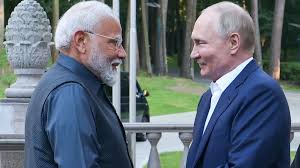
Russian President Vladimir Putin’s official visit to India on December 4–5, marking another major milestone in the strategic partnership between the two countries
New Delhi: The Russian Cabinet has given its approval for the signing of a crucial Memorandum of Understanding (MoU) with India to significantly deepen bilateral cooperation in the field of civil nuclear energy. The agreement is slated to be formalised during Russian President Vladimir Putin’s official visit to India on December 4–5, marking another major milestone in the strategic partnership between the two countries.
Russia’s state-owned nuclear energy giant Rosatom, which is currently constructing multiple reactors at the Kudankulam Nuclear Power Plant in Tamil Nadu, has been authorised to sign the MoU on behalf of the Russian government with the concerned Indian authorities. According to Russian media reports, the agreement is expected to expand cooperation beyond existing projects and pave the way for next-generation nuclear technologies.
Speaking to Indian journalists on Tuesday, Kremlin spokesman Dmitry Peskov confirmed that Rosatom CEO Alexei Likhachev will arrive in New Delhi with an extensive portfolio of proposals. The agenda will include collaboration in the development of small modular reactors (SMRs)—a cutting-edge technology seen as a key future solution for clean, safe, and scalable nuclear power.
“Rosatom will be presenting a full range of proposals covering both conventional nuclear projects and advanced reactor technologies,” Peskov said, indicating that the forthcoming summit is likely to witness significant announcements in the energy sector.
Earlier reports have also suggested that Rosatom has expressed its readiness to localise production of advanced Russian-designed nuclear reactors in India, in line with New Delhi’s ‘Make in India’ programme. Such localisation would not only enhance India’s indigenous nuclear manufacturing capabilities but also reduce project costs and strengthen long-term energy security.
India and Russia already share a decades-old partnership in civil nuclear cooperation, with Kudankulam remaining the flagship project of this collaboration. The proposed MoU is expected to broaden the scope of joint ventures, technology transfer, fuel cycle cooperation, and workforce training, reinforcing nuclear energy as a cornerstone of the India–Russia strategic relationship.
President Putin’s visit is also expected to cover key discussions on defence, trade, connectivity, and multipolar global cooperation, with nuclear energy emerging as a central pillar of the evolving partnership.