



Listen To This Post
Chandigarh: As the country approaches December 26, officially designated by the Centre as Veer Bal Diwas, the controversy surrounding the terminology has once again intensified. What began with a government announcement in January 2022 has evolved into a sustained theological, historical, and civilisational debate, with Punjab MPs, the Akal Takht, the Shiromani Gurdwara Parbandhak Committee (SGPC), and a broad spectrum of Sikh scholars reiterating their long-standing objections. The collective Sikh position remains unequivocal: the day should be officially recognised as Sahibzade Shaheedi Diwas (or Chaar Sahibzade Shaheedi Diwas) to honour the martyrdom of all four sons of Guru Gobind Singh, not only the two younger ones.
‘Not a Symbolic Issue, but a Civilisational One’
Sikh scholars argue that the disagreement is not merely about symbolism. According to them, the current nomenclature fractures a unified Sikh narrative of martyrdom and disregards centuries-old traditions of collective remembrance deeply embedded in Sikh theology.
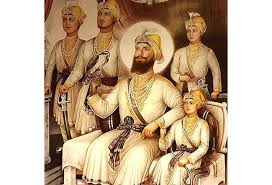
Guru Gobind Singh’s four sons—revered as the chaar sahibzade—were martyred within days of each other in 1705:
-
Baba Ajit Singh Ji (18) and Baba Jujhar Singh Ji (14) attained martyrdom on December 22 in the Battle of Chamkaur, fighting against overwhelming Mughal forces.
-
Baba Zorawar Singh Ji (9) and Baba Fateh Singh Ji (6) were hanged alive at Sirhind on December 26 for refusing to abandon their faith.
Their sacrifice, scholars emphasise, is regarded in Sikh tradition as a collective act of faith and resistance, unparalleled in world history. “The martyrdom of the younger sahibzade falls on 12–13 Poh (December 26–27), while the elder two were martyred on 8 Poh (December 22). The entire period is observed as Shaheedi Saptah—a week of remembrance marked not by mourning but by pride, courage and Gurbani,” said Sikh scholar and writer Gurcharanjit Singh Lamba.
Why Separating the Sahibzade Is Unacceptable
According to Sikh scholars, segregating the sahibzade by age or circumstance violates the Sikh ethos of collective martyrdom. In daily Ardaas, Sikhs invoke “Panj Piare, Chaar Sahibzade, Chaalis Mukte…” together—never selectively.
On January 9, 2022, during the Prakash Purab celebrations of Guru Gobind Singh, Prime Minister Narendra Modi announced that December 26 would be observed as Veer Bal Diwas to commemorate the martyrdom of the two younger sahibzade. The decision was formalised through a gazette notification.
While projected as a tribute, Sikh institutions argue the decision was unilateral, taken without consultation with the Akal Takht, SGPC, or established Sikh bodies that traditionally guide doctrinal and commemorative matters. A special SGPC sub-committee later unanimously recommended renaming the observance as Sahibzade Shaheedi Diwas, but the Centre has so far not amended the notification.
Guru Gobind Singh’s Own Message Rejects Selective Remembrance
Scholars often cite Guru Gobind Singh’s response upon learning of the martyrdom of his sons. Tradition records him saying: “Chaar Muye To Kya Hua, Jeevat Kayi Hazar” (What if four have died, when thousands still live?)
In the Zafarnama, his Persian epistle to Emperor Aurangzeb, Guru Ji reiterated the same philosophy—asserting that the physical loss of his sons was insignificant compared to the eternal strength of the Khalsa Panth. “This very philosophy rejects selective remembrance and demands collective honouring of sacrifice,” said Lamba.
Why ‘Veer Bal Diwas’ Is Seen as Problematic
Sikh scholars have outlined several objections to the terminology. First, they point to the historical baggage of “Bal Diwas”, traditionally observed on November 14 as Children’s Day. Critics allege that repurposing the term for December 26—by merely adding “Veer”—carries political overtones.
Second, scholars argue that the term “Veer” risks subsuming Sikh martyrs into a broader Hindu warrior framework, eroding distinct Sikh identity. Past attempts to rebrand Sikh figures—such as Bhai Hakikat Rai or Baba Banda Singh Bahadur—have faced strong resistance.
Third, there is growing unease over what many perceive as the systematic dilution of Sikh-specific terminology, citing examples such as naming village ponds “Amrit Sarovar,” a term historically reserved for the sacred sarovar at Harmandir Sahib.
Community Stands Firm
For Sikhs worldwide, December 21–27 continues to be observed as Chaar Sahibzade Shaheedi Saptah. Community leaders maintain that no externally imposed nomenclature—however well-intentioned—can replace a tradition sanctified by three centuries of collective memory.
The demand remains unchanged: officially rename December 26 as Sahibzade Shaheedi Diwas, thereby honouring all four sahibzade equally and respecting Sikh religious autonomy. Until then, Sikh institutions say, the debate will persist—not as a political contest, but as a question of historical integrity and civilisational respect.