



Listen To This Post
Labour organisations have announced plans to intensify their agitation, with dharnas scheduled outside deputy commissioners’ offices across Punjab on January 6 and 7.
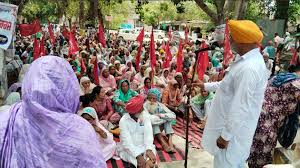
Chandigarh: Opposition to the Centre’s move to replace the Mahatma Gandhi National Rural Employment Guarantee Act (MGNREGA) with the Viksit Bharat Guarantee for Rozgar and Ajeevika Mission (Gramin) (VB-G RAM G) Bill has intensified across Punjab, with farmer and labour unions spearheading widespread protests in rural areas.
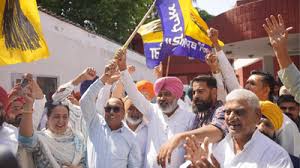
On the call of a joint front of rural and farm labour organisations, demonstrations were held across dozens of villages in districts including Sri Muktsar Sahib, Faridkot, Moga, Sangrur and Bathinda, where protesters burnt copies of the VB-G RAM G Bill and effigies of the Central government.
The protests were led by organisations such as the Punjab Khet Mazdoor Union, whose leaders accused the Centre of diluting a hard-won statutory right to employment and pushing rural workers towards greater insecurity.
“This is not merely a change of name; it is an attack on the right to work,” said union leaders Lachhman Singh Sewewala and Jora Singh Nasrali, alleging that the new law weakens employment guarantees at a time when rural unemployment is already acute due to privatisation and shrinking public investment
Why Labour Unions Are Alarmed
MGNREGA, enacted in 2005, guarantees 100 days of unskilled manual work per rural household as a legal entitlement, making the government accountable for providing employment on demand or paying unemployment allowance.
Labour unions argue that the proposed VB-G RAM G framework fundamentally alters this rights-based structure. While the Bill promises to raise guaranteed workdays to 125, unions point out that employment would no longer be demand-driven. Instead, it would be linked to pre-approved budgets, fixed planning frameworks and sectoral priorities, effectively giving the government discretion over when and how much work is generated.
A major flashpoint is the proposed funding model. Under MGNREGA, the Centre bears nearly 90 per cent of the cost, whereas the new law requires states to contribute around 40 per cent.
“Punjab is already debt-ridden. Shifting the financial burden to states will directly reduce employment days for workers,” Sewewala warned, adding that cash-strapped states would struggle to sustain the scheme.
Farmers’ Groups Extend Solidarity
The Samyukta Kisan Morcha (SKM) has thrown its weight behind the labour unions, calling the Bill “retrograde” and warning that it converts a people-centric employment guarantee into a government-investment-driven programme aligned with corporate priorities.
SKM leaders said MGNREGA was designed not only to provide wages but also to create essential rural infrastructure through local planning by panchayats. The new model, they argue, weakens decentralisation and undermines local self-governance institutions. Women, Dalits and landless labourers—who form a large proportion of MGNREGA workers—will be the worst affected, unions cautioned, as any rollback in employment hits them first.
Protests to Escalate
Labour organisations have announced plans to intensify their agitation, with dharnas scheduled outside deputy commissioners’ offices across Punjab on January 6 and 7. As protests spread village to village, farmer and labour unions have signalled that the resistance will not remain symbolic. With copies of the Bill continuing to be burnt and mobilisation expanding, Punjab’s rural workforce appears set for a prolonged confrontation over what unions describe as the dismantling of India’s most crucial rural employment guarantee