





Listen To This Post
New Delhi: The Viksit Bharat–Guarantee for Rozgar and Ajeevika Mission (Gramin) (VB-G RAM G) Bill formally became law on Saturday after President Droupadi Murmu gave her assent, two days after its passage in Parliament amid sustained protests by Opposition parties.
With the President’s approval, the new legislation officially replaces the Mahatma Gandhi National Rural Employment Guarantee Act (MGNREGA), 2005, marking the most significant overhaul of India’s rural employment framework in two decades.
The Centre has projected the new Act as a significant milestone in transforming rural employment policy. Officials said the law enhances the statutory wage employment guarantee from 100 days to 125 days per financial year for rural households, while seeking to integrate employment generation with broader development goals.
According to the government, the VB-G RAM G Act aims to promote empowerment, inclusive growth, the convergence of welfare schemes, and the saturation-based delivery of benefits, with the stated objective of building a resilient, self-reliant, and prosperous “Rural Bharat”.
“The legislation modernises the rural employment architecture to align it with contemporary economic and social realities, while strengthening the foundation of rural livelihoods,” a senior official said.
However, the political battle over the new law is far from over. The Congress on Sunday announced that it would finalise plans for a nationwide mass movement against the Act at a meeting of the Congress Working Committee (CWC) scheduled for December 27. The party has accused the Centre of altering the fundamental, rights-based character of the rural employment guarantee without adequate consultation with states, stakeholders or rural communities.
Opposition leaders have argued that replacing MGNREGA with a new framework risks diluting legal entitlements and shifting greater financial and administrative burdens onto states.
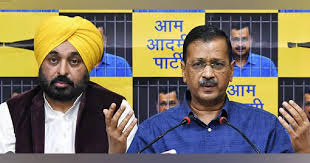
Adding to the resistance, the Aam Aadmi Party-led Punjab government has decided to convene a special session of the Vidhan Sabha on December 30 to deliberate on the Act and its implications for rural employment, fiscal federalism and state autonomy.
The VB-G RAM G Bill was passed earlier this week amid sharp exchanges, walkouts and slogan-shouting by Opposition MPs, who alleged that the Centre was dismantling a key social safety net for the rural poor under the guise of reform.
With the law now in force, the focus is expected to shift from parliamentary confrontation to political mobilisation on the ground, setting the stage for a wider Centre–state and ruling–Opposition confrontation over the future of rural employment policy.