


Listen To This Post
 The experience of Haryana illustrates the gravity of this dilution. More than eight lakh MGNREGA workers are registered and active in the state, yet in 2024-25, only 2,191 workers secured the full 100 days of employment.
Written By: Bhupinder Singh Hooda
Leader of the Opposition, Haryana Legislative Assembly
The passage of the Viksit Bharat–Guarantee for Rozgar and Ajeevika Mission (VB-G Ram G) Bill in the Lok Sabha to replace the Mahatma Gandhi National Rural Employment Guarantee Act (MGNREGA) is not a routine legislative exercise or a benign administrative reform. It is not merely a change in nomenclature, but a fundamental retreat from India’s commitment to a legally enforceable right to work and an unmistakable shift away from the principles of decentralisation, federalism and economic dignity that have underpinned rural livelihoods for nearly two decades. MGNREGA is not just a scheme; it is a social contract between the Indian state and its poorest citizens, affirming that no rural household willing to work will be left without livelihood support.
The attempt to rebrand and restructure MGNREGA cannot be divorced from ideology. The use of Mahatma Gandhi’s name was never merely symbolic; it reflected the programme’s philosophical roots in Gram Swaraj, democratic decentralisation, and community-led development. Removing Gandhi’s name while simultaneously centralising decision-making exposes the real intent. Despite repeated claims that the new law aligns with the ideals of Ram Rajya, good governance cannot be achieved by weakening Panchayati Raj institutions, marginalising states and converting a demand-driven legal right into a supply-controlled administrative scheme.
The most damaging aspect of the new scheme is its reclassification of rural employment as a centrally sponsored programme with a 60:40 funding pattern between the Centre and the states. Under MGNREGA, the Union government bore the entire cost of unskilled wages, recognising that poorer states lack the fiscal capacity to guarantee employment during periods of distress. Today, states are already grappling with shrinking fiscal space, GST-related uncertainties and growing welfare obligations. Forcing them to bear a significantly higher financial burden will inevitably lead to reduced work approvals, suppressed demand for employment and weakened rural wage growth. This creates a dangerous contradiction where states retain legal responsibility for providing work while being denied assured central funding to meet that obligation.
The government’s claim that the new framework enhances welfare by increasing the annual employment ceiling to 125 days is equally misleading. Empirical data from MGNREGA itself shows that the real problem has never been the statutory limit on workdays, but chronic underfunding and delayed wage payments. Even during the COVID-19 crisis in 2020–21, when rural distress was at its peak, only about 9.5 per cent of households completed 100 days of work. Over the past three years, this figure has averaged close to 7 per cent. Raising the ceiling without guaranteeing adequate financial allocations is an exercise in optics, not a genuine expansion of livelihood security.
The experience of Haryana illustrates the gravity of this dilution. More than eight lakh MGNREGA workers are registered and active in the state, yet in 2024-25, only 2,191 workers secured the full 100 days of employment. Even more troubling is the complete non-payment of the unemployment allowance—mandated by law when work is not provided—over the past five years, with not a single worker in Haryana receiving this statutory compensation. Simultaneously, central budgetary support has steadily declined. Haryana received ₹764 crore under MGNREGA in 2020-21, but this allocation has been reduced to ₹590 crore in 2024-25, further constraining the state’s ability to meet genuine work demand.
Equally troubling is the shift from a bottom-up, demand-driven framework to a centrally capped, supply-driven model. MGNREGA empowered rural households to demand work as a legal right, compelling the state to respond. The new Bill reverses this logic by allowing the Union government to determine allocations in advance and by making states liable for any expenditure beyond these caps. This will inevitably push state administrations to discourage job creation, thereby defeating the very essence of an employment guarantee. A right that depends on administrative discretion ceases to be a right.
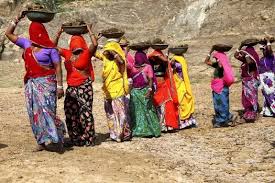
MGNREGA’s record speaks for itself. The programme routinely generates over two billion person-days of employment annually, supporting nearly 50 million rural households. More than half of its workforce consists of women, while around 40 per cent belong to Scheduled Castes and Scheduled Tribes, making it one of the most inclusive economic interventions in the world. Its early years coincided with unprecedented growth in rural wages, increased consumption and improved bargaining power for agricultural labour. Numerous independent studies have dispelled the myth that the programme promotes inefficiency; instead, they confirm that it strengthens local economies by injecting purchasing power during periods of distress.
Beyond wages, MGNREGA has played a critical role in creating durable rural assets—water-harvesting structures, farm ponds, irrigation channels, rural roads and soil-conservation works—that directly support agriculture and enhance climate resilience. Diluting the programme will not only deprive rural families of income but also erode this productive asset base at a time when Indian agriculture is already vulnerable to climate shocks and market volatility.
The growing politicisation of funding decisions further undermines the credibility of the proposed framework. The unexplained suspension of MGNREGA funds to West Bengal for the past three years stands as a stark warning of how discretionary powers can be misused. Institutionalising such discretion under a new law will render the employment guarantee hollow and deepen mistrust between the Centre and the states.
If rural livelihoods and economic stability are to be protected, the path forward is clear. The VB-G Ram G Bill must be withdrawn, and MGNREGA must be retained in its original, rights-based form. The Union government must reaffirm its responsibility to fully fund unskilled wages, ensure timely payments with automatic compensation for delays, and strengthen Panchayati Raj institutions rather than bypass them. Wages must be indexed to inflation to protect real incomes, and reforms—if any—must be undertaken only through consultation with states, not imposed through central diktat.
MGNREGA transcends political divisions. It embodies the principle that economic dignity is a fundamental right and that the national government must stand as the guarantor of last-resort employment. To dismantle or dilute this landmark legislation would be a historic error—one that risks deepening rural distress, weakening federalism and abandoning millions of Indians at a time of profound economic uncertainty.
What is particularly troubling is that the VB-G Ram G framework is deliberately delinked from the agricultural cycle. By introducing a so-called “blackout period,” the government has ensured that no work will be available under the scheme during critical sowing and harvesting seasons, precisely when rural households need income support the most. Rural India does not need a renamed and restricted programme; it requires a renewed national commitment to the right to work, timely wages and the dignity of labour.