


Listen To This Post
DGP Gaurav Yadav Unveils ‘Vision 2026’
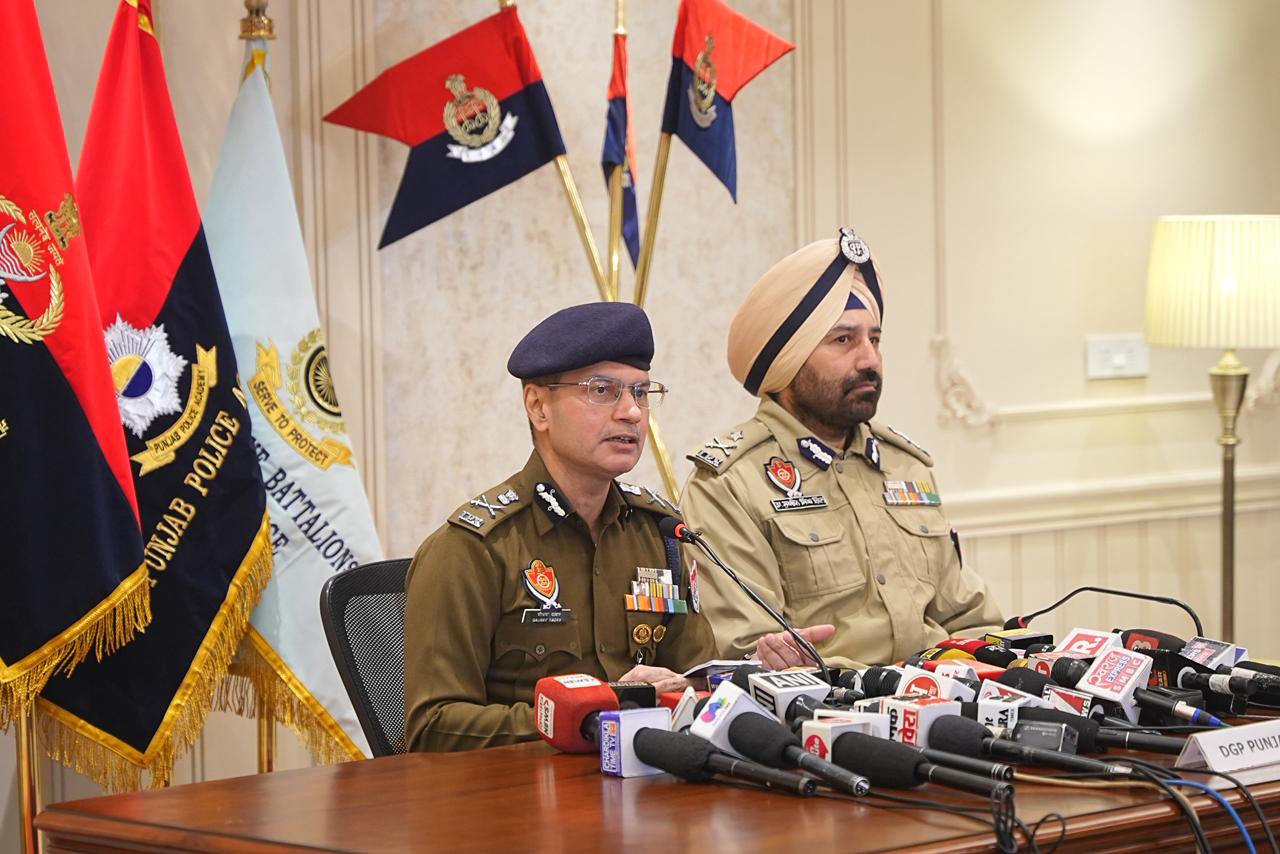
Chandigarh: In a significant step towards modern, technology-driven policing, Punjab Police on Wednesday unveiled an ambitious ‘Vision 2026’, outlining a comprehensive infrastructure and capability upgrade aimed at significantly enhancing efficiency, responsiveness and professionalism across the force.
Unveiling the roadmap, Director General of Punjab Police Gaurav Yadav said the initiative aligns with the governance commitment of Chief Minister Bhagwant Singh Mann to deliver faster, people-centric policing through sustained investment in technology, infrastructure and human resources.
A central pillar of Vision 2026 is the strengthening of the Dial 112 Emergency Response Support System (ERSS). A dedicated Dial 112 Central Control Room building will be constructed in Mohali at a cost of ₹52 crore. At the same time, the emergency response vehicle fleet will be augmented with an additional investment of ₹50 crore. “Our objective is to bring down the current average response time of 12–13 minutes to just 7–8 minutes,” the DGP said, adding that District Control Rooms across Punjab will be upgraded at a cost of ₹25 crore to ensure seamless coordination and faster incident management.
Border Security and Anti-Drone Measures
Focusing on border security, the DGP said the Second Line of Defence along the International Border will be significantly strengthened with the installation of 2,367 CCTV cameras at 585 locations, at a cost of ₹49.58 crore. These cameras, he said, will act as critical force multipliers in surveillance and real-time monitoring.
The Anti-Drone System (ADS) capability will also be expanded. From the existing three operational systems, three additional systems are currently under procurement, with 10 more to be acquired in a phased manner. Drone Response Teams (DRTs) are already operational and will be further synergised with Village Defence Committees (VDCs) in the coming year.
₹800 Crore Spent on Modernisation in Three Years
Highlighting the scale of ongoing reforms, DGP Yadav said the Punjab government has spent over ₹800 crore on modernising the Punjab Police over the last three years, with significant upgrades planned to continue through 2026.
“All SP-rank officers posted in the field have been provided new vehicles. In addition, all police stations and police posts across the state have been equipped with new vehicles to improve mobility and response,” he said.
The government has also approved a mega police infrastructure project worth ₹426 crore to be executed over the next three years. This includes:
-
A new Cyber Crime Division headquarters at Phase 4, Mohali
-
New police lines in Nawanshahr and Malerkotla districts
-
Construction of 11 new police station buildings
-
New Anti-Narcotics Task Force (ANTF) range offices in Ludhiana, Ferozepur and Jalandhar, along with the modernisation of existing ANTF units using advanced gadgets and forensic tools
Technology, New Criminal Laws and Investigation Focus
The DGP said that, in line with the New Criminal Laws, the Punjab government has already notified a Witness Protection Scheme, which is expected to improve conviction rates significantly. Network connectivity at police stations will also be upgraded from 50 Mbps to 100 Mbps, depending on operational workload.
He further revealed that the Anti-Gangster Task Force (AGTF) has upgraded its technical backbone, with the Punjab Artificial Intelligence System (PAIS 2.0) now supporting advanced voice analysis and other cutting-edge features. The Organised Criminal Information System (OCIS)—a digital platform for managing criminal records—is also being further strengthened.
DGP Yadav stressed that the Punjab Police will intensify investigations into travel agents who facilitate passports on fake particulars for organised criminals, calling it a key area of focus in the coming year.
Traffic, Urban Policing and Real-Time Monitoring
To improve traffic management and emergency response in urban areas, the DGP announced that dedicated Traffic and Road Safety Police Stations will be set up. These units will be integrated with Integrated Command & Control Centres (IC3) for real-time monitoring using city CCTV networks and adaptive traffic signalling systems.
Summing up, the DGP said Vision 2026 represents a decisive shift towards proactive, intelligence-led and technology-enabled policing, aimed at delivering faster response, stronger border security and higher public confidence in law enforcement across Punjab.