




Listen To This Post
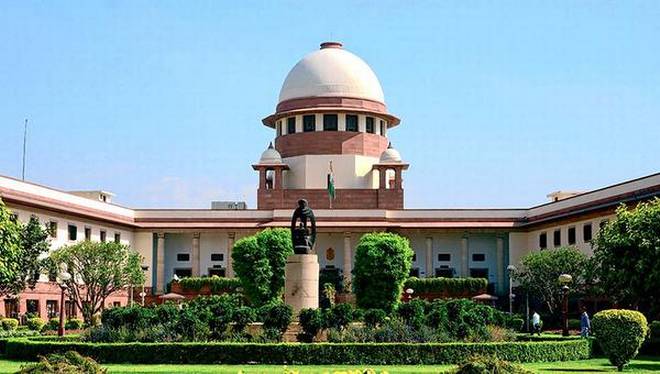
New Delhi: The Supreme Court of India has asked a newly constituted expert committee to consult all stakeholders and provide definitive guidance to resolve long-standing ambiguities surrounding the definition and ecological scope of the Aravalli Hills, stressing that no irreversible directions should be implemented without an independent and holistic scientific assessment.
A three-judge special vacation Bench led by Surya Kant on Monday kept in abeyance its November 20 order, which had relied on recommendations of an earlier committee, and laid down detailed parameters for the new panel’s functioning. The Bench also included J. K. Maheshwari and A. G. Masih.
The court underlined that before the implementation of any committee report or enforcement of its earlier directions, “a fair, impartial and independent expert opinion must be obtained and considered, after associating all requisite stakeholders.”
Concern Over Narrow Definition of Aravallis
The Bench asked the new expert panel to examine whether defining the ‘Aravalli Hills and Ranges’ strictly as areas within a 500-metre radius of two or more Aravalli hills creates a structural paradox by significantly narrowing the extent of protected land.
The court flagged concerns that such a restrictive demarcation may have inadvertently expanded the category of ‘non-Aravalli’ areas, thereby facilitating unregulated mining and other disruptive activities in ecologically contiguous terrains that are technically excluded under the present definition.
Ecological Continuity Beyond the 500-Metre Rule
Another key issue referred to the panel is whether hills with an elevation of 100 metres and above should be treated as part of a contiguous ecological formation, even if the distance between them exceeds the 500-metre threshold.
In such cases, the court asked the committee to clarify:
-
Whether regulated or sustainable mining would be permissible in the intervening gaps
-
What precise spatial parameters or lateral width should be adopted to define the Aravalli range so that ecological continuity is not compromised?
Dispute Over Elevation Criteria in Rajasthan
The Bench also sought a scientific examination of widespread criticism that only 1,048 out of 12,081 hills in Rajasthan meet the 100-metre elevation criterion, effectively stripping the remaining lower hill ranges of environmental protection.
If this criticism is found to be factually and scientifically accurate, the court said the panel must determine whether a comprehensive geological and scientific survey is required. Such an exercise, the Bench noted, may involve precise measurement of all hills and hillocks to enable a more nuanced and proportionate standard that preserves the structural and ecological integrity of the entire Aravalli range.
Five Core Questions for Holistic Review
Referring five critical issues to the new committee for an “exhaustive and holistic examination”, the Supreme Court asked it to:
-
Clearly enumerate the regions covered under the proposed definition.
-
Identify areas that would be excluded from protection.
-
Assess whether regulated mining within the newly demarcated Aravalli zones could still cause ecological harm.
-
Examine the fate of areas removed from protection, and whether they risk long-term degradation or erasure.
-
Conduct a multi-temporal assessment of both short-term and long-term environmental impacts arising from the revised definition and related directions.
The Bench also left the door open for the panel to flag any additional systemic vulnerabilities or supplementary issues that may emerge during the exercise and warrant judicial intervention.