


Listen To This Post
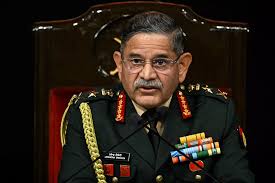
New Delhi: Referring to the evolving situation along the disputed boundary with China, General Upendra Dwivedi on Tuesday said the ground situation remains “stable but needs constant monitoring,” underscoring that the Indian Army continues to maintain a balanced and vigilant posture along the frontier. Addressing the annual press conference ahead of Army Day on January 15, the Army Chief said, “The situation on the northern front remains stable but requires continuous monitoring. Our deployment along the Line of Actual Control is balanced.”
He referred to the October 2024 understanding between India and China on patrolling arrangements in the Depsang sector of eastern Ladakh, which effectively brought an end to the prolonged military standoff that began in April 2020. Since then, India and China have held sustained diplomatic and military-level engagements. The Special Representatives of the two countries — India’s National Security Advisor Ajit Doval and China’s Foreign Minister Wang Yi — have met twice and agreed to work towards long-term confidence-building measures, including efforts to clarify and demarcate the boundary.
Turning to the western front, General Dwivedi said Operation Sindoor, launched in May last year to target terrorist infrastructure in Pakistan, is continuing. “Any misadventure will be responded to,” he said, making it clear that the Army remains on high alert.
On the issue of nuclear rhetoric that surfaced during the India-Pakistan skirmishes earlier this year, the Army Chief clarified that such language did not figure in military-level communications. “There was no mention of nuclear issues during the talks between the two Directors General of Military Operations (DGMOs) during that period,” he said, adding that Pakistan’s political leadership largely drove such rhetoric.
Referring to developments after May 10, when cessation of hostilities was announced, General Dwivedi said some forward mobilisation was rolled back by the end of May, but stressed that the Army continues to maintain robust surveillance. “Our eyes and ears are open,” he said.
Outlining the future trajectory of the Indian Army, the Chief said significant progress is being made on integration and restructuring, including the move towards theatre commands. “By 2026, we will have an Indian Army capable of striking deep,” he said, highlighting enhanced jointness, modernisation, and operational readiness.
He also detailed new force raisings and capability enhancements, including the induction of Bhairav light commando battalions, Shaktibaan regiments, Divyaastra artillery batteries, and Ashni platoons, aimed at improving agility, firepower, and rapid-response capability across theatres.