






Listen To This Post
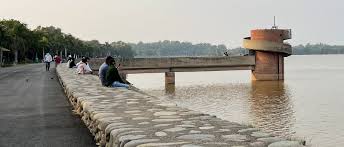
New Delhi: Expressing serious concern over the deteriorating condition of Chandigarh Sukhna Lake , Chief Justice of India Surya Kant on Wednesday remarked, “Aur kitna sukhaoge Sukhna Lake?”, while flagging alleged collusion between builder mafias, bureaucrats and political entities behind the lake’s gradual destruction.
A Bench comprising the CJI, Joymalya Bagchi and Vipul M Pancholi was hearing interim applications filed in the long-pending 1995 public interest litigation titled In Re: TN Godavarman Thirumulpad, which deals with forest conservation and environmental protection.
Making strong oral observations, the Chief Justice said illegal constructions had mushroomed around the lake’s catchment area due to “collusion and connivance with bureaucrats”, allegedly backed by political interests in Punjab. “There are illegal constructions… All builder mafias are operating there, resulting in the complete destruction of the lake,” the CJI observed.
The Bench also questioned why matters relating to forests, lakes and environmental protection were increasingly being brought directly before the Supreme Court of India, bypassing the jurisdiction of High Courts, often through interim applications in decades-old PILs.
“Why are all forest matters coming to this Court?” the Bench asked at the outset, noting that several such disputes could be effectively addressed by the concerned High Courts.
Referring specifically to the Sukhna Lake-related application, the CJI remarked that it prima facie appeared that a “friendly match” was being played at the behest of private developers and other vested interests.
The court asked Additional Solicitor General Aishwarya Bhati, appearing for the Centre, and senior advocate K Parmeswar, assisting the court as amicus curiae, to apprise it of local environmental issues that could be handled by High Courts themselves.
Litigation surrounding Sukhna Lake has largely focused on protecting its fragile catchment area from encroachments. In 2020, the Punjab and Haryana High Court had ordered the demolition of structures found to be illegally constructed in the protected zone, underscoring the ecological sensitivity of the region.