


Listen To This Post
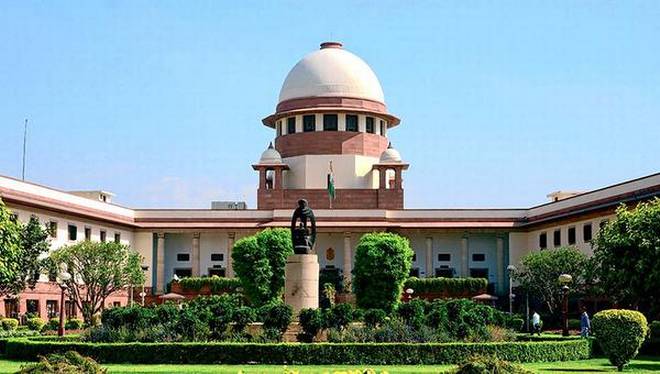
New Delhi: Forty-eight years after a landmark seven-judge ruling gave an expansive interpretation to the term “industry” under the Industrial Disputes Act, 1947, a nine-judge Constitution Bench of the Supreme Court, led by Chief Justice of India Surya Kant, on Thursday reserved its verdict on whether that 1978 judgment was correctly decided.
The bench reserved judgment after three days of extensive hearings. Arguments were presented by Attorney General R Venkataramani and Additional Solicitor General KM Nataraj on behalf of the Centre, along with senior advocates Shekhar Naphade, Indira Jaising, CU Singh, Sanjay Hegde and others.
The Constitution Bench also comprises Justices BV Nagarathna, PS Narasimha, Dipankar Datta, Ujjal Bhuyan, Satish Chandra Sharma, Joymalya Bagchi, Alok Aradhe and Vipul M Pancholi.
The case revisits the 1978 ruling in Bangalore Water Supply and Sewerage Board v A Rajappa, authored by Justice VR Krishna Iyer, which held that any systematic activity carried out through cooperation between employer and employee for the production or distribution of goods and services could qualify as an “industry”—even if the entity was not profit-driven.
The Centre has challenged the breadth of this interpretation, arguing that welfare and charitable functions carried out by the state should not be classified as “industry” under labour laws.
Attorney General Venkataramani submitted that while the “triple test” evolved in the 1978 judgment may be logically sound, its indiscriminate application has led to an unwarranted expansion of the definition of “industry”. He cautioned against applying the precedent too broadly.
The nine-judge bench will now determine whether the sweeping interpretation laid down in 1978 remains legally sound.
Earlier, on February 16, the court framed key questions for adjudication. Among them is whether subsequent laws—such as the Industrial Disputes Act, 1982, and the Industrial Relations Code, 2020—have altered the legal understanding of the term “industry”.
The bench will also examine whether government-led welfare schemes, social initiatives, and activities carried out by public authorities can be classified as “industrial activities” under Section 2 of the 1947 Act.
The issue has a long judicial history marked by conflicting rulings. In 1996, a three-judge bench relied on the 1978 verdict to hold that the social forestry department fell within the definition of “industry”. However, in 2001, another bench took a divergent view, prompting a reference to a five-judge bench to resolve the inconsistency.
In May 2005, a Constitution Bench referred the matter to a larger bench for authoritative interpretation. Later, in 2017, a seven-judge bench led by then Chief Justice TS Thakur directed that the matter be placed before a nine-judge bench, citing its “serious and wide-ranging implications.” The forthcoming verdict is expected to have far-reaching consequences for labour jurisprudence, particularly in defining the scope of state functions and their accountability under labour laws.