







Listen To This Post
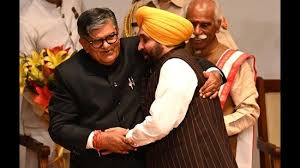
Chandigarh: In a significant legislative development, Punjab Governor Gulab Chand Kataria has given assent to the Jaagat Jot Sri Guru Granth Sahib Satkar (Amendment) Bill, 2026, paving the way for its enactment into law. The move marks one of the most stringent legal frameworks in the country aimed at preventing sacrilege and protecting religious sanctity.
Confirming the development, Chief Minister Bhagwant Mann expressed gratitude, calling it a moment of deep spiritual and public significance. “Now this will be enacted… I thank Waheguru for giving me this opportunity to serve,” he said, also acknowledging the support of the Sikh community.
Stricter punishment: 10 years to life imprisonment
The amended law introduces severe penalties for acts of sacrilege involving the Guru Granth Sahib. Anyone found guilty — including those involved in conspiracy — will face imprisonment ranging from 10 years to life, along with fines between ₹5 lakh and ₹25 lakh. The law also provides for the confiscation of the accused’s property.
Importantly, the scope of the offence has been widened to include publishing or circulating derogatory content, making digital and media-based violations punishable under the Act.
Tighter investigation and institutional accountability
To ensure the seriousness of enforcement, the law mandates that investigations be conducted only by officers of the rank of Deputy Superintendent of Police (DSP) or above, aiming to improve the quality and credibility of probes.
The amendment also strengthens the institutional role of the Shiromani Gurdwara Parbandhak Committee (SGPC). Building on provisions of the original 2008 Act, the SGPC is now legally required to maintain detailed records — both physical and digital — of all saroops (copies) of the Guru Granth Sahib, ensuring greater accountability and traceability.
Legislative journey and context
The Bill was passed unanimously by the Punjab Vidhan Sabha on April 13, coinciding with Baisakhi — the foundation day of the Khalsa Panth — underscoring its symbolic and cultural importance. The state government had maintained that, being an amendment to a state law, it required only the Governor’s assent and not Presidential approval — a position that has now been validated.
A response to past gaps in justice
The new law comes against the backdrop of growing public concern over sacrilege incidents and historically low conviction rates, often attributed to weak investigations and procedural lapses. By introducing stricter punishments and clearer accountability mechanisms, the government aims to create a strong deterrent while reinforcing communal harmony and respect for religious sentiments.
With the Governor’s nod, Punjab now moves to operationalise one of its most sensitive and consequential pieces of legislation in recent years.