




Listen To This Post
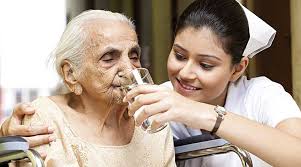
There is no Swiggy for loneliness. No app replaces the human who helps an 80-year-old diabetic woman in Chandigarh bathe safely, take her medication on time, or have someone to talk to before she sleeps.

Written by DINESH SOOD | THE NEWS DOSE.COM
New Delhi/Chandigarh, Updated At: 1.37 PM April 22, 2026 IST
India’s public discourse on skill development follows a well-worn groove: code, manufacture, export, and most recently, AI. Every budget speech celebrates upgraded ITIs, minted engineers, and funded start-ups. All laudable. But there is a thundering silence around a sector that employs over 66% women, higher than almost any other, and is growing at 18.2% CAGR, outpacing even global wellness. It faces a structural mismatch so severe that the industry is losing revenue not for lack of customers, but for a shortage of skilled, certified hands to serve them.
Those sectors are Beauty-Wellness and Cure & Care. The physiotherapy and elderly care assistance industry faces a shortage of adequately trained workers in tier 2 and 3 cities. This limits many physiotherapy centres and elderly care providers from operating at full capacity.
Let’s be precise: the Personal Care market in India was valued at USD 26.58 billion in 2025 and is projected to reach USD 74.12 billion by 2035, at a CAGR of 10.8%. The broader wellness economy, which includes yoga, spa therapy, ayurveda, nutrition, and integrative health, was valued at $156 billion in 2024 and is set to reach $256.9 billion by 2033.
The KPMG Skill Gap Study revealed that the overwhelming majority of the workforce remains informally trained, uncertified, and unprotected. Under the Government’s flagship PMKVY scheme, the Beauty & Wellness Sector Skill Council trained just 4.89 lakh individuals over nearly a decade — against a sector that, by 2030, will need to place 3 crore workers.
Beauty and Wellness is not merely a luxury lifestyle industry. It is, empirically, India’s most feminised formal employment pathway. Women make up about 66% of the current workforce, and that figure is expected to rise to 70% by 2030. This is extraordinary because no other sector at this scale can claim comparable female workforce participation. It naturally aligns with female entrepreneurship, flexible employment, and the dignity of work at scale.
A certified therapist in Tier 2-3 cities is not just a service provider. She is a micro-entrepreneur, a community health touch point, and often the first woman in her family to own a business. For too long, vocational training has carried an undeserved stigma, seen as a ‘second option’ rather than a first choice. The beauty-wellness industry is an early example of success when education and employment truly align.
Yet the same hands that can heal a stressed executive or restore a cancer patient’s dignity are desperately absent where needed most: in the homes of India’s rapidly ageing population. India is home to over 173 million citizens aged 60 and above, a number projected to surge past 347 million by 2050, making it one of the fastest-ageing large nations. Statistics fail to capture the quiet crisis inside tens of millions of households. In tier-3 towns like Muzaffarnagar and Nanded, Bengaluru suburbs, and rural Punjab, an elderly parent sits alone. Their children, who once shared the same courtyard, are now in Toronto, Pune’s tech parks, or Gulf cities.
According to the United Nations Population Fund’s 2023 India Ageing Report, over 40% of India’s elderly population lives without the direct support of an adult child. The legal framework, the Maintenance and Welfare of Parents and Senior Citizens Act, 2007, to ensure that children/heirs maintain senior citizens, is ineffective. The Longitudinal Ageing Study of India (LASI) found that more than 27% of older adults experience functional limitations that require regular assistance with daily activities. Yet, India has fewer than 30,000 certified geriatric caregivers for a population that needs millions.
There is no Swiggy for loneliness. No app replaces the human who helps an 80-year-old diabetic woman in Chandigarh bathe safely, take her medication on time, or have someone to talk to before she sleeps. For every such elder waiting — and there are millions — the absence of a trained, trustworthy, certified caregiver is not an inconvenience. It is a slow emergency. The skill gap in wellness and personal care is not just an economic problem; it is a failure of the national care infrastructure, measured in the loneliness of elders.
Global wellness is discovering what India has always known. Integrative, holistic, plant-based, and ancient-knowledge-rooted beauty and wellness form the premium end of every global market. India’s ayurvedic and herbal beauty segment is projected to hit USD 1.7 billion. Wellness tourism from international visitors to India is expected to generate $38.22 billion by 2030. Destinations from Kerala’s Panchakarma centres to Six Senses Vana in Uttarakhand command global premium rates.
But who trained the therapist delivering the Abhyanga? Who certified the practitioner overseeing the detox protocol? In far too many cases, training is entirely informal — passed down within families or learned on the job with no quality standard, no IP protection, and no career ladder. This is India exporting its most valuable intellectual heritage without capturing the economic value of the people who deliver it. This is cultural capital converted into human capital, and no other country can replicate it.
India is at an inflexion point, and the nation tends to notice only in retrospect. Training institutes seeded the IT revolution before software parks celebrated it. The pharmaceutical export boom was built on chemistry and pharmacy colleges long before it became headline GDP. The beauty-wellness and Cure & Care industries are at the same time. Capital is flowing in, consumers are spending, global brands are landing, but the trained human layer is missing.
The nation that can train a software engineer in six months at a coding boot camp has no structural excuse for failing to produce certified physiotherapists, spa therapists, cosmetologists, wellness practitioners, and elder care assistants at the same pace and scale. The skilled workforce for the Beauty and Wellness sector is not a secondary aspiration. It is first-order economic infrastructure for women’s empowerment, rural employment, monetisation of Ayurvedic heritage, dignified care of elders, and a generation of young Indians more interested in skincare science than spreadsheet modelling.
The comb, the cure, and the care are not lesser instruments than the laptop. It is time India’s policy imagination and investment energy caught up with what the market and the nation’s most vulnerable are already screaming.
-The writer is Co-founder and Managing Director of Orane International. Views expressed are personal.