





Listen To This Post
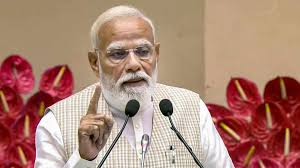
New Delhi: Prime Minister Narendra Modi has written letters to over a crore civil servants across the country, urging them to place the principle of “Nagrik Devo Bhava” (citizen is god) at the core of governance and public service.
Issued on April 20, ahead of Civil Services Day, the letters were circulated in 12 languages, reflecting an effort to reach officials across ministries, departments, states and Union Territories.
Citizen-first governance at the core
In his message, the Prime Minister stressed that governance must be rooted in compassion, sensitivity and service, reminding civil servants that their role is not merely administrative but deeply human.
“The principle of ‘Nagrik Devo Bhava’ must be at the heart of every decision,” he said, underlining that government institutions exist to serve citizens to the best of their abilities.
He also described civil servants as ‘Karmayogis’, emphasising dedication, integrity and a sense of higher purpose in public life.
Push for lifelong learning and reform.
A major focus of the letter was on continuous learning and capacity building. Referring to initiatives like Mission Karmayogi and the iGOT Karmayogi platform, Modi said that adapting to rapid technological and societal changes is essential for effective governance.
He noted that:
- New technologies and innovations are reshaping governance
- Civil servants must remain updated and skilled
- Learning should become a lifelong habit, not a one-time exercise
‘Viksit Bharat 2047’ is the guiding vision.
Positioning governance within a larger national framework, Modi urged officials to align their work to build a developed India by 2047.
He said the “speed, scale, direction and intensity” of administrative efforts must reflect this vision, moving beyond incremental improvements to transformative outcomes.
Breaking silos, building team governance
Highlighting the need for institutional reform, the Prime Minister called for:
- A “whole-of-government” approach instead of isolated functioning
- Greater use of digital tools and data-driven decision-making
- Stronger coordination across departments and states
He emphasised that India’s progress is the sum of collective efforts across all sectors and regions.
Massive participation in ‘Sadhana Saptah’
The letter also referred to the recently concluded Sadhana Saptah (April 2–8), a nationwide capacity-building initiative under Mission Karmayogi.
- Over 46 lakh civil servants participated
- More than 3.1 crore course completions were recorded
- A significant number completed over four hours of structured learning
Modi described the scale of participation as unprecedented, calling it a sign of renewed energy within India’s civil services.
Festive spirit, renewed commitment
Drawing a cultural connection, the Prime Minister noted that the letters were written during a festive period marked by celebrations such as Baisakhi, Vishu, Rongali Bihu, and Puthandu, symbolising renewal and new beginnings.
He urged civil servants to treat this phase as a “festival of learning and growth”, reinforcing their commitment to public service and nation-building.
The larger message
At its core, the Prime Minister’s outreach seeks to redefine the governance ethos—from rule-based administration to citizen-centric, compassionate, and technology-driven service delivery.
The emphasis on ‘Nagrik Devo Bhava’, lifelong learning, and collective governance signals a push towards a more responsive and accountable bureaucracy in India’s journey towards 2047.