



Listen To This Post
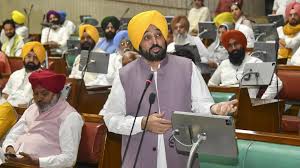
Chandigarh: A significant political and religious moment unfolded in Punjab on Monday as the Aam Aadmi Party-led government introduced the Jaagat Jot Sri Guru Granth Sahib Satkar (Amendment) Bill, 2026, in the Vidhan Sabha, drawing the presence of a large number of members from the Sant Samaj and leaders of various deras outside and within the Assembly premises.
The development underscores the sensitivity and importance of the legislation, which seeks to impose stricter penalties for sacrilege (beadbi) of the Guru Granth Sahib.
Devotional Start, Emotional Undertone
Proceedings of the House began on a solemn and spiritual note, with devotional kirtan played inside the Assembly, reflecting the gravity of the issue. The session opened with obituary references, including tributes to legendary singer Asha Bhosle, victims of the Vrindavan and Kangra tragedies, and martyrs of the historic Jallianwala Bagh massacre.
High-Level Presence in the House
Punjab Vidhan Sabha Speaker Kultar Singh Sandhwan presided over the session. At the same time, prominent Sikh religious figure Giani Raghbir Singh and AAP Rajya Sabha MP Balbir Singh Seechewal were present during the proceedings, underscoring the broader religious and social engagement surrounding the Bill.
Speaker Sandhwan also used the occasion to flag concerns over tourist safety, particularly at boating sites, calling for better equipment and trained rescue personnel in light of recent tragedies.
What the Bill Proposes
The proposed amendment introduces stringent punishment provisions for acts of sacrilege, including:
- Imprisonment ranging from 10 to 25 years
- Fines between ₹5 lakh and ₹25 lakh
- Provision for confiscation of the property of the accused
In a notable structural reform, the Shiromani Gurdwara Parbandhak Committee (SGPC) would be legally designated as the custodian of all saroops (physical copies) of the Guru Granth Sahib, with a mandate to maintain detailed records—an attempt to ensure accountability and prevent incidents of desecration.
Opposition Seeks Wider Deliberation
Leader of Opposition Partap Singh Bajwa called for the tabling of the Select Committee report on a related 2025 Bill, arguing that the issue required deeper legislative scrutiny. He also urged the government to extend the Assembly session to allow broader debate and build consensus.
Bajwa further emphasised the need for a uniform law across religions, suggesting that legal safeguards against sacrilege should not be limited to one faith but should reflect a broader constitutional framework.
Debate Underway Amid High Public Attention
With discussions currently underway, the Bill has already sparked intense political, religious, and public interest, as stakeholders across the spectrum weigh its legal, social, and constitutional implications.
The presence of religious leaders and the emotionally charged atmosphere inside the House indicate that the legislation could become a defining moment in Punjab’s legislative and socio-political landscape, especially in the run-up to the 2027 Assembly elections.