






Listen To This Post
New Delhi: The Supreme Court of India on Monday put in abeyance its November 20 order approving a revised definition of the Aravalli Hills, citing the need for deeper scientific scrutiny and clarity. A three-judge Special Vacation Bench led by Justice Surya Kant ordered the constitution of a fresh expert committee to re-examine the environmental impact of the new criteria before the court takes a final call.
Directing that the earlier committee’s recommendations and the court’s subsequent findings “shall remain in abeyance,” the Bench said the matter raised substantial concerns, including whether the revised definition had created a “structural paradox” by narrowing the scope of what qualifies as Aravalli landforms while potentially expanding non-Aravalli areas—thereby opening the door to unregulated mining. The case has been posted for further hearing on January 21, 2026.
Why the court stepped in again
Last month, the top court had accepted a committee’s proposal to introduce an elevation-linked definition to identify Aravalli landforms across Delhi, Haryana, Rajasthan and Gujarat for regulating mining. Under this framework, any landform in notified Aravalli districts with an elevation of 100 metres or more above local relief would be classified as an “Aravalli Hill,” while an “Aravalli Range” would comprise two or more such hills within 500 metres of each other.
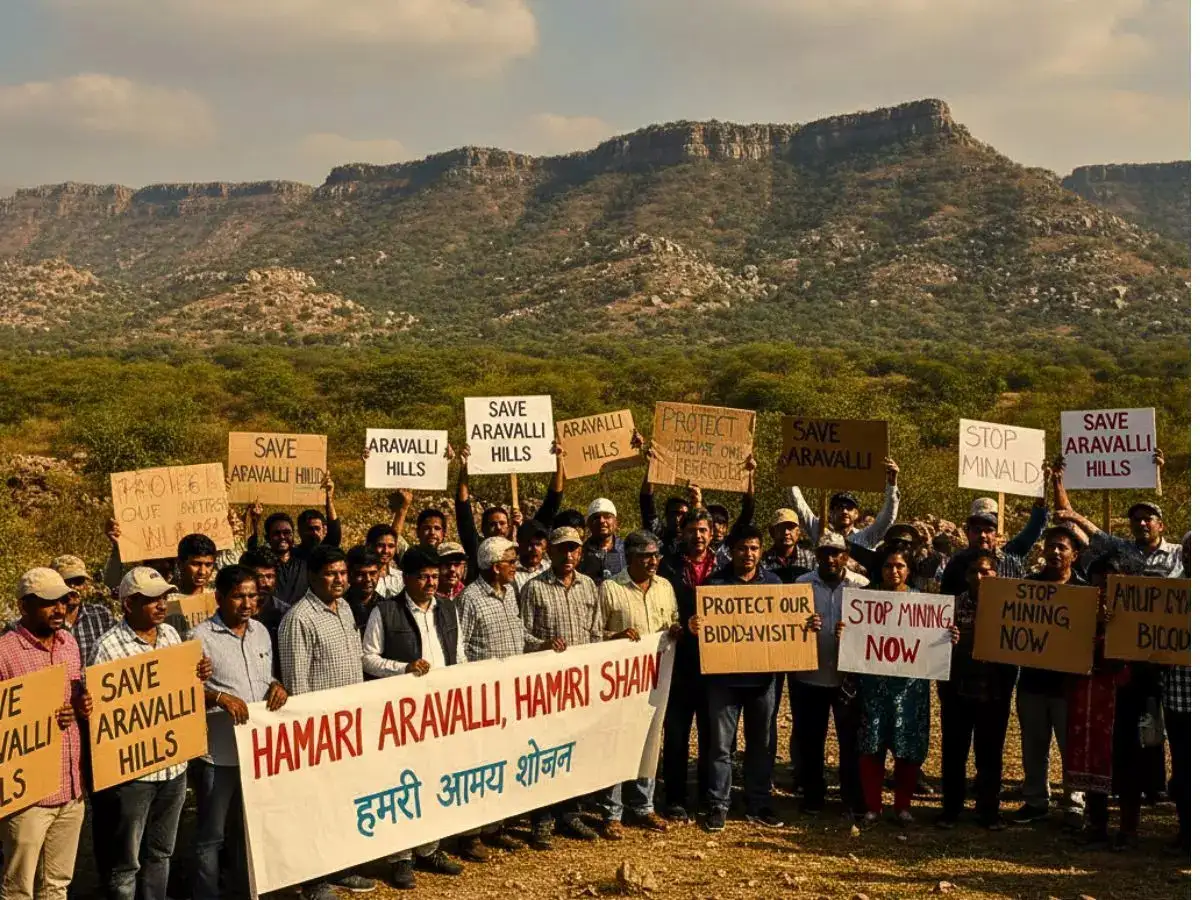
However, environmental groups and scientists flagged serious apprehensions, warning that the redefinition could dilute protections for one of the world’s oldest mountain systems and legitimise mining and construction in areas historically treated as part of the Aravallis. Acting on these concerns, the court took suo motu cognisance last week and urgently revisited the issue.
Fresh committee, wider consultation
On Monday, the Bench—also comprising Justices J K Maheshwari and A G Masih—issued notices to the Centre and the governments of Haryana, Rajasthan, Gujarat and Delhi, seeking their responses. It asked R Venkataramani and senior counsel to assist on key questions, including the composition and mandate of the proposed expert body.
While the Centre maintained that “there were a lot of misconceptions” around the earlier order and noted that the previous committee’s report had been accepted by the court, the Bench underlined the need for an independent expert opinion to resolve ambiguities—particularly on whether the restrictive demarcation approved in November could, in practice, broaden areas where mining might be permitted.
What stays protected—for now
Importantly, the court reiterated that ecologically sensitive zones—such as tiger reserves, national parks, wildlife sanctuaries, eco-sensitive buffers, wetlands and compensatory afforestation plantations—remain out of bounds for mining or development, unless specifically permitted under wildlife or forest laws, regardless of how the Aravalli definition evolves.
The Supreme Court had earlier stopped short of imposing a blanket mining ban in the Aravallis, noting that absolute prohibitions often fuel illegal mining. Instead, it stressed the need for expert-led, uniform criteria to balance ecological protection with regulatory enforcement, warning that unchecked mining in the region poses a “great threat to the ecology of the nation.”
Why Aravallis matter
Stretching across four states and recognised historically in 37 districts, the Aravalli range acts as a critical ecological barrier against desertification, supports biodiversity, and plays a vital role in groundwater recharge. With competing interpretations of what constitutes the Aravallis across states, the court’s latest intervention signals caution: conservation priorities will not be settled by technical definitions alone, but by rigorous science and ecological impact assessment.
For now, the revised definition stands suspended—offering a temporary reprieve to environmental concerns—until a fresh panel of experts brings greater clarity to how India protects one of its most fragile and ancient natural systems