





Listen To This Post
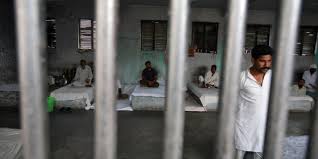
Chandigarh: Jails across Punjab, Haryana and Chandigarh are set to witness a historic transformation as custodial institutions will be converted into certified skill development academies, with the unified reform initiative to be formally launched on December 6 by Chief Justice of India Justice Surya Kant. The programme aims to equip inmates with market-ready skills, nationally recognised certificates and structured employment pathways, turning incarceration into an opportunity for rehabilitation and reintegration.
The initiative, titled “Empowering Lives Behind Bars, Real Change: The New Paradigm of Correctional Justice”, will be inaugurated virtually from District Jail, Gurugram, marking the Chief Justice’s first major reform programme for his parent High Court after assuming office. He will be joined by Supreme Court Judges Justice Rajesh Bindal and Justice Augustine George Masih, along with Punjab and Haryana High Court Chief Justice Sheel Nagu and other High Court Judges.
Under the programme, inmates will receive training in computer engineering, welding, plumbing, sewing technology, cosmetology, woodwork, bakery, tailoring and other industry-linked trades. Each course will operate on national skill standards, supported by certified trainers, modern workshops and hands-on practical work inside jail factories. Every enrolled inmate will receive a monthly stipend of ₹1,000, along with formal certifications that will be valid across government and private sectors, enabling direct employability after release.
Punjab to Train 2,500 Inmates Across 24 Jails
Punjab has rolled out one of the largest coordinated prison education programmes in the region in collaboration with the High Court, Prisons Department and Technical Education & Industrial Training Department. A total of 11 ITIs have been activated across 24 jails, enabling nearly 2,500 inmates to undergo NCVET-certified long-term courses and NSQF-aligned short-term modules.
The long-term trades include electrician, plumbing, COPA, welding, sewing technology, bakery and cosmetology, while short-term programmes will cover jute and bag making, mushroom cultivation, computer hardware, tailoring, bakery skills and fabrication work.
Alongside skill training, Punjab has strengthened in-prison rehabilitation through petrol pumps inside nine jails, yoga and sports programmes, inmate calling systems, the inmate-run radio channel ‘Radio Ujala’, and platforms for creative expression. The State Legal Services Authority will also launch a parallel statewide anti-drug awareness campaign titled “Youth Against Drugs” on the same day to break the crime-addiction cycle.
Haryana to Introduce Polytechnic Diplomas and ITI Programmes
Haryana is set to introduce one of the most ambitious correctional education frameworks in the country by launching polytechnic diploma courses, ITI trades and full-scale skill development centres within jails. The flagship offering is a three-year polytechnic diploma in computer engineering, along with ITI courses in COPA, welder, plumber, dress maker, electrician, woodwork technician, sewing technology and cosmetology.
The training will be supported by certified faculty, government-recognised curricula and modern laboratories. Jail factories operating in carpentry, bakery, welding, tailoring and fabrication will serve as hands-on training hubs. The programme includes monthly stipend support, counselling facilities and continuity of training based on good conduct. The model has been developed under the guidance of a committee led by Justice Kuldeep Tiwari.
Haryana will also roll out a month-long statewide anti-drug awareness campaign under the leadership of Justice Lisa Gill, focusing on NDPS legal awareness, early detection, de-addiction support and community vigilance, involving schools, colleges, district authorities and civil society groups.
Chandigarh Jail to Operate Full-Fledged ITI Campus
At Model Jail, Burail, Chandigarh has established ‘Jeevan Dhara ITI’, a full-fledged industrial training institute inside the prison in collaboration with the High Court and the UT Administration. From the 2025–26 academic session, the jail will offer one-year certificate courses in sewing technology and woodwork technician, affiliated with the Ministry of Skill Development and Entrepreneurship.
The roadmap also includes diploma and ITI courses in computer engineering, COPA, welding, plumbing, dress making, electrician and cosmetology, ensuring inmates graduate with skills aligned to national industrial standards and private sector demand.
The UT will simultaneously launch a month-long anti-drug campaign titled “Mission – Youth Against Drugs” from December 6 to January 6, 2026, focusing on prevention, NDPS legal awareness and community mobilisation through doctors, lawyers, para-legal volunteers and education institutions.
A Systemic Shift in Correctional Justice
Taken together, the coordinated reforms across Punjab, Haryana and Chandigarh aim to redefine prisons from spaces of punishment to campuses of capability. By integrating certified skills, income support, counselling, factory-based training and drug prevention, the initiative seeks to reduce recidivism, restore dignity and ensure inmates return to society as employable and self-reliant individuals.
As the judiciary-driven programme rolls out simultaneously across three jurisdictions, it signals a structural reset in India’s approach to correctional justice—where reform, not retribution, becomes the central purpose of imprisonment.