



Listen To This Post
New Delhi: In a significant intervention on the worsening air quality in Delhi-NCR, the Supreme Court on Monday made it clear that air pollution cannot be treated as a “seasonal or customary winter issue” and must instead be monitored throughout the year. The top court announced that the matter will now be heard at least twice every month to ensure effective short-term and long-term solutions to the menace.
A Bench comprising Chief Justice of India Surya Kant and Justice Joymalya Bagchi observed that the recurring air pollution crisis requires sustained judicial monitoring rather than reactive seasonal hearings. “The Delhi pollution matter cannot be listed customarily in October alone. It should be taken up regularly at least twice a month,” the CJI remarked.
Stubble Burning Should Not Become a Political Blame Game: CJI
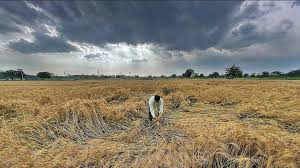
In a notable shift from the often dominant narrative that places stubble burning at the centre of Delhi’s pollution crisis, the Chief Justice cautioned against turning the issue into a political or ego-driven debate. “The issue of stubble burning should not unnecessarily become a political issue or an issue of ego,” the Bench said. Referring to his own background as a farmer’s son from Hisar, Haryana, CJI Kant questioned the logic of relentlessly blaming farmers alone for the capital’s air quality crisis. “Stubble burning was happening even during the COVID lockdown, yet people could see clear blue skies. Why? This suggests that other factors are also at play,” he said. Emphasising the vulnerability of farmers, the CJI added: “It is incorrect to pass the burden onto people who are hardly represented in this court.”
Court Seeks Detailed Action Plan From Central Agencies
Seeking accountability, the Supreme Court directed the Centre to clearly specify the immediate and long-term steps being taken by key statutory bodies, including the Commission for Air Quality Management (CAQM) and the Central Pollution Control Board (CPCB). The Bench asked the government to submit a comprehensive report detailing- Immediate containment measures, long-term structural solutions, Steps taken against all primary pollution sources beyond stubble burning. The matter has been listed for further hearing on December 10.
Centre Lists Major Contributors to Air Pollution
Appearing for the Central government, Additional Solicitor General Aishwarya Bhati informed the court that the key contributors to air pollution include stubble burning, vehicular emissions, construction dust, road dust and biomass burning. She assured the Bench that a detailed list of actions taken under each category could be submitted. However, the court asked the Centre to specifically explain what steps are being taken to control non-agricultural pollution sources, particularly vehicular emissions and urban dust. “We would like to have a report within a week on the measures taken to contain these other factors as well,” the Bench directed.
Unplanned Urban Growth and Rising Aspirational Population Under Scanner
Expressing concern over unplanned urbanisation, the CJI highlighted how cities were never designed to handle the present scale of population or the explosion in private vehicle ownership. “None of the cities of the country were developed with the thought that every household will have multiple cars,” he observed.
The Bench said it would closely examine whether the pollution control measures suggested by authorities are genuinely implemented or merely remain “on paper.” The CJI noted that unchecked urban expansion and infrastructure strain are directly affecting citizens’ quality of life, and any development model that degrades environmental and public health must be re-evaluated.
Year-Round Monitoring of Delhi Air Pollution
Concluding the hearing, the Supreme Court firmly stated that the air pollution issue in Delhi-NCR will now be monitored round the year, with bi-monthly hearings to ensure both short-term containment and long-term structural reforms are implemented in a time-bound manner. The court’s move signals a shift from crisis-driven intervention to continuous judicial oversight, aimed at delivering sustainable solutions to one of India’s gravest public health and environmental challenges.