


Listen To This Post
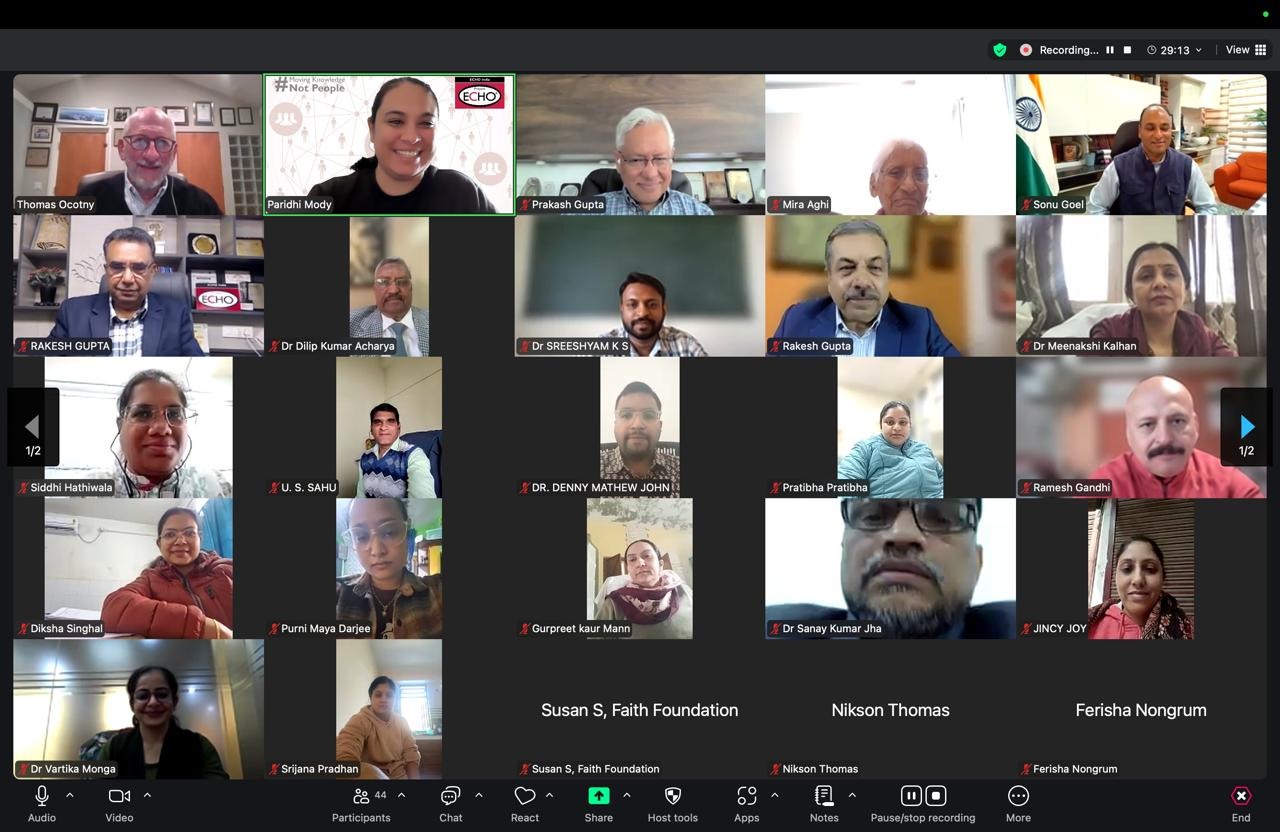
 The concerns were raised during an International Consultation on Cigarette Filters: Implications for Health Effects and the Environment, jointly hosted by the Tobacco Control Section of the International Union Against Tuberculosis and Lung Disease (The Union), the Strategic Institute of Public Health Education and Research (SIPHER) and ECHO India.
 The concerns were raised during an International Consultation on Cigarette Filters: Implications for Health Effects and the Environment, jointly hosted by the Tobacco Control Section of the International Union Against Tuberculosis and Lung Disease (The Union), the Strategic Institute of Public Health Education and Research (SIPHER) and ECHO India.
Chandigarh: Public health and environmental experts on Thursday strongly pitched for phasing out cigarette filters and imposing strict regulations on tobacco product waste (TPW), warning that cigarette butts and tobacco pouches pose a serious threat to public health, soil, water bodies, and marine life.
The concerns were raised during an International Consultation on Cigarette Filters: Implications for Health Effects and the Environment, jointly hosted by the Tobacco Control Section of the International Union Against Tuberculosis and Lung Disease (The Union), the Strategic Institute of Public Health Education and Research (SIPHER) and ECHO India.
The consultation brought together officials from health and environment ministries, pollution control boards, tobacco control professionals, environmental scientists, researchers and civil society representatives from India and abroad to deliberate on the growing menace of tobacco product waste, including cigarette and bidi butts, plastic tobacco pouches and pan masala sachets.
Highlighting the Indian public health perspective, Dr Sonu Goel, Professor, Department of Community Medicine and School of Public Health, PGI Chandigarh, said tobacco product waste has received scant attention despite its massive scale. Over five trillion cigarettes are smoked annually worldwide, resulting in billions of cigarette butts being discarded into the environment each year. “Our goal is to protect the environment from tobacco product waste, which has become an overlooked but serious pollutant,” he said.
Dr Rakesh Gupta, Chair of the Tobacco Control Section of The Union, explained that cigarette filters are made of cellulose acetate. This nearly non-biodegradable plastic absorbs toxic chemicals during smoking. “These filters can persist in the environment for years without degrading,” he said, referring to a communication issued by the Ministry of Environment, Forest and Climate Change to the Central Pollution Control Board in November 2020 on effective TPW management.
The keynote address was delivered by Dr Thomas E Novotny, Professor Emeritus at San Diego State University and former US CDC epidemiologist, who debunked the myth that filters make smoking safer. He stressed the need to disseminate accurate information that filters do not reduce health risks and primarily exist to sustain cigarette consumption. Dr Novotny strongly recommended a complete ban or phased elimination of cigarette filters, cautioning against allowing the tobacco industry to misuse such measures for reputational gains.
Chief Guest Dr P C Gupta, Director of HEALIS, Navi Mumbai, warned that even after breaking down, tobacco waste persists as toxic microplastic particles that contaminate soil and water. Citing studies, he said that a single cigarette butt soaked in one litre of water for 96 hours can reach lethal toxicity levels for fish. He also noted that the Central Pollution Control Board issued guidelines on TPW management in November 2022, exploring options such as banning single-use filters, bringing them under Extended Producer Responsibility (EPR), and imposing litter fees on manufacturers.
The consultation concluded with a set of strong policy recommendations, including manufacturing only filter-less cigarettes, classifying tobacco waste as toxic waste, imposing penalties for littering, fixing responsibility on manufacturers and users alike, and integrating tobacco waste-free compliance into national cleanliness missions such as Swachh Bharat and Swachh-Nirmal Tat Abhiyan.
Experts unanimously agreed that addressing tobacco product waste is critical not only for environmental protection but also for strengthening tobacco control efforts in India and globally.