






Listen To This Post
Estimated Loss: Rs 5,000 crore. CM Mann questioned the Centre’s Rs 1,600 crore compensation; BJP leader claimed Rs 800 crore given.
Chandigarh: Punjab’s farm economy has taken a severe triple hit—first from flood-induced crop losses, then from a sharp fall in basmati prices leading to distorted procurement patterns, and now from a growing political row over delayed flood relief funds from the Centre.
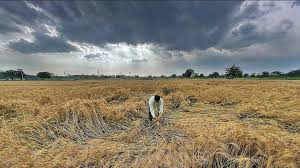
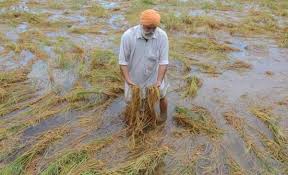
According to official estimates, Punjab suffered a loss of 17.54 lakh metric tonne (LMT) of paddy production due to floods during August–September, translating into an economic setback of over Rs 5,000 crore. The impact is clearly reflected in the state’s procurement figures this season. Total paddy procurement fell to 157.39 LMT this year, down from 173.93 LMT last year.
This decline directly hit farmers’ incomes. The total payout to farmers stood at Rs 37,237.42 crore this year, compared to nearly Rs 43,000 crore last year—a shortfall of almost Rs 6,000 crore. Economists warn that the reduced cash flow is already affecting consumer spending, rural liquidity and state tax revenues.
Non-Basmati Cultivation Offsets Flood Loss in Some Districts
Even as the overall figures dip, the Food and Supply Department was puzzled by unexpectedly high paddy arrivals in flood-hit districts of Amritsar, Tarn Taran and Fazilka. An internal inquiry revealed that farmers had significantly shifted from basmati to non-basmati varieties, which compensated for flood damage in these regions.
A senior food and supply official explained,
“Our inquiry revealed that this was purely because of the cyclical fall in global basmati prices last year, which led farmers to shun basmati and cultivate more non-basmati varieties. As the area under non-basmati increased, so did its production. As a result, paddy arrivals, despite flood damage, equalled last year’s figures.”
Due to unexpectedly high arrivals, the government even temporarily halted paddy procurement in these districts, triggering concern among farmers.
Basmati Crash Deepens Rural Distress
The trend away from basmati has been dramatic. Last year, Punjab procured 33.02 LMT of basmati paddy, but by November 17 this year, only 15.10 LMT had reached the mandis. The average basmati price fell from Rs 3,744 per quintal last year to Rs 3,400 this year, sharply cutting farmer earnings from the premium crop.
Agriculture experts say this shift will have long-term consequences for Punjab’s export-oriented rice economy, as basmati plays a crucial role in foreign exchange earnings.
Flood Relief Turns Into Political Flashpoint
Meanwhile, the economic distress has been compounded by a fresh political confrontation over flood relief funds.
Chief Minister Bhagwant Mann questioned the Centre’s delay in releasing Rs 1,600 crore promised by Prime Minister Narendra Modi for flood-ravaged villages.
“I fail to understand why the Centre is dilly-dallying on the release of the promised amount,” Mann said.
However, Punjab BJP president Sunil Jakhar and Union Minister Ravneet Singh Bittu rejected the charge, accusing the AAP government of misleading the public. Bittu countered that over Rs 800 crore has already been released by the Centre and disbursed to flood victims.
Farm Economy Under Multi-Directional Stress
With lower production, collapsing basmati prices, reduced mandi arrivals, shrinking farm payouts and delayed relief, Punjab’s rural economy is facing pressure on multiple fronts simultaneously. Farmers’ unions have warned that, unless compensation and price-stabilisation measures are implemented quickly, the combined effect could lead to more profound agrarian distress in the coming months.