






Listen To This Post
Responding to criticism following the strike call, Deepinder Goyal strongly defended the gig-work model, asserting that it provides flexibility and reliable supplementary income, rather than a traditional employment arrangement. Data shared by Goyal, average hourly earnings for Zomato delivery partners rose by about 10.9% year-on-year in 2025, from ₹92 in 2024 to ₹102, excluding tips. Over a longer horizon, he argued, gig worker earnings have shown steady growth.
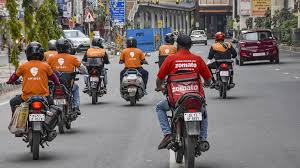
New Delhi: Shaik Salauddin, founder president of the Telangana Gig & Platform Workers’ Union (TGPWU), on Saturday, alleged that Deepinder Goyal, CEO of Zomato, was under mounting pressure following recent nationwide protests by gig and platform workers.
Claiming that Goyal was attempting to “save himself” amid growing scrutiny of the gig model, Salauddin said the Zomato CEO’s recent posts on X (formerly Twitter) had offered a glimpse into the company’s internal thinking but failed to address several core concerns raised by workers.
“Many of our questions remain unanswered. CEOs of food delivery platforms and gig workers should sit across the table and discuss honestly what went wrong and how to fix it,” Salauddin said. He warned that despite what he described as “repeated threats” from platform managements, workers continued their peaceful strikes, leading to disruptions in nearly 60% of orders in some areas. “If these issues are not resolved, this was just a teaser. More is yet to come,” he cautioned.
‘10-Minute Delivery Is Physical and Mental Stress’
Salauddin reiterated the union’s long-standing demand to scrap 10-minute delivery targets, calling them a source of intense mental and physical stress for delivery workers. He said the pressure to meet ultra-fast timelines directly impacts safety and well-being, a charge echoed by gig worker unions across several states.
Goyal Pushes Back, Cites Earnings and Flexibility
Responding to criticism following the strike call, Deepinder Goyal strongly defended the gig-work model, asserting that it provides flexibility and reliable supplementary income, rather than a traditional employment arrangement.
According to data shared by Goyal, average hourly earnings for Zomato delivery partners rose by about 10.9% year-on-year in 2025, from ₹92 in 2024 to ₹102, excluding tips. Over a longer horizon, he argued, gig worker earnings have shown steady growth.
Goyal explained that if a delivery partner works 10 hours a day for 26 days a month, gross earnings would be around ₹26,500. After accounting for approximately 20% fuel and maintenance costs, the net monthly income stands at roughly ₹21,000. These calculations, he clarified, are based on total logged-in hours, including waiting time.
He also highlighted that the average Zomato delivery partner worked 38 days in 2025, averaging 7 hours per working day, and that only 2.3% of partners worked more than 250 days in the year—underscoring the part-time nature of most gig work.
‘Gig Roles Not Meant for Full-Time Benefits’
Addressing demands for provident fund (PF), guaranteed salaries and other employee-style benefits, Goyal said such expectations were misaligned with the gig model.
“Demanding full-time employee benefits like PF or fixed salaries for gig roles doesn’t align with what the model is built for. This is a flexible, stop-gap earning option, not a long-term lock-in,” he said.
On safety concerns around quick commerce, Goyal insisted that 10-minute delivery promises do not pressure riders to drive dangerously. He said delivery partners are not shown customer-facing countdown timers, and that faster deliveries are achieved through store proximity rather than higher speeds.
In 2025, the average distance per Blinkit order was 2.03 km, with an average driving speed of 16 kmph, while Zomato deliveries averaged 21 kmph, he said.
Insurance, Welfare Measures Highlighted
Goyal said Zomato and Blinkit spent over ₹100 crore on insurance premiums in 2025, covering accident insurance up to ₹10 lakh, medical coverage of ₹1 lakh, and loss-of-pay insurance. Additional measures include:
-
Two paid rest days per month for women partners.
-
Income tax filing assistance for 95,000 partners
-
National Pension Scheme enrolment for 54,000 workers
He stressed that delivery partners are free to choose when and where they work, without assigned shifts or fixed geographies, calling flexibility “the whole point” of the gig economy.
“Now tell me—is this unfair? Especially for an unskilled, largely part-time job with zero barriers to entry,” Goyal wrote.
Debate Draws Investor Intervention
The debate also drew sharp reactions from Sanjeev Bikhchandani, founder of Naukri.com and a prominent investor, who publicly backed Goyal’s stance. In a controversial post on X, Bikhchandani praised Goyal’s response to the strike while taking a swipe at critics alleging exploitation of gig workers, using pointed political and personal references.
As the standoff between platform companies and worker unions intensifies, the gig economy debate has moved beyond wages to more profound questions about the dignity of labour, safety, social security, and the future of platform-based work in India—with both sides signalling that the conversation is far from over.