




Listen To This Post
How IndiGo’s Rahul Bhatia Outflew Naresh Goyal, Captain Gopinath and Vijay Mallya
Written By: HARISH MANAV / Thenewsdose.com
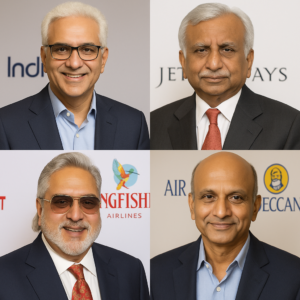
Chandigarh: Three of India’s most high-profile private airlines – Jet Airways, Air Deccan and Kingfisher Airlines – promised to remake the way Indians fly. All three are grounded today, their founders battling the courts, creditors, or simply fading from the aviation scene. The one carrier that not only survived but went on to dominate India’s skies is IndiGo, co-founded by the relatively low-profile Rahul Bhatia.
The contrast between Bhatia’s conservative, systems-driven style and the flamboyant, personality-led empires of Jet’s Naresh Goyal, Air Deccan’s Captain G.R. Gopinath and Kingfisher’s Vijay Mallya offers a sharp lesson in how India’s aviation boom turned many legends into history – and one operator into a near-monopoly.
Rahul Bhatia: The Reluctant Celebrity Who Built IndiGo’s
Rahul Bhatia, son of an Indian Airlines officer, studied electrical engineering at the University of Waterloo in Canada before returning to India to set up InterGlobe in 1989 – initially a modest travel, hotel and airline-representation business.
For over a decade, he stayed in the background, quietly building relationships with global carriers and honing a reputation for execution. When India’s low-cost revolution beckoned in the mid-2000s, Bhatia partnered with US airline veteran Rakesh Gangwal to launch IndiGo in 2006.
From day one, IndiGo followed a playbook that looked almost boring compared to its rivals- Single-class, single-type fleet – first only Airbus A320S, allowing economies in maintenance, training and spares. Aggressive but disciplined fleet orders locked in bulk purchase discounts while maintaining tight control on costs. No basic food for sale, quick turnarounds, sharp on-time performance, and obsessive cost discipline. Leasing and sale-and-leaseback finance, which turned aircraft deliveries themselves into a source of cash.
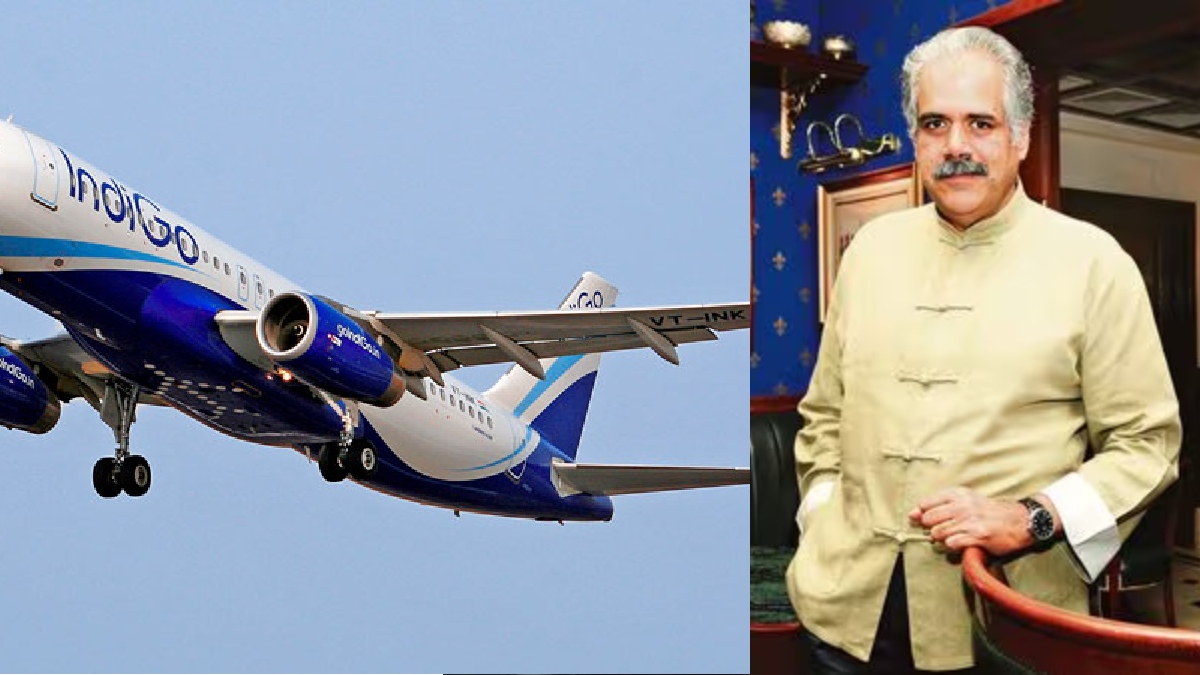
Bhatia, who largely avoided media limelight, ran IndiGo more like a process-driven logistics company than a lifestyle brand. The result: while rivals chased market share with flashy offerings, IndiGo chased utilisation, reliability and cash flow. Two decades later, IndiGo commands 63% of India’s domestic market with a fleet of 400+ aircraft and over 2,000 daily flights, making it by far the country’s largest airline.
Even its current turbulence – a pilot and scheduling crisis that forced mass cancellations and dented its famed punctuality – is being viewed as a systemic risk to Indian aviation precisely because IndiGo has become “too big to fail”.
Naresh Goyal: Travel Agent to Jet-Age Maharaja – and a Hard Landing
If Bhatia is the quiet engineer, Naresh Goyal is the archetypal salesman-entrepreneur. Born in 1949 in Punjab’s Sangrur, Goyal began as an accountant at a Calcutta-based airline company, then, one of his colleagues turned politician, Braham Mohindra, former minister in Punjab, revealed Goyal’s success story, explaining how, with barely any formal higher education, Goyal built his own traveling agency, Jetair, in 1974, representing foreign airlines in India.
When India opened its skies in the early 1990s, Goyal was uniquely placed: he knew global carriers, Indian regulators and the travel trade. In 1993, he launched Jet Airways, positioning it as a full-service private alternative to state-run Indian Airlines. With courteous cabin crew, reliable schedules, and hot meals, Jet quickly became India’s premium choice and, by the mid-2000s, the country’s largest private airline.
The model that made Jet a star also sowed the seeds of its fall:
- A full-service, high-cost structure just as low-cost carriers emerged.
- Costly strategic decisions – notably the 2007 acquisition of loss-making Air Sahara – loaded the airline with debt.
- A mixed fleet of Boeing and Airbus jets, regional ATRs and varied cabin products added complexity and costs.
- Goyal’s tightly controlled, personality-centric style left little room for professional dissent or sharp course correction, according to former executives quoted in multiple investigations.
- As fuel prices rose and fares were driven down by low-cost rivals like IndiGo and SpiceJet, Jet’s balance sheet buckled. By 2018–19, the airline’s debt had swollen to over ₹8,000 crore, and it defaulted on payments to lenders and lessors.
In April 2019, Jet Airways suspended all flights due to a lack of funds. Goyal stepped down as chairman and today faces money-laundering and financial misconduct investigations, a stark fall for the man who once best symbolised India’s private aviation success story.
Captain G.R. Gopinath Air Decan: The Idealist Who Taught India to Fly for a Rupee
Where Goyal aimed at business-class travellers and corporates, Captain G.R. Gopinath set out to democratise the skies. Born in a small village in Hassan district, Karnataka, Gopinath joined the army, fought in the 1971 war, and eventually left as a captain to become an entrepreneur, first in sericulture and motorbike distribution, then in the 1990s with a helicopter charter firm, Deccan Aviation.
In 2003, he launched Air Deccan, India’s first actual low-cost carrier, inspired by Ryanair and Southwest. His idea was radical for its time:
- No-frills service, point-to-point routes and secondary airports.
- Dynamic pricing that offered a handful of seats for as low as ₹1, making flying aspirational – and suddenly possible – for train and bus passengers.
- Air Deccan expanded at breakneck speed, connecting dozens of smaller cities neglected by established airlines. But growth outpaced capital. A thin balance sheet, high fuel costs, and intense fare wars made the airline chronically unprofitable. By 2007, it was bleeding cash even as it gained market share.
Vijay Mallya’s UB Group bought a 26% stake, eventually merging Air Deccan into Kingfisher and rebranding it as Kingfisher Red. Gopinath exited, his dream airline effectively absorbed into a very different, premium-focused brand. A later attempt to revive the brand under the regional connectivity scheme UDAN also ceased operations in 2020 amid the pandemic, drawing a line under Air Deccan’s journey.
Vijay Mallya and Kingfisher: Glamour Without Ground Handling
If Gopinath symbolised idealism and Goyal represented old-school hustle, Vijay Mallya was aviation’s showman. Already known as the “King of Good Times” for building United Breweries and Kingfisher Beer into mass brands, Mallya entered aviation in 2005 with Kingfisher Airlines. The airline promised a five-star, lifestyle experience in the sky – in-flight entertainment at every seat, gourmet meals, attractive branding and a party-like marketing aura. Initially, passengers loved it. But behind the glamour:
- Kingfisher’s high-cost, luxury positioning clashed with the brutal economics of Indian aviation.
- Rapid expansion, including an ill-timed international foray and the acquisition and later merger with Air Deccan, created a sprawling, complex operation. Mounting debt and unpaid dues to banks, airports and staff eroded trust and liquidity.
By 2012, regulators suspended Kingfisher’s licence over safety and financial-viability concerns; the airline never returned to service. Mallya has since become a high-profile fugitive economic offender, fighting fraud cases and bankruptcy orders abroad linked to unpaid Kingfisher loans running into thousands of crores.
Why Jet, Air Deccan and Kingfisher Became History
Though their stories differ, the three failed airlines share common faultlines:
- Over-expansion funded by debt: Jet’s Air Sahara acquisition, Air Deccan’s rapid capacity addition, and Kingfisher’s international push and Deccan merger all relied on borrowed money in an industry notorious for thin margins and volatile fuel prices.
- Complex fleets and confused brands: Jet juggled multiple aircraft types and cabin products. Kingfisher blended a luxury brand