



Listen To This Post
Haryana Cabinet Clears Major Reforms in Mobility, Mines, HCS, Police & Prosecution
Chandigarh: The Haryana Cabinet on Monday approved sweeping amendments to the Transport Department’s Aggregator Policy, under which motor vehicle aggregators, delivery service providers, and e-commerce companies will not be permitted to include any vehicle running solely on diesel or petrol in their existing fleets with effect from January 1, 2026. The move aligns with the CAQM’s clean-mobility mandate for the NCR.
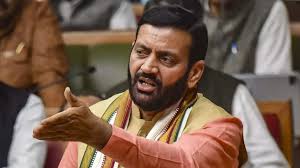
Presiding over the Cabinet meeting, Chief Minister Nayab Singh Saini cleared multiple administrative, environmental, recruitment and governance reforms across key departments.
Clean Mobility Push, Vehicle Age Limits Revised
Under the amended rules, only CNG or electric three-wheelers will be allowed to join aggregator fleets in the future. For two-wheelers, light goods vehicles and four-wheelers, adding any Internal Combustion Engine (ICE) vehicle will be prohibited from 01.01.2026. A Clean Mobility Portal is being created to record the entire fleet of license holders, ensuring transparency and compliance with central guidelines.
The Cabinet also approved amendments to the Haryana Motor Vehicles Rules:
-
NCR: Petrol/CNG/Electric vehicles allowed for 15 years; Diesel for 10 years.
-
Non-NCR: Maximum age 15 years for all vehicle types under most permits.
Officials said the measures will significantly curb vehicular emissions and strengthen enforcement of pollution mandates in NCR districts.
Structural Reforms
The Cabinet approved 890 posts for the Mines and Geology Department based on the rationalisation commission’s recommendations, citing a shortage of technical workforce for digital mining management and enforcement.
Key governance reforms cleared include:
-
Expansion of HCS Mains from four to six papers (600 marks).
-
Amendments to Punjab Police Rules (Haryana Amendment) Rules, 2025 for Constable and SI recruitment, with:
-
HSSC shortlisting 10× candidates,
-
Knowledge Test carrying 97% weightage,
-
Mandatory 20% Haryana-based questions, and
-
NCC certificate weightage (1–3 marks).
-
-
Amendments to the Prosecution Department Group A Rules to recruit 24 Deputy Directors and 24 Assistant Directors are required under BNSS 2023.
Unified Municipal Law and New Cadre Change Policy for Teachers
A landmark proposal—the Haryana Municipal Bill, 2025—was approved to replace two outdated Acts and establish a single, modern municipal governance framework for all 87 municipalities. The new law enables improved taxation powers, municipal magistrates, urban mobility provisions, standard service rules and stricter action against illegal colonies.
For administrative efficiency, 17 villages across six districts were reorganised and shifted to more suitable tehsils.
The Cabinet also cleared the District Cadre Teachers Cadre Change Policy, 2025, introducing:
-
Objective, tech-enabled merit-based cadre change,
-
60 points for age,
-
20 points for special categories,
-
80-point priority for critical cases (severe illness, disability, widows with young children, near-retirement).
Teachers cannot be shifted out of districts functioning below 95% staffing strength, and Mewat cadre teachers remain non-transferable. The new policy will replace the 2018 framework, though pending cases will continue under the old rules.