


Listen To This Post
Joint operation by Chandigarh Police and Punjab Counter Intelligence cracks case in 72 hours; foreign handlers in Portugal and Germany named
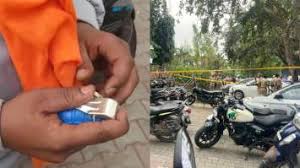
Chandigarh: In a swift and significant security breakthrough, authorities cracked open a Pakistan’s ISI-linked terror conspiracy on Saturday, just three days after a grenade explosion outside the Bharatiya Janata Party (BJP) office in Sector 37, Chandigarh, rattled the city and ignited a fierce political controversy. Five accused have been arrested, and a cache of weapons — including a live hand grenade, a .30 bore Zigana pistol, and 10 live cartridges — has been recovered from their possession.
The arrests were the result of a coordinated joint operation conducted by the Chandigarh Police and the Counter-Intelligence wing of the Punjab Police, underscoring the effectiveness of inter-agency collaboration in tackling sophisticated, cross-border criminal networks.
The Arrests: Who Was Nabbed
The five individuals taken into custody have been identified as:
- Balwinder Lal alias Shami, a resident of village Majari in Nawanshahr district
- Jasvir Singh alias Jassi, from village Bharapur, also in Nawanshahr
- Charanjit Singh alias Channi, hailing from village Sujawalpur in Nawanshahr
- Rubal Chauhan, a native of village Thana in Shimla district, Himachal Pradesh
- Mandeep alias Abhijot Sharma, a resident of Dhuri in Sangrur district, Punjab
The geographic spread of the accused — spanning Punjab and Himachal Pradesh — points to the deliberately dispersed and compartmentalised structure of the module, designed to evade detection.
Two key suspects, Gurtej Singh and Amanpreet Singh, remain at large. Joint police teams are actively conducting raids to apprehend them, and their capture is expected to yield further intelligence about the network’s operations.
The ISI Connection: Foreign Handlers Pulling the Strings
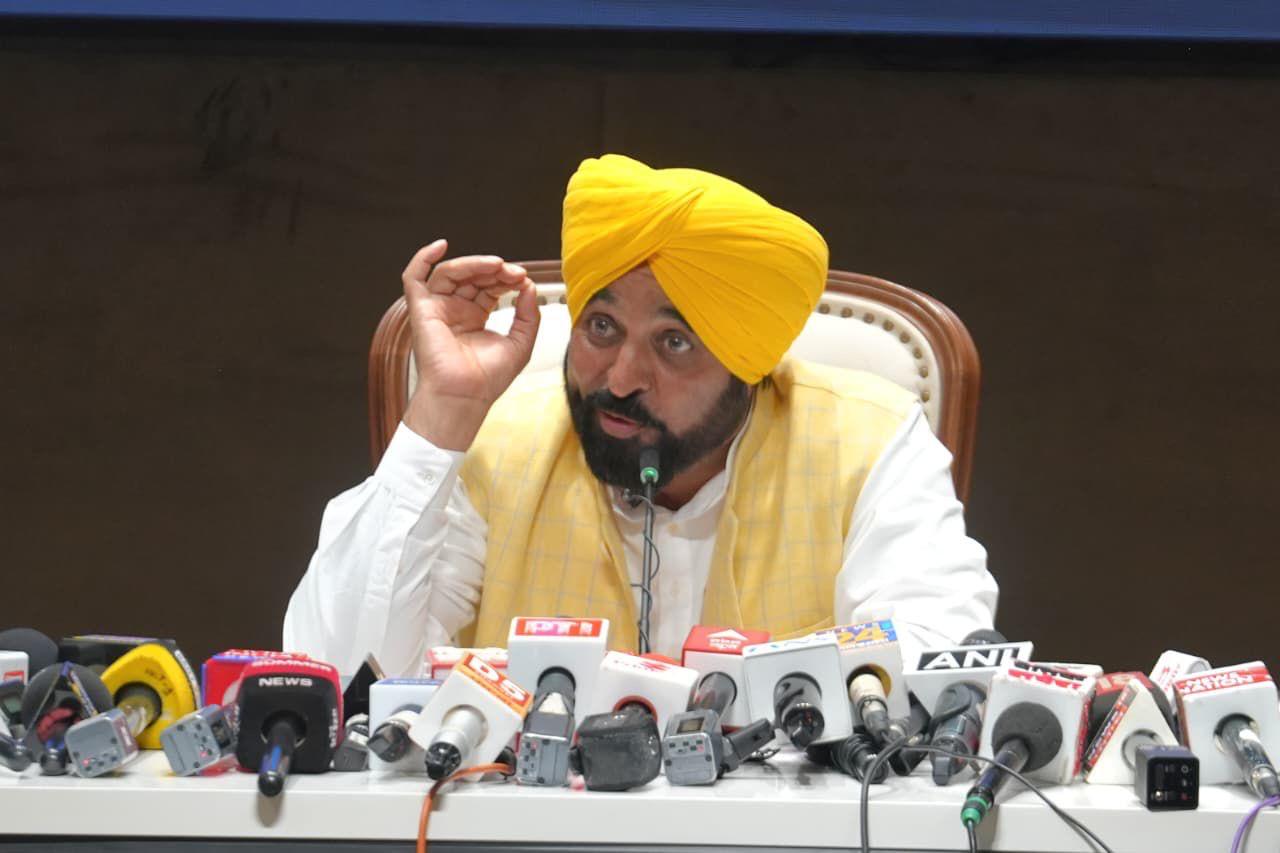
At a joint press conference, Chandigarh DGP Dr Sagar Preet Hooda and Punjab DGP Gaurav Yadav made a startling disclosure: preliminary investigations have confirmed that the attack was not a spontaneous act of local criminality, but a carefully orchestrated operation executed by a Pakistan’s ISI-backed module, directed by foreign-based handlers operating out of Portugal and Germany.
According to DGP Gaurav Yadav, the accused were acting on the explicit instructions of Baljot Singh alias Jot, a handler based in Portugal, who coordinated both the delivery of weapons and the execution of the attack. The consignment of hand grenades, arms, and live cartridges was transported through a chain of multiple operatives and sub-modules — a classic cutout structure used by intelligence-backed networks to obscure the trail and insulate the foreign masterminds from direct accountability.
The weapons passed through several hands before reaching the final perpetrators who carried out the April 1 attack, making the investigation a complex exercise in tracing both backwards and forward linkages across state borders and international boundaries.
A formal case has been registered under Section 25(1)(B) of the Arms Act and Section 61(2) of the Bharatiya Nyaya Sanhita at Police Station SSOC, Mohali, dated April 3. Investigations are continuing to map the full extent of the network, trace the arms supply chain, and identify all individuals involved.
Political Firestorm in the Wake of the Blast
The grenade attack on April 1 did not merely alarm citizens — it detonated a political storm of considerable proportions across Chandigarh and Punjab. Every major political party rushed to stake its claim on the narrative, transforming a serious security incident into a theatre of competitive blame-gaming.
The BJP was the quickest to go on the offensive, squarely blaming the Aam Aadmi Party (AAP) government in Punjab for a deteriorating law-and-order situation and demanding immediate accountability from Chief Minister Bhagwant Mann. The attack on their own party office lent the BJP’s criticism a particular edge and urgency.
The AAP, however, pushed back sharply, accusing opposition parties of cynically exploiting a security incident for electoral and political mileage. AAP leaders were also quick to note the jurisdictional reality — that Chandigarh is a Union Territory administered by the Centre, which the BJP controls — effectively deflecting blame back onto the ruling party at the national level.
Not to be left out, both the Congress and the Shiromani Akali Dal (SAD) weighed in with their own broadsides, adding volume to an already cacophonous political debate. The blast, in effect, became a new flashpoint in Punjab’s perpetually charged political landscape — a state where issues of security, militancy, and governance have historically carried explosive electoral weight.
Pattern of Violence Preceding the Attack
The BJP office attack was not an isolated incident but rather the most alarming episode in a troubling pattern that had already set Chandigarh’s nerves on edge. In the days immediately preceding April 1, the city had witnessed three separate shooting incidents within a single week — an unusual and deeply concerning concentration of violent crime for a city that has long prided itself on relative peace and orderly administration.
Each of those shooting cases was notably resolved quickly by the Chandigarh Police, with arrests made in quick succession. This record offered some reassurance about the force’s operational readiness and response capability, even as questions mounted about the broader security environment.
Saturday’s arrest of the grenade attack accused further demonstrated that, when it comes to tackling organised, cross-border crime with potential terror linkages, seamless coordination between multiple agencies — local police, state intelligence, and counter-terrorism wings — remains the most potent tool available to law enforcement.