


Listen To This Post
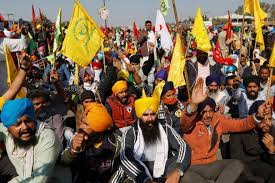
Chandigarh: The Samyukta Kisan Morcha (SKM) on Friday accused the Centre of pursuing what it termed an “economic colonisation strategy” through its import-export decisions on key agricultural commodities, alleging that recent policy shifts under the proposed India–US trade framework would devastate Indian farmers and the dairy sector.
In a strongly worded statement, SKM protested Commerce Minister Piyush Goyal’s reported remark that India would “purchase raw materials from America” in exchange for securing zero-tariff export access once the interim trade agreement is finalised. The farmers’ body described the statement as the “naked truth” of the Modi government’s surrender of self-reliance and economic sovereignty to the United States.
According to SKM, the government’s assertion that “agriculture is out of the US trade deal” is misleading. It claimed that the free trade agreements (FTAs) signed by the Centre serve as a blueprint to open Indian markets to multinational corporations and turn India into a “dumping yard” for American agricultural products.
Cotton Import Decision Under Fire
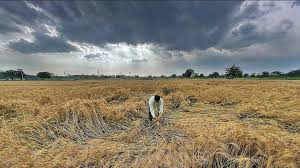
The farmers’ body alleged that the removal of the 11% import duty on cotton on August 19, 2025, would severely impact domestic cotton growers by depressing prices. It said cotton imports from the US surged by 95.5% — from $199.30 million (January–November 2024) to $377.90 million (January–November 2025).
Citing calculations based on the C2+50% formula recommended by farm groups, SKM argued that the minimum support price (MSP) for cotton in 2025 should be ₹10,075 per quintal. However, the Commission for Agricultural Costs and Prices (CACP) fixed the MSP at ₹7,710 per quintal (based on A2+FL), which SKM claimed was ₹2,365 lower than the C2 benchmark.
The group further alleged that inadequate procurement arrangements forced farmers to sell cotton at distress prices ranging between ₹5,500 and ₹6,500 per quintal, worsening rural distress.
Wheat Export Move Questioned
SKM also criticised the government’s decision to export 25 lakh metric tonnes of wheat, which the Centre has described as a “farmer-centric step to stabilise domestic markets.” The farmers’ organisation argued that unplanned export of raw agricultural produce, without a broader domestic industrialisation strategy, risks compromising food security and benefiting foreign markets more than Indian cultivators.
The group claimed that commodities such as apples, cotton, tree nuts, soybean oil, wine and spirits, and maize- and sorghum-based animal feeds have been opened under the interim India–US trade understanding. It is alleged that similar liberalisation in dairy products under FTAs with the European Union, New Zealand and the United Kingdom could expose Indian dairy farmers to global competition without adequate safeguards.
Tariff Reductions and Parliamentary Oversight
SKM further alleged that tariffs on agricultural imports, ranging from 30% to 150%, were being reduced to zero, while export tariffs were being raised from 0–3% to 18%, without adequate parliamentary discussion.
The farmers’ body accused the government of first failing to enact a legal guarantee of MSP at C2+50% for all crops, and now of dismantling the tariff protections that shielded agriculture and dairy from global price volatility.
It said the policy direction would push farmers and agricultural workers into “uncertainty and insecurity of the world market,” describing it as unacceptable to the country’s people.
Call for Agitation
Reiterating its demand for the resignation of Commerce Minister Piyush Goyal, SKM called upon farmers to intensify protests through village demonstrations, public meetings and door-to-door campaigns.
The organisation also referred to the All India General Strike on February 12, 2026, claiming it reflected widespread opposition among working people to current economic policies. SKM announced that its National Council meeting scheduled for February 24 at Kurukshetra, Haryana, would finalise a concrete programme to intensify the agitation.
The government has maintained that trade agreements aim to expand market access for Indian goods while balancing domestic interests. However, the sharp reaction from farm groups signals that agricultural trade liberalisation could emerge as a major flashpoint in the coming months.