




Listen To This Post
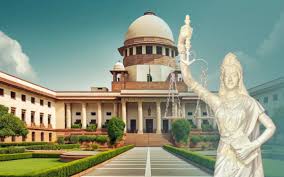
New Delhi: In a landmark ruling advancing gender justice and educational equity, the Supreme Court on Friday declared the right to menstrual health as an integral part of the right to life under Article 21 of the Constitution and directed all states and Union Territories to provide free oxo-biodegradable sanitary napkins to girl students and functional, gender-segregated toilets in all schools.
A Bench of Justices J B Pardiwala and R Mahadevan ordered that the directions be implemented across government, aided and private schools in both urban and rural areas. The court warned of strict consequences for non-compliance, including the derecognition of private schools and holding state governments accountable for failures in public institutions.
Writing the verdict, Justice Pardiwala held that access to safe, effective and affordable menstrual hygiene measures is essential for ensuring the highest standard of sexual and reproductive health for girls and is closely linked to dignity, privacy, equality and the right to education.
The court directed that sanitary napkins be made available free of cost to girl students, preferably through vending machines installed within toilet premises or at designated points within schools. It also ordered that every school must have functional, gender-segregated toilets with usable water connectivity, proper privacy and accessibility, including for children with disabilities. All school toilets must be equipped with handwashing facilities with soap and water at all times.
The judgment underscored that the right to education under Articles 21 and 21A cannot be realised without addressing systemic barriers such as a lack of menstrual hygiene facilities, which disproportionately affect girls’ participation in education. It noted that denial of menstrual hygiene management undermines dignity and equality by forcing girls to miss school and limiting their opportunities later in life.
The Bench further directed all schools to establish menstrual hygiene management corners and ensure awareness and training on menstrual health and puberty. It reiterated that schools must comply with the norms under the Right to Education Act, warning that private schools that violate these provisions could face de-recognition. The verdict was delivered in a public interest litigation filed by Jaya Thakur, seeking the pan-India implementation of a menstrual hygiene policy for school-going girls.