





Listen To This Post
New Delhi, Chandigarh: After 10 hours of counting, the NDA has surged far ahead in the Bihar Assembly election, securing leads on 203 seats and decisively closing the contest. The ruling alliance, led by the BJP and JD(U), has maintained a steady climb throughout the day, widening the gap with every updated trend.
The BJP, which began the day with a comfortable advantage, is now heading towards a record victory, leading on 92 seats across the state. The JD(U), led by Chief Minister Nitish Kumar, has consolidated its performance and currently leads on 83 seats, marking one of its strongest electoral outings in recent years.
Among NDA partners, Chirag Paswan’s LJP-RV has opened up leads on 19 seats, Jitan Ram Manjhi’s HAM is ahead on five seats, and the Rashtriya Lok Morcha (RLM) is leading on four seats—indicating a broad, unified sweep for the ruling alliance.
Mahagathbandhan Routed, Struggling to Hit 40
The opposition Mahagathbandhan is witnessing one of its poorest performances in decades, struggling to reach even the 40-seat mark. The RJD, which had hoped to challenge the ruling alliance and reclaim its legacy as Bihar’s largest party, is leading in only 26 constituencies. The Congress continues its downward slide, holding leads on just five seats. Left parties have a marginal presence, with the CPI(ML) ahead on two seats and the CPM leading on one seat. Political analysts say the results reflect a complete reversal of the 2020 mandate, signalling a collapse in the Mahagathbandhan’s organisational strength, messaging, and leadership appeal.
Jan Suraaj Fails to Make an Impact
Despite weeks of high-decibel campaigning and promises of a “new political alternative,” Prashant Kishor’s Jan Suraaj Party has failed to register an impact on the electoral map. The party has not been able to take a lead in any constituency as of 5 PM, disappointing supporters who had anticipated a breakthrough debut.
PM Modi, Amit Shah React
Reacting to the trends, Prime Minister Narendra Modi said voters had made their choice based on the NDA’s “track record” and development work in Bihar. He said the mandate reflected the people’s endorsement of stability, governance, and welfare delivery.
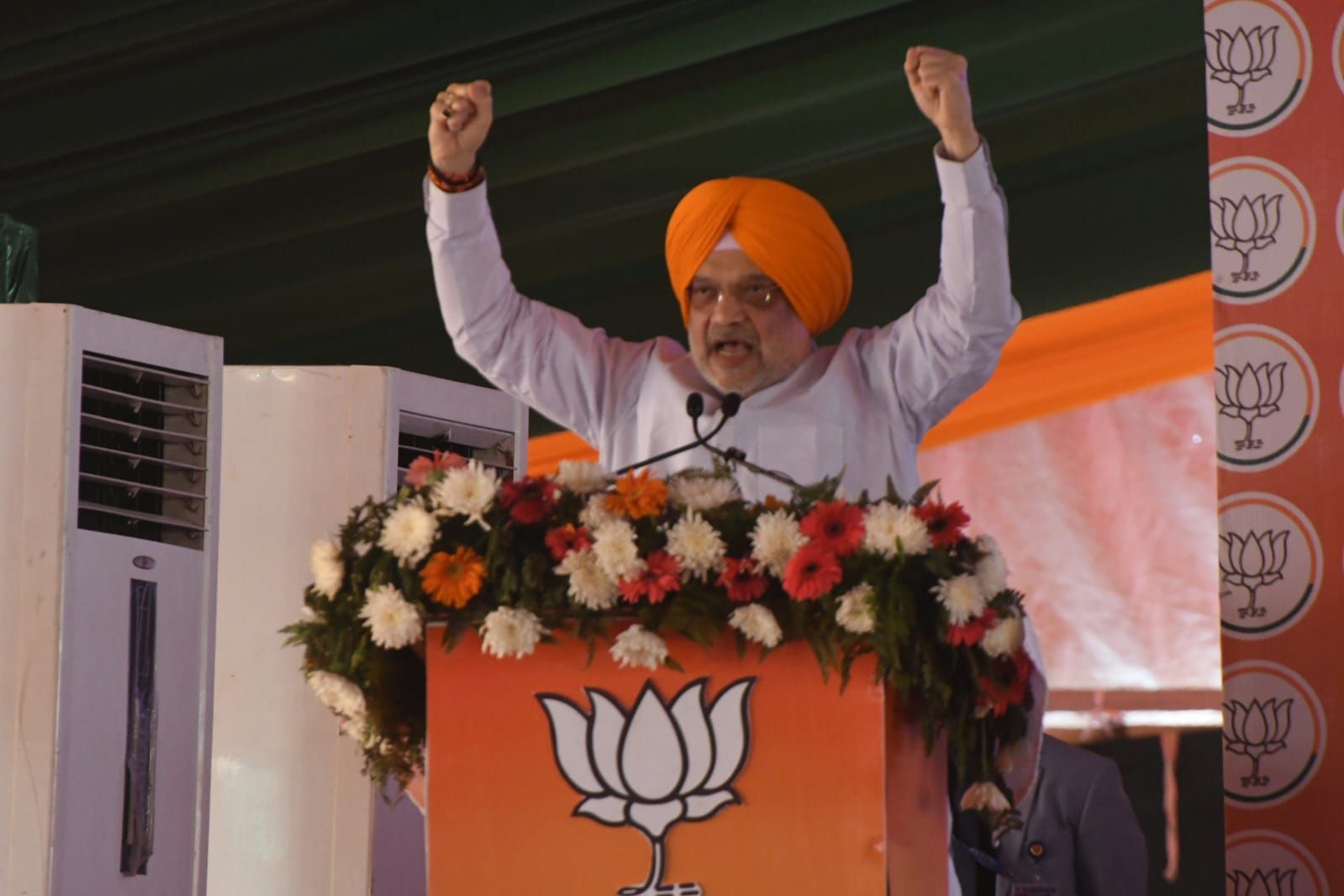
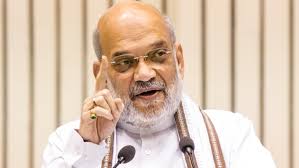
Union Home Minister Amit Shah, in his remarks earlier in the day, said the SIR process (Special Revision of the voter list) had played a critical role in ensuring clean and transparent elections. He termed it a “purification” of the voter list and said the results reflect the nation’s mood. “The people of Bihar have conveyed the mood of the entire country—that the purification of the voter list is mandatory and there is no place for politics against it,” Shah said. “Under Rahul Gandhi’s leadership, the Congress has now reached the last rung in Bihar.”
One-Sided Mandate
With trends now stabilising and counting entering its final phase, the 2025 Bihar election has turned into a one-sided sweep for the NDA. The results are being seen as a strong reaffirmation of the BJP-JD(U) coalition, a revival of NDA dominance, and a significant setback for the Mahagathbandhan, which appears to have lost even its core support base.
NDA Performance
BJP – Leading on 92 seats
The BJP has demonstrated extraordinary dominance across urban, semi-urban, and upper-caste OBC belts. Strong organisational presence, micro-targeting of beneficiaries, and the Modi factor have delivered a sweeping mandate. The party has expanded its footprint even in regions where it was traditionally weaker—especially parts of Seemanchal and Magadh.
JD(U) – Leading on 83 seats
Nitish Kumar’s JD(U) appears to have consolidated its rural, EBC, and women voters. The party’s strong showing is also seen as an endorsement of Nitish Kumar’s governance record, particularly in welfare delivery, health, and agriculture-linked schemes.
LJP-RV – Leading on 19 seats
Chirag Paswan’s party has emerged stronger than expected, particularly in Dalit-dominated pockets. The party’s messaging around dignity, jobs, and caste equity seems to have resonated with younger voters.
HAM – Leading on five seats
Jitan Ram Manjhi’s party has retained its core support base in limited pockets of Gaya and neighbouring regions.
RLM – Leading on four seats
The RLM’s performance indicates small yet meaningful consolidation among extremely backward castes (EBCs), aligning firmly with NDA.
Mahagathbandhan Performance
RJD – Leading on 26 seats
The RJD’s collapse is the headline of this election. Despite Yadav-Muslim consolidation in a few pockets, the party was unable to expand its base. Narrative fatigue, leadership uncertainty and weak booth-level mobilisation contributed to the poor showing.
Congress – Leading on five seats
The party remains electorally irrelevant in Bihar. Its weak organisational structure and lack of local messaging continue to hinder its progress.
Left Parties – Leading on three seats (CPI-ML: 2, CPM: 1)
Left parties have retained influence only in their narrow pockets of Bhojpur, Siwan, and parts of Patna periphery.
New Entrants
Jan Suraaj (Prashant Kishor) – No Lead
Despite the massive padyatra and media buildup, the party failed to translate ground mobilisation into votes. The lack of a cadre, weak candidate selection, and absence of a cohesive caste strategy contributed to its failure.
Why the Mahagathbandhan Collapsed
Five Key Reasons Behind MGB’s Worst Performance in a Decade
1. Weak Leadership & Confused Narrative
The MGB lacked a unified, compelling campaign theme. RJD’s leadership transition phase and Congress’s disinterest in grassroots mobilisation left voters unconvinced.
2. NDA’s Deep Welfare Penetration
The NDA’s messaging—“Modi ki guarantee” and Nitish’s welfare delivery—had strong resonance among women voters, EBCs, and first-time voters. These groups drifted away from MGB in large numbers.
3. Organisational Fatigue
The RJD cadres were not as mobilised as in previous elections. Congress had no booth machinery to support the alliance.
4. Poor Social Coalition Strategy
The MGB primarily relied on Yadav–Muslim consolidation but failed to attract EBCs, Mahadalits, upper castes, and non-Yadav OBCs—crucial voting blocs in Bihar.
5. Voter List Controversy Backfired
The Congress’s allegations of “vote theft” over the SIR (Special Revision) process did not resonate with voters. Instead, it reinforced the NDA’s narrative of electoral transparency and system reform.