





Listen To This Post
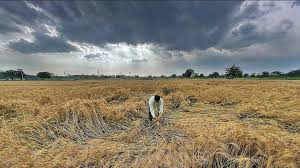
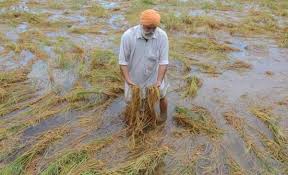
Farmers want lasting solutions that improve their knowledge, resilience, and income security, especially as input costs rise, weather becomes more unpredictable, and landholdings shrink. Recent floods in Punjab, Haryana, and hilly states like Himachal Pradesh and Uttarakhand have made the sector even more vulnerable to climate risks.

Written By: BHUPINDER SINGH HOODA | THE NEWS DOSE.COM
New Delhi / Chandigarh, Updated At:1025 AM JAN 29,2026 IST
With the Union Budget for 2026-27 approaching, farmers across the country are mobilising, underscoring that many agrarian problems remain unsolved. The years of neglect have forced farmers to take to the streets. Their protests point to deeper issues in the sector, especially low income, climate challenges, and the ongoing lack of investment in agricultural research and development.
Farmers want lasting solutions that improve their knowledge, resilience, and income security, especially as input costs rise, weather becomes more unpredictable, and landholdings shrink. Recent floods in Punjab, Haryana, and hilly states like Himachal Pradesh and Uttarakhand have made the sector even more vulnerable to climate risks. Productivity growth has slowed, costs continue to rise, and climate shocks are occurring more frequently. Tackling these issues requires science-based solutions, which highlights the importance of agricultural research. Yet the latest budget provided only a slight increase in funding for this area.
Despite numerous policy statements, public investment in agricultural research and development remains insufficient. Almost 85 per cent of the R&D budget goes to salaries and running costs, leaving little for core research. This problem happens every year. The Indian Council of Agricultural Research (ICAR) says most of its budget is spent on salaries. At the same time, state agricultural universities across India are short of funds, limiting their ability to conduct research and support farmers.
Recent budgets have shown only slight increases in funding. The Department of Agricultural Research and Education (DARE), which includes ICAR, got Rs 10,466 crore for 2025-26, up from Rs 10,156 crore in 2024-25. At the same time, the Ministry of Agriculture and Farmers Welfare received Rs 1.32 lakh crore in 2024-25 and about Rs 1.37 lakh crore in 2025-26, a 2.5% drop from the revised 2024-25 estimates. Only a small share of this money goes to research and innovation, indicating that agricultural science remains a low national priority.
With R&D spending stuck at just 0.3 to 0.7 per cent of agricultural GDP, India is far behind countries like the United States, China, Israel, and South Korea, which invest 2 to 4 per cent. This shows how urgently India needs to step up its commitment. There can be no consequences.
India operates one of the world’s most extensive agricultural research systems, employing nearly 27,500 scientists and over 100,000 support staff. The Indian Council of Agricultural Research (ICAR) manages 103 institutes, 11 Agricultural Technology Application Research Institutes (ATARIs), 63 State Agricultural Universities, 3 Central Agricultural Universities, and 731 Krishi Vigyan Kendras (KVKs) nationwide. Despite this expansive infrastructure, critical challenges remain unresolved, including reducing cultivation costs, closing yield gaps, managing water scarcity, improving market access, and strengthening food processing and value chains.
Previous solutions improved food security but were region-specific and input-intensive, often excluding rainfed areas, smallholders, and landless labourers. Currently, nearly 50 per cent of Indian agriculture is rain-dependent, and climate change has rendered traditional practices increasingly unreliable. Research priorities must therefore shift toward dry land farming, climate-resilient crops, affordable technologies, and diversified livelihood systems that mitigate risk and enhance income security.
Doubling farmers’ incomes, a common goal, will not be possible unless Indian agriculture shifts from a sole focus on production to building a modern agri-food system. This requires bringing innovation to every step, from managing soil and water to storage, processing, logistics, and market access. Technologies that reduce input costs and support activities such as watershed development, agroforestry, silvipasture, growing diverse crops, horticulture, livestock, fisheries, and related activities need much more research and policy support to be sustainable.
Land degradation, declining groundwater levels, soil nutrient imbalances, and biodiversity loss are undermining the productivity gains made in past decades. Conservation agriculture, micro-irrigation (More Crop-Per Drop), better nutrient use, organic inputs, and climate-smart practices need to move from small pilot projects to programs nationwide. New technologies such as precision farming, biofortification, protected cultivation, remote sensing, artificial intelligence, drones, and digital advisory platforms could transform the sector. But without substantial investment and support, small and marginal farmers will not be able to access these innovations. It should also strengthen State Agricultural Universities and extension systems, ensuring that research outcomes are efficiently and equitably disseminated to farmers.
Investment in agrarian science should be recognised as essential for food security, rural livelihoods, climate resilience, and national stability. To effectively translate these recommendations into practice, the budget should include specific policy actions, such as earmarked R&D funds for sustainable agricultural initiatives, performance-linked grants to encourage breakthroughs in agricultural science, and the establishment of a national agrarian innovation task force to prioritise critical research areas.
These measures would ensure that resources are utilised effectively and align with national goals. The principle of ‘Jawan, Jai Kisan, Jai Vigyan, Jai Anusandhan’ remains relevant, underscoring the interconnectedness of farmers’ welfare, scientific advancement, and national self-reliance. Budget 2026 presents a critical opportunity to translate this vision into effective policy measures.
-Leader of Opposition & former CM Haryana, Headed the Congress Committee on Agriculture & Farm Welfare.