






Listen To This Post
 India’s prisons are teeming, as there are around 5.50 lakh inmates in jails. From a societal standpoint, most prisoners are not career criminals; over 75 % are undertrials, first-time offenders, or individuals caught in socio-economic vulnerabilities.
Written By: DINESH SOOD
Thenewsdose.com
In India, prisons remain predominantly viewed as institutions of punishment, places where offenders are locked away, cut off from society, and forgotten. But a growing body of evidence and early successes suggest that prisons can be far more than containment centres. Prisoners can become centres of learning, productivity, and rehabilitation if we empower inmates with fundamental, marketable skills.
Punishment to Possibility
In 2024, prisoners across India generated goods worth approximately ₹274 crore. Tamil Nadu accounted for ₹67 crore of this output, followed by Telangana with ₹56 crore, and both Kerala and Delhi contributed ₹24 crore each. Maharashtra produced goods worth ₹21 crore, Gujarat ₹13 crore, and Andhra Pradesh ₹12 crore, while other states contributed the remainder. These figures highlight that organised inmate hard work and skills can create significant economic value.
However, they also indicate untapped potential. Much of the work performed is low-skilled, fragmented, and often lacks connection to opportunities available after release. Additionally, the wages set by the state for inmates may not accurately reflect market conditions. Many inmates do not receive formal certifications or develop skills that enhance their long-term employability. Consequently, when they leave prison, their work experience seldom translates into sustainable employment.
Why skills matter for rehabilitation
The case for rehabilitative skill training is compelling on both moral and pragmatic grounds. India’s prisons are teeming, as there are around 5.50 lakh inmates in jails. From a societal standpoint, most prisoners are not career criminals; over 75 % are undertrials, first-time offenders, or individuals caught in socio-economic vulnerabilities. Without meaningful training, a vast number of these individuals, many of whom will return to society, face bleak prospects for legal employment on release. International research consistently shows that vocational training, education, and structured post-release support significantly reduce recidivism.
Take Norway, for example. The Nordic country has reoriented its criminal justice system toward normalisation and rehabilitation rather than harsh punishment. Its recidivism rate — meaning the proportion of released prisoners who re-offend is remarkably low. According to an analysis of the inmates released between 2015 and 2024, about 22.9% of male ex-prisoners were reincarcerated. In some reports, two-year reconviction rates hover around 20% and rise modestly over five years.
Norwegian prisons invest heavily in education, therapy, and vocational training. As one study from the University of Bergen observed, inmates who were unemployed before incarceration were 40% more likely to be working five years after release if they had participated in prison training programmes. This is not just about kindness — it is efficient public policy: fewer crimes, fewer re-arrests, and a smoother reintegration into society.
India’s present is the foundation for its future.
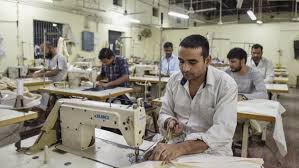
India is not starting from scratch. Several states already run vocational programmes inside prisons: carpentry, weaving, baking, plumbing, agriculture, beauty and wellness, and more. In Andhra Pradesh’s prisons, for example, inmates in 2023 produced goods worth over ₹12 crore, a 44% jump over the previous year, through the manufacture of furniture, baked goods, printed items, and agro-produce. The Odisha government also recently launched a vocational training initiative to teach inmates how to repair electric household appliances, a practical, potentially marketable skill. These initiatives illustrate two essential truths: first, inmates are willing to work and learn, and second, when properly directed, their labour can yield goods beneficial to society or commercially viable.
Success needs scale and strategy.
To convert this potential into systemic reform, India needs a structured, well-funded national mission. Piecemeal training is helpful, but without coherence in curricula, certification, market linkage, and post-release pathways, we risk perpetuating a cycle in which prison labour remains disconnected from the outside world. Six scalable reforms could be there:
- Demand-led vocational curriculum: Training must reflect real market demand. Rather than generic prison craft, inmates should be certified in trades in demand locally—such as digital skills, plumbing, renewable energy repair, food processing, tailoring, among others.
- Accreditation & certification: Vocational training should lead to recognised qualifications aligned with national vocational frameworks. Digital or physical certificates, possibly stored in secure government registries, will make it easier for ex-inmates to demonstrate their capabilities to employers.
- Public–private partnerships: Skill-sets must collaborate with industry, NGOs, and educational institutions to train inmates. Firms can commit to hiring or mentoring ex-prisoners. Training providers can bring certified experts into prisons.
- Enterprise development and prison products: Revenue from prison-manufactured goods should be reinvested in prison enterprises. Modern machines, quality control, branding, and e-commerce channels can help prison products compete in open markets. Government procurement quotas (for state-run establishments) can also be leveraged.
- Structured re-entry support: It is imperative to plan for the moment inmates walk out. Pre-release programs should include job placement, mentorship, financial literacy, ID verification and banking assistance, and, if needed, microcredit to start small businesses.
- M&E and evidence-based scaling: A national mission should have built-in monitoring and evaluation(M&E). Key metrics: how many inmates are trained, certified, employed, and how many relapse. Data collected should guide periodic course corrections.
A broader moral and economic imperative
Empowering prisoners with skills is not just about rehabilitation; it is about inclusion. Democracies thrive when the marginalised are lifted rather than locked away. India spends considerable public money to keep people in jail. Redirecting even a fraction of that investment into training and reintegration can yield social returns: better livelihoods for ex-offenders, lower crime rates, and long-term fiscal savings.
Moreover, this is a question of dignity. Many incarcerated individuals come from socio-economically vulnerable backgrounds. Access to training validates their potential, builds self-worth, and increases their chances of genuine change. It transforms prisons into places of possibility rather than merely punishment.
A national mission of prison reformation
The ₹274 crore of prison-made goods India produced in 2024 is not simply a statistic — it is a signal. It shows that prisoners can contribute, learn, and that their labour is not only enforceable but also productive. But it is only the beginning.
India now stands at a crossroads: continue with a fragmented, under-leveraged prison production model — or harness it, build it, and scale it into a national mission of rehabilitation. By investing in skills, certification, industry partnerships, and structured re-entry, we can craft a prison system that not only punishes crime but prevents it. That restores people. That builds futures.
If a more humane prison system can help Norway reduce re-offence rates to the low 20s, then there is no reason why India cannot chart its own path, one that is not only just but also pragmatic, productive, and forward-looking. The walls of a prison should not be the end of hope; they can be the beginning of transformation.
-The author is the Co-founder and MD of Orane International.