



Listen To This Post
While the strategy ensured that the Congress ultimately retained one seat, the cross-voting by five MLAs suggests cracks within the party’s legislative ranks.

Written by: HARISH MANAV | THE NEWS DOSE.COM
The outcome of the Rajya Sabha election in Haryana — one seat each for the ruling Bharatiya Janata Party and the opposition Indian National Congress — may appear arithmetically predictable. Still, the drama surrounding the contest has exposed deeper political currents shaping the state’s politics.
On paper, the numbers in the 90-member Assembly had already suggested that both parties would secure one seat each. Yet the actual voting process — marked by cross-voting, invalid ballots, abstentions and a late Independent entry — turned the election into a political stress test for both sides.
Congress Victory Amid Internal Tremors
For the Congress, the victory of Dalit activist Karamvir Boudh is politically significant. It allows the party to claim that it held its ground against a determined challenge from the BJP. However, the celebrations are tempered by uncomfortable questions about internal discipline.
Five Congress MLAs reportedly cross-voted, and four of the party’s ballots were declared invalid; in total, Congress lost 9 of its 37 MLAs. Even if some of these irregularities may have resulted from procedural lapses or the five Congress MLAs may have been managed by the independent contender Satish Nandal, the episode exposes cracks within the party’s legislative ranks. For a party seeking to present itself as the primary challenger to the BJP in Haryana, such internal dissent carries implications far beyond a Rajya Sabha election.
The decision to shift Congress MLAs to a resort in Himachal Pradesh ahead of the vote — a familiar tactic in contemporary Indian politics — itself reflected the leadership’s apprehensions about possible defections. While the strategy ensured that the party ultimately retained its seat, the cross-voting episode suggests that factional rivalries within the state unit remain unresolved.
BJP’s Calculated Gamble
The BJP’s victory through former MP Sanjay Bhatia was expected. What made the contest intriguing, however, was the party’s decision to support Independent candidate Satish Nandal.
The move was a calculated gamble. By backing an Independent candidate, the BJP sought to test the opposition’s unity and possibly engineer a surprise upset through cross-voting. Although Nandal eventually lost by a narrow margin, the experiment succeeded in unsettling the Congress and forcing it onto the defensive.
For the BJP, the episode offered an opportunity to highlight alleged factionalism within the Congress while projecting itself as politically agile.
INLD’s Strategic Abstention
Another notable dimension of the election was the Indian National Lok Dal’s decision to abstain from voting. In a contest decided by extremely narrow margins, the absence of two votes assumed outsized importance.
The BJP has argued that the abstention indirectly benefited the Congress by preventing those votes from going to the BJP-backed Independent candidate. However, from the INLD’s perspective, the decision may have been a calculated attempt to maintain equidistance from both major parties while avoiding the perception of aiding either side. In Haryana’s fragmented political landscape, such tactical neutrality often serves smaller parties seeking to preserve their political space.
A Snapshot of Haryana’s Political Balance
The Rajya Sabha election ultimately reaffirmed what political observers already knew: Haryana remains a finely balanced political arena.
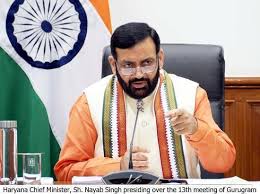
The BJP retains control of the government under Chief Minister Nayab Singh Saini, but the Congress continues to command significant influence in the Assembly. The narrow margins and cross-voting episodes indicate that neither side can afford complacency.
Moreover, the political theatre surrounding the election — from allegations of horse-trading to the relocation of MLAs — underscores the growing intensity of competitive politics in the state.
Beyond Numbers: Signals for Future Politics
Though Rajya Sabha elections are indirect contests determined by legislative arithmetic, they often reveal the deeper health of political alliances and party structures.
In Haryana’s case, the election has highlighted three key realities. First, the Congress remains electorally relevant but organisationally fragile. Second, the BJP continues to experiment with tactical manoeuvres to expand its advantage. And third, smaller players like the INLD retain the ability to influence outcomes in close contests.
In that sense, the Haryana Rajya Sabha poll was less about two parliamentary seats and more about the evolving political dynamics of a state that remains one of North India’s most competitive political battlegrounds.
Total Assembly strength: 90
INLD abstentions: 2
Votes cast: 88
After invalid votes: Congress candidate Karamvir Boudh: 28 votes
BJP candidate Sanjay Bhatia: 28 votes
Independent Satish Nandal (BJP-backed): 27 votes
The Congress had five of its MLAs cross-vote, while four of its votes were declared invalid, significantly affecting the contest’s outcome.