




Listen To This Post

These four codes—Wages, Industrial Relations, Social Security, and Occupational Safety—constitute the most comprehensive labour reform since Independence, a transformation to ‘Viksit Bharat’.
Written By AS MITTAL
Thenewsdose.com
For over 70 years, India’s manufacturing aspirations have been shackled by an outdated, colonial-era labour framework that has actively discouraged formal hiring, penalised scaling, and rewarded inefficiency. While capital, technology, and entrepreneurship surged ahead, labour regulations stagnated—fragmented across 29 archaic laws that fostered inspector raj, litigation, and uncertainty. The impact is undeniable: suppressed investment, stunted job creation, and an overwhelming informal workforce.
Parliament approved the new law in 2020; now, after five years of political manoeuvring, it is set to be uniformly implemented nationwide. With the Centre’s notification of the four unified labour codes on November 21, India has decisively moved towards Viksit Bharat, where growth will be driven by productivity, formal employment, and enhanced global competitiveness—without compromising worker dignity. These four codes—Wages, Industrial Relations, Social Security, and Occupational Safety—constitute the most comprehensive labour reform since Independence. They do not merely maintain labour rights; they modernise governance to align with the demands of a 21st-century economy.
Prioritising Industry’s Productivity
The labour codes revolutionise enforcement philosophy. The new inspector-cum-facilitator system demands a shift from coercion to guidance. The introduction of digital inspections, third-party audits, and web-based compliance will drastically reduce corruption, harassment, and litigation, signalling a monumental transformation that goes far beyond superficial reforms.
The number of labour rules has plummeted from around 1,400 to roughly 350, significantly alleviating the regulatory burden on businesses. This transparency aligns perfectly with the expectations of global buyers, especially in exports tied to Europe and North America, where formalisation, traceability, and worker welfare audits are essential.
In the developed world, soaring labour costs have transformed industrial practices. The United States, Germany, Japan, and South Korea have seen high wages and inflexible labour markets force industries to replace human labour with machines, robotics, and automation. Labour-intensive manufacturing has shifted out of these economies—not due to unmet demand, but because labour costs have become unsustainable.
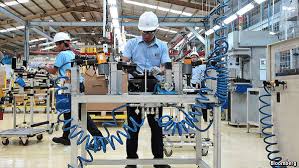
India stands in stark contrast. Here, labour is plentiful, affordable, youthful, and increasingly skilled, presenting a significant competitive advantage. This demographic and economic edge can propel India forward—if the policy environment actively supports large-scale manufacturing. The four labour codes pave the way by enabling flexible hiring via fixed-term employment, swift dispute resolution, and streamlined compliance through digital single-window systems, while also eliminating the complexities of excessive registers and filings. This is why nations like China, Vietnam, and Bangladesh, with adaptable labour regimes, have surged ahead in export manufacturing while India has lagged despite its vast market potential.
The Industrial Relations Code (IRC) empowers enterprises to adapt decisively to business cycles, which is vital for seasonal industries such as textiles, sports goods, bicycles, agricultural equipment, and light engineering, as well as for export-driven clusters that rely heavily on unpredictable global order flows. Without the flexibility to hire and adjust shifts, Indian manufacturers cannot compete with the efficiency of East Asian factories.
Furthermore, progressive reforms such as permitting women to work night shifts in factories under stringent safety measures can unleash massive productivity gains—especially in sectors like textiles and apparel —and transform the country into a multi-shift export powerhouse.
Ensuring Labour Dignity
The misleading narrative pushed by some ideological unions is that labour reforms benefit industries alone. This misconception is outright false. The truth is that several robust worker-friendly measures—mandatory appointment letters, standardised minimum wages, free annual health check-ups for employees over 40, and gender-neutral pay—are significant strides forward.
Under the Social Security Code, workers will gain eligibility for gratuity after just one year, rather than five. This represents a revolutionary shift for industrial migrants who frequently change employers due to seasonal demand; their work tenure will now translate into actual financial security.
Moreover, gig and platform workers—including delivery partners, logistics personnel, and ride-hailing drivers—are being integrated into statutory social protection for the first time. Aggregators will be required to contribute 1–2% of their turnover to a welfare fund that provides insurance, pensions, and accident coverage. This is not merely about maintaining labour rights; this is about empowering labour.
A Lesson-Bengal and China Model
As global companies diversify their supply chains with the China+1 strategy, India stands at a crucial inflexion point. However, investors prioritise labour flexibility, compliance burdens, dispute-resolution timelines, and the ease of workforce expansion.
India has already felt the dire consequences of militant trade unionism that lacks industrial realism. West Bengal, once home to iconic industrial cities like Kolkata, Howrah, Durgapur, and Asansol, has seen its industrial landscape ravaged by rigid hire-and-fire restrictions, ideological confrontations, and political meddling. These factors have systematically dismantled industries, forcing both capital and jobs to flee the state.
Ironically, the very trade unions that resisted necessary flexibility in India have championed the Chinese Communist Party’s hire-and-fire manufacturing model. In China, productivity, discipline, and state-supported industrial expansion have triumphed over the stagnant practices of Western manufacturing. China never allowed labour rigidity to obstruct its national growth, while India has suffered the consequences of doing just that for far too long.
The Way Forward
The four labour codes herald India’s transition from a rigid command-and-control labour regime to a dynamic model that prioritises productivity and worker protection. These codes ensure that the needs of enterprises align with workers’ rights.
Labour is a concurrent subject, and the central government has fulfilled its role by establishing the framework. Now, the onus falls on the states to act decisively to implement customised rules under all four labour codes. It needs to establish a tripartite task force comprising industry leaders, labour representatives, and experts, digitise all labour compliance platforms, and launch skill certification pipelines linked directly to formal employment.
The vision of a ‘Viksit Bharat’ cannot be constructed on the crumbling foundation of outdated colonial labour laws. It will rise through productive factories, secure employment for workers, flexible labour policies, and global competitiveness. The four labour codes are not merely a reform; they represent a necessary revival.
-The author is Vice-Chairman of Sonalika ITL Group, Vice-Chairman(Cabinet minister rank)of the Punjab Economic Policy and Planning Board, and Chairman of ASSOCHAM Northern Region Development Council. Views expressed are personal. vc@sonalika.com