


Listen To This Post
New Delhi: The Centre came under sharp attack from Opposition parties on Monday over a proposed law that seeks to repeal the Mahatma Gandhi National Rural Employment Guarantee Act (MGNREGA) and replace it with a new rural employment framework, with critics questioning why the name of Mahatma Gandhi was being removed from a landmark welfare scheme.
The Viksit Bharat Guarantee for Rozgar and Ajeevika Mission (Gramin) (VB-G RAM G) Bill, 2025 has been listed in the Lok Sabha’s supplementary list of business. The Bill proposes to repeal the 2005 MGNREGA Act and replace it with a new statute aligned with the government’s vision of Viksit Bharat 2047.
What the New Bill Proposes
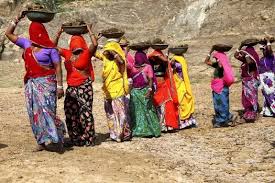
Under the proposed law, rural households would be guaranteed 125 days of wage employment per financial year, up from the current 100 days, for adult members willing to undertake unskilled manual work. The scheme would be centrally sponsored, with states required to frame their own implementation plans within six months of the Act coming into force.
The Centre would allocate funds to states based on prescribed parameters, while any expenditure beyond the approved allocation would have to be borne by the states.
Congress: ‘Why Remove Gandhi’s Name?’
Congress MP Saptagiri Ulaka, chairperson of the Parliamentary Standing Committee on Rural Development and Panchayati Raj, said the panel had earlier made multiple recommendations to strengthen MGNREGA, including increasing workdays to 150 days and raising wages.
“When the BJP came to power, Prime Minister Narendra Modi had called MGNREGA a scheme for digging pits. It was always their intention to end it,” Ulaka said, questioning the removal of Mahatma Gandhi’s name.
“I don’t know what problem they have with the name of Bapu. If they wanted reforms, why not implement the committee’s recommendations? States have pending dues, West Bengal is not getting funds, and now they bring a Bill but erase Mahatma Gandhi’s name,” he said.
Priyanka Gandhi Flags Cost, Intent
Congress leader Priyanka Gandhi Vadra questioned both the intent and the cost of renaming the scheme.
“Whenever a scheme’s name is changed, money is spent on changing files, stationery and signage. What is the benefit? Why is Mahatma Gandhi’s name being removed?” she asked in Parliament.
“Mahatma Gandhi is not just India’s tallest leader but one of the world’s greatest. I don’t understand the objective behind removing his name,” the Wayanad MP said, accusing the government of wasting parliamentary time instead of addressing people’s real issues.
Opposition Parties Cry ‘Insult to Gandhi’
Senior Trinamool Congress leader Derek O’Brien termed the move “an insult to Mahatma Gandhi”.
“These are the same people who once glorified the man who killed Mahatma Gandhi. Now they want to erase him from history,” the Rajya Sabha MP said.
CPI(M) general secretary M A Baby said the revamp was an attempt to mask the “dismantling” of the rights-based framework of MGNREGA.
“The Centre is drastically reducing its share and passing the burden to states. This will allow the government to punish Opposition-ruled states by cutting allocations,” Baby alleged, also criticising increased reliance on technological interventions that, he said, had deprived many workers of their entitlements.
Calling the move “reckless” and linked to the recently notified “draconian” labour codes, Baby warned it would worsen rural distress. “We will fight this both inside and outside Parliament,” he said.
Government’s Stand
In the statement of objects and reasons, Rural Development Minister Shivraj Singh Chouhan said MGNREGA had provided guaranteed employment to rural households for two decades, but further strengthening was required due to significant socio-economic transformation in rural India driven by social security schemes and saturation-based delivery of government programmes.
MGNREGA, enacted in 2005 and renamed in 2009, currently guarantees 100 days of employment. The proposed law raises this to 125 days but fundamentally alters the structure and branding of one of India’s most recognisable welfare programmes.With emotions running high over Gandhi’s legacy, federal funding, and workers’ rights, the Bill is expected to trigger a major political confrontation in Parliament in the coming days.