




Listen To This Post
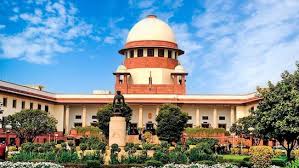
New Delhi: A Public Interest Litigation (PIL) has been filed in the Supreme Court of India seeking urgent judicial intervention to address what it terms a “continuing constitutional failure” in preventing and responding to racial discrimination and violence against citizens from India’s northeastern states and other frontier regions.
The PIL, filed on December 28, comes in the aftermath of the brutal killing of Anjel Chakma, a 24-year-old MBA student from Tripura, who succumbed on December 27 to grievous injuries sustained in an allegedly racially motivated attack in the Selaqui area of Dehradun.
Anjel, a resident of Machmara village in Tripura’s Unakoti district, had moved to Dehradun after completing his schooling in Agartala to pursue an MBA. He was allegedly assaulted and stabbed in the presence of his younger brother, Michael. According to the petition, Anjel suffered severe injuries to his neck and spine, remained unconscious throughout his treatment, and died after spending over 14 days in intensive medical care. His death triggered widespread anguish, protests and demands for justice across the country.
The PIL has been filed by Delhi-based advocate Anoop Prakash Awasthi, who has made the Union government along with all states and Union Territories parties to the petition. The victim’s family has sought the death penalty or, at the very least, life imprisonment for all those accused in the case.
Quoting Anjel’s last recorded words — “We are Indians. What certificate should we show to prove that?” — the petition argues that the incident starkly reflects the everyday constitutional insecurity faced by citizens from the Northeast. It relies on media reports and eyewitness accounts to underline the racial slurs and hate-based motivation that allegedly preceded the fatal attack.
Invoking Article 32 of the Constitution, the petition alleges violations of fundamental rights under Articles 14, 19(1)(a), 19(1)(g) and 21, and seeks a writ of mandamus or other appropriate directions to tackle racial discrimination as a distinct constitutional and criminal wrong.
Among its key prayers, the PIL seeks interim judicial directions—until a dedicated law is enacted—to formulate comprehensive guidelines recognising “racial slur” as a separate category of hate crime, with clearly defined punishments. It also urges the Centre and states to establish a central nodal agency or permanent commission, as well as corresponding state-level bodies, to ensure reporting, monitoring and redressal of racial crimes.
The petition further calls for the creation of dedicated special police units in every district and metropolitan area to deal specifically with racially motivated offences. It also seeks directions for mandatory workshops, debates and awareness programmes in educational institutions to address entrenched racial prejudices and promote constitutional values.
A major concern highlighted in the plea is that despite the clear racial motivation behind many such crimes, India’s criminal justice system lacks any mechanism to identify or record racial bias at the investigation stage. As a result, such offences are treated as routine crimes, “erasing motive, diluting constitutional gravity, and perpetuating a pattern of impunity,” the petitioner contends.
The PIL argues that Anjel Chakma’s killing is not an isolated incident but part of a long-standing pattern of racial abuse and violence against people from the northeastern states. It recalls earlier cases such as the 2014 death of Nido Taniam and multiple assaults on students and workers in metropolitan cities—incidents that have been acknowledged by the Centre in Parliament but, according to the petitioner, remain unaddressed due to the absence of any dedicated legislative or institutional framework.
The petition is expected to come up for preliminary hearing in the coming days, potentially reopening a national debate on racial discrimination, hate crimes and the constitutional promise of equality for citizens from India’s frontier regions.