



Listen To This Post
Chandigarh: In a series of major decisions aimed at strengthening higher education, industrial growth and governance reforms, the Punjab Cabinet, led by Chief Minister Bhagwant Singh Mann, on Saturday approved the establishment of a world-class Sri Guru Teg Bahadur University at Sri Anandpur Sahib and cleared the Industrial and Business Development Policy-2026.
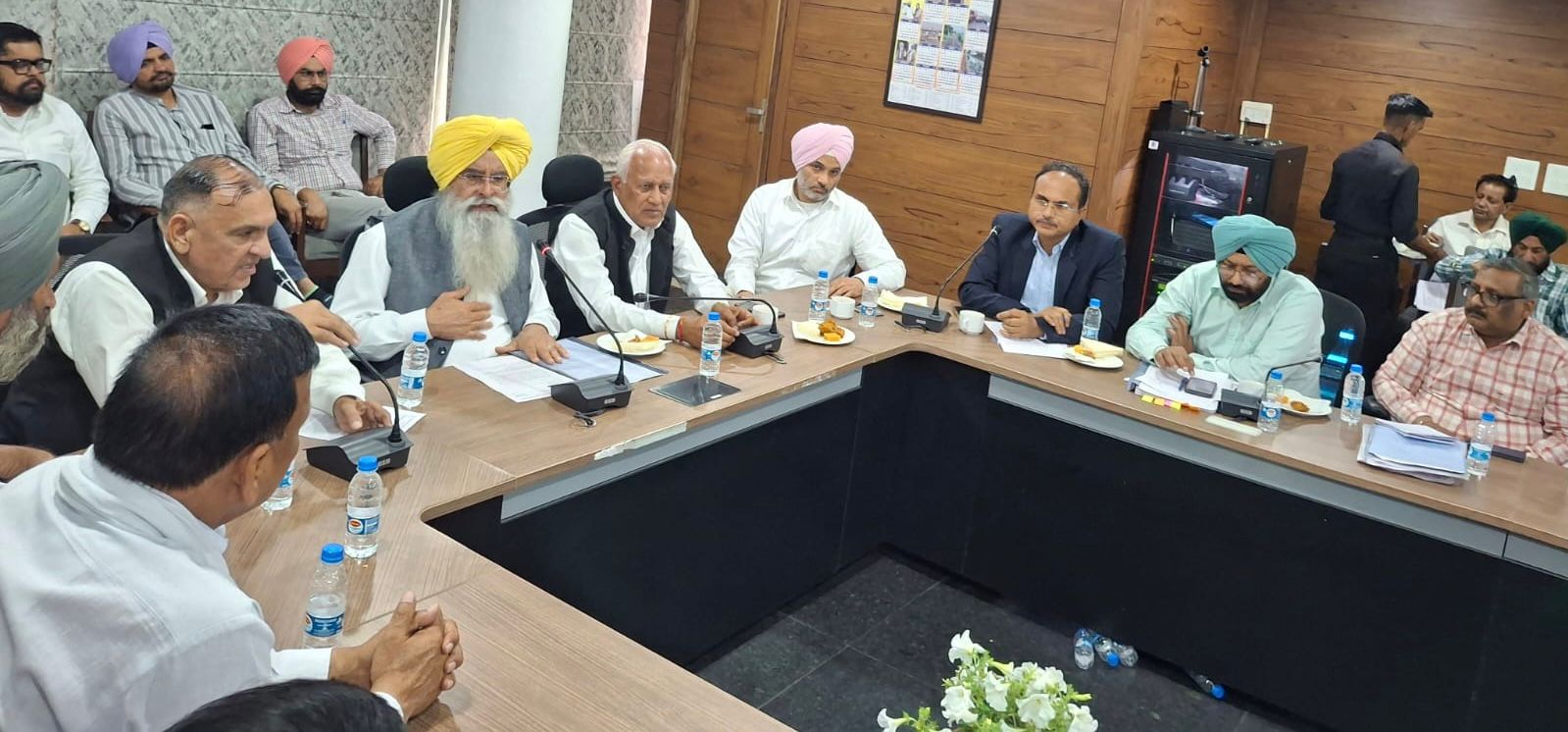
The decisions were taken during a meeting of the Council of Ministers chaired by the Chief Minister. The Cabinet also approved the recruitment of 1,158 Assistant Professors and Librarians in government colleges, besides clearing several policy reforms related to health, education, sports, prisons and urban development.
According to the Chief Minister’s Office, the Cabinet approved the draft Bill for establishing the Sri Guru Teg Bahadur World Class University at Anandpur Sahib, which will now be introduced in the Punjab Assembly. The Cabinet also authorised the Chief Minister to take necessary decisions to ensure the timely establishment of the university.
The government said the university would be developed as a premier higher education institution aimed at promoting academic excellence, research and global collaboration while also enhancing Punjab’s higher education ecosystem.
Industrial policy under ‘Punjab Udyog Kranti’
The Cabinet also gave a green signal to the Industrial and Business Development Policy-2026 along with sector-specific policies, operational guidelines and schemes under the flagship initiative “Punjab Udyog Kranti.”
The policy seeks to create a comprehensive framework to boost industrialisation through fiscal incentives, sector-based development strategies, employment generation and improved infrastructure. It also aims to promote emerging and sunrise industries in the state and accelerate economic growth.
Officials said the policy is expected to significantly strengthen Punjab’s industrial ecosystem, attract new investment, and encourage the expansion and modernisation of existing industrial units.
New policy for sportspersons’ reservation
The Cabinet also approved a policy to further streamline reservations for sportspersons in government jobs and admissions to educational institutions.
The new framework lays down objective criteria for assigning marks to sports certificates. Under the revised system, 75 per cent weightage will be given to sports achievements, while 25 per cent weightage will be based on performance in the entrance test.
Amendment in health service rules
In another decision, the Cabinet approved an amendment to the Punjab Health and Family Welfare Technical (Group-C) Service Rules, 2016.
The amendment includes a Diploma in Pharmacy as an additional educational qualification for recruitment to the post of pharmacist. The move will enable diploma holders to apply for these posts and is expected to strengthen healthcare service delivery across the state.
₹1 crore ex gratia for Home Guards volunteer
In a humanitarian gesture, the Cabinet approved an ex gratia grant of ₹1 crore to the family of Punjab Home Guards volunteer Ashok Kumar, who lost his life while performing duty in Gurdaspur.
The government described the decision as a recognition of his sacrifice in safeguarding the country’s unity and integrity.
Recruitment of 1,158 faculty posts
The Cabinet also approved the recruitment of 1,158 posts in government colleges, including 1,091 Assistant Professors and 67 Librarians.
The recruitment will be conducted through the Punjab Public Service Commission in accordance with the UGC Regulations, 2018. The government will withdraw the earlier requisition of 612 Assistant Professor posts pending with the commission and submit a fresh consolidated requisition.
To ensure fairness, candidates who applied under the October 19, 2021, advertisement will be granted a one-time relaxation of the upper age limit, while reserved categories will continue to receive age relaxation as per government policy.
World-class MICE project approved.
The Cabinet also approved a world-class MICE (Meetings, Incentives, Conferences and Exhibitions) project along with a multi-purpose structure to host commercial, scientific, educational and government events.
To facilitate such projects, the government has created a separate category for MICE projects by amending a notification issued on June 4, 2025. Charges for these projects have been fixed at 50 per cent of commercial charges, making them more viable for investors.
Medicity policy amended
The Cabinet also approved amendments to the Medicity Policy-2014, allowing certain sites to be disposed of under the existing policy, while others will be allotted through e-auction.
The authority to decide which sites will be put up for e-auction has been delegated to the Minister for Housing and Urban Development. While eligibility conditions for e-auction participation have been relaxed, the land will continue to be used exclusively for hospital purposes.
GMADA education plot policy
The Cabinet approved a new policy for allotment of education plots for establishing K-12 and senior secondary schools by the Greater Mohali Area Development Authority (GMADA).
The policy, formulated based on recommendations of Boston Consulting Group (India), introduces technical eligibility criteria to ensure that only credible educational institutions acquire land for school development in the Greater Mohali region, including SAS Nagar (Mohali), New Chandigarh and Aerocity.
GLADA property prices rationalised
The Cabinet also approved the rationalisation of property prices under the Greater Ludhiana Area Development Authority based on valuation reports submitted by independent valuers.
The revised rates will serve as the base reserve price for e-auctions, and allotment will be made to the highest bidder as per the prevailing e-auction policy. The rates will remain valid for one year and will be revised periodically thereafter.
Amendment in Punjab Civil Services Rules
In another welfare-oriented decision, the Cabinet approved an amendment to Rule 6.17(3) of the Punjab Civil Services Rules (Volume-II) to expand the definition of family pension.
Under the revised rule, dependent disabled siblings of government employees will now also be entitled to receive family pension benefits.
New prisons law to replace colonial-era act
The Cabinet also approved the enactment of the Punjab Prisons and Correctional Services Bill, 2026, which will replace the colonial-era Prisons Act, 1894, currently in force.
The new legislation aims to modernise prison administration and strengthen jail security through advanced technology, surveillance systems, and modern equipment, creating a more secure and efficient correctional framework in the state.
Officials said the wide range of decisions taken at the Cabinet meeting is expected to significantly strengthen governance, improve public services and accelerate economic development across Punjab.