




Listen To This Post
“This fight cannot be won by the police alone. Drug addiction is a social disease, and society itself must become part of the cure,” Chief Minister Bhagwant Mann said.
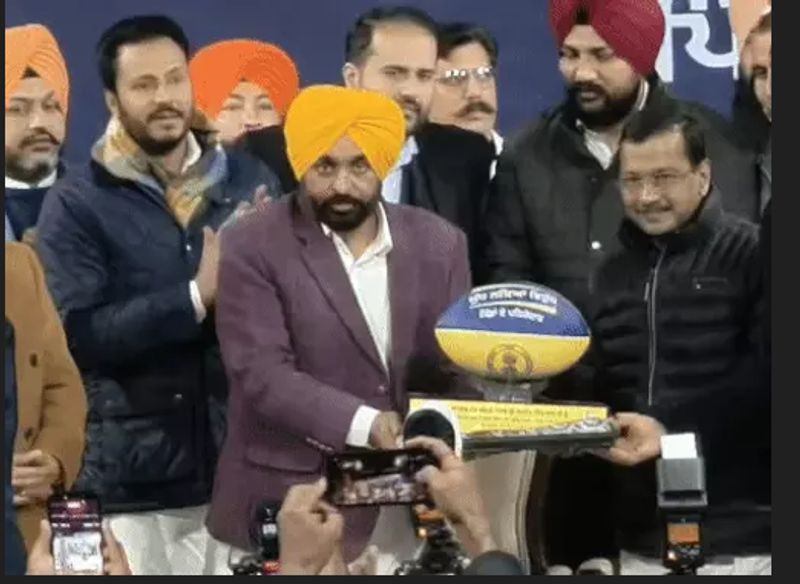
Phagwara: The Punjab Government on Wednesday formally launched the second phase of its flagship ‘War Against Drugs’ campaign at Lovely Professional University, marking a strategic shift from a predominantly policing-driven crackdown to a people-centric social movement anchored in citizen participation, institutional coordination and transparent enforcement.
Addressing a large gathering of students, civil society representatives, and officials, Arvind Kejriwal, AAP national convener, and Bhagwant Singh Mann asserted that Punjab’s battle against narcotics has entered a decisive phase, where community ownership will be as critical as law enforcement.
“This fight cannot be won by the police alone. Drug addiction is a social disease, and society itself must become part of the cure,” Chief Minister Mann said, stressing that fear-free citizen reporting and ethical governance were essential to dismantle entrenched drug networks.
First Phase: Enforcement With Impact
The state leadership said Phase I of the campaign yielded significant outcomes, including:
-
Nearly 30,000 cases registered under the NDPS Act
-
Over 40,000 alleged drug traffickers arrested.
-
Action against more than 350 major suppliers and kingpins
-
Freezing of properties worth hundreds of crores linked to drug syndicates
-
Rehabilitation and counselling support for nearly 90,000 youth, many of whom have reportedly returned to mainstream social and economic life
Senior police officials also highlighted the recovery of over 250 suspected cross-border drones, underlining sustained efforts to disrupt international and inter-state narcotics supply chains.
Phase-II: From Crackdown to Community Movement
The second phase, leaders said, will deepen public participation and restore citizens’ trust in the system. Manish Sisodia noted that while Phase I focused on aggressive action against traffickers, Phase II would expand community-led vigilance.
Citizens will be encouraged to play a decisive role through:
-
Confidential reporting systems and digital platforms
-
Village- and ward-level defence committees
-
State-monitored helplines with identity protection
-
Neighbourhood outreach and awareness programmes
“These mechanisms will ensure people can report drug activity without fear, pressure or political interference,” Sisodia said, describing the effort as a “public crackdown backed by the state.”
‘No One Is Untouchable’: Kejriwal
Arvind Kejriwal said the campaign’s credibility rests on taking action against those previously considered beyond reach.
“The fight against drugs must be fearless, non-discriminatory and transparent. If people see that even the powerful are not spared, trust will follow,” he said, adding that accountability and ethics would remain central to the campaign.
Political Will Over Political Cost
Rajya Sabha MP Ashok Mittal praised the initiative, saying strict action against drug syndicates could politically inconvenience the ruling leadership but was necessary to protect Punjab’s youth. “This is about safeguarding Punjab’s social fabric and future generations, not short-term political comfort,” Mittal said.
Infrastructure Push, ₹40-Crore Backing
Officials announced that the government has approved nearly ₹40 crore to strengthen the operational backbone of the campaign. The funding will be used to:
-
Expand CCTV surveillance networks.
-
Enhance anti-drone systems
-
Improve police mobility and response capability.
-
Reinforce monitoring and intelligence infrastructure.
Community mobilisation drives will be intensified from January 10 to 30, with volunteers, local bodies, and educational institutions roped in to raise awareness and strengthen vigilance.
A Long-Term Social Commitment
Summing up the vision of Phase-II, the leadership said the ‘War Against Drugs’ is no longer just a law-and-order initiative but a long-term social commitment—one that seeks to reclaim trust, empower communities and ensure that Punjab’s youth are protected from the grip of narcotics. “The message is clear,” Mann said. “This fight belongs to every Punjabi—and together, we will see it through.”