



Listen To This Post
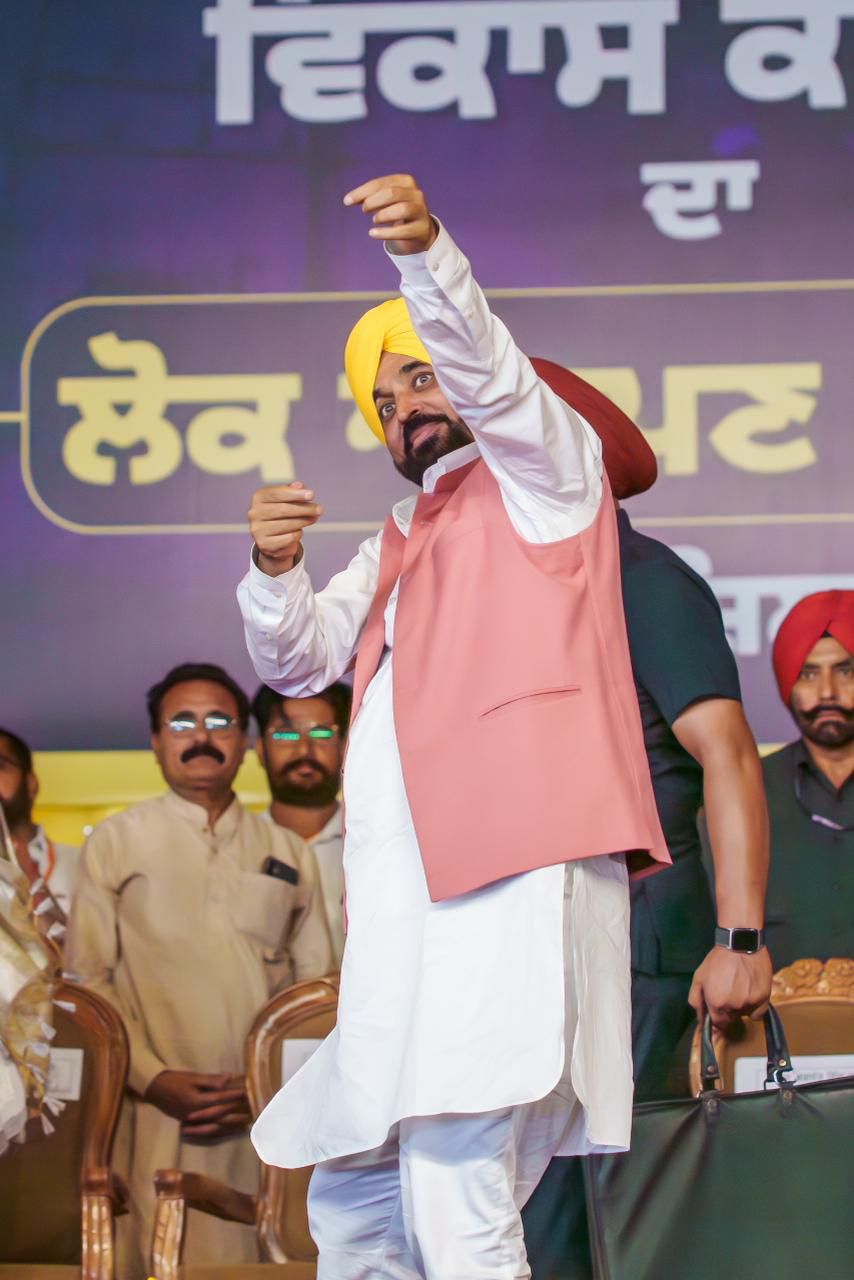
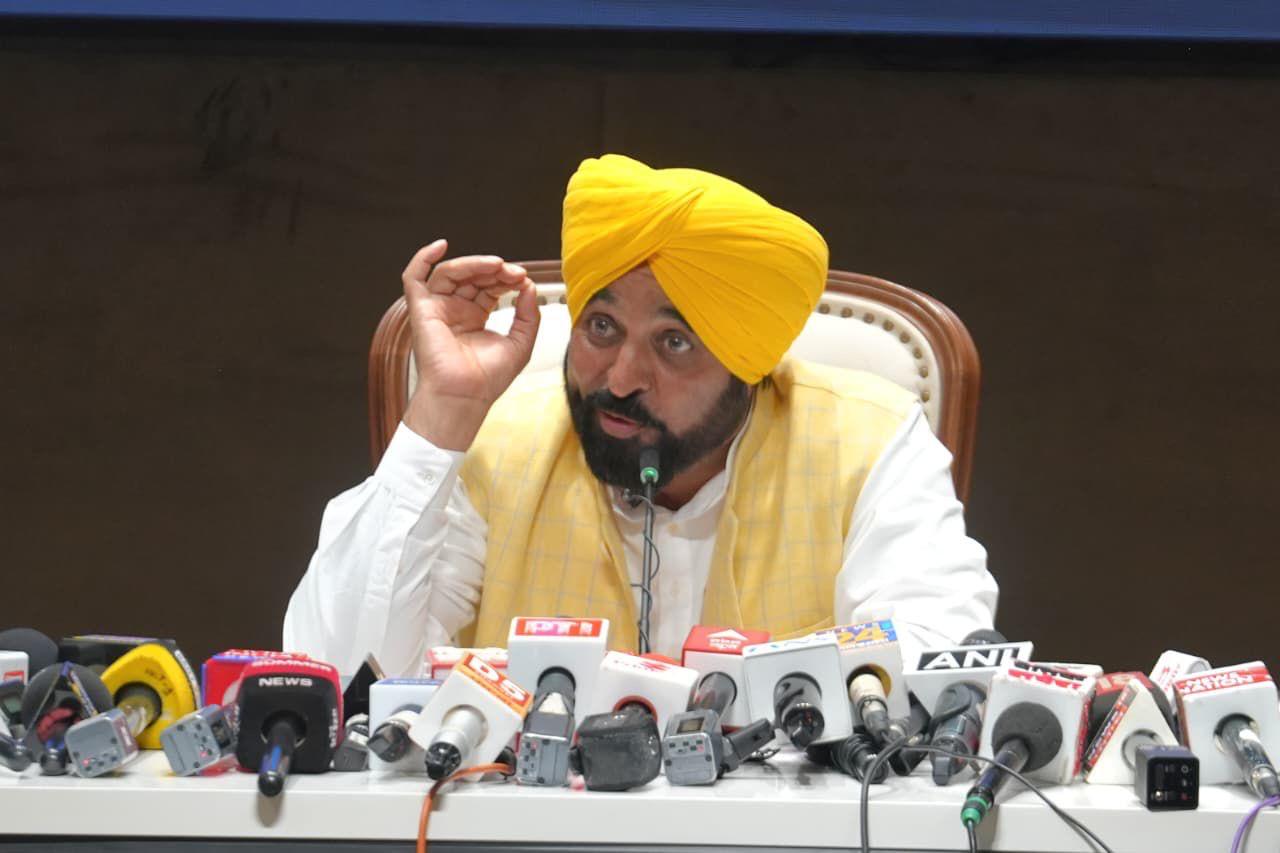
CHANDIGARH: Four years into power, the Aam Aadmi Party government in Punjab is in the mood to take stock — and Chief Minister Bhagwant Singh Mann did exactly that on Thursday, presenting what he described as a comprehensive report card under the ruling party’s celebratory series, ‘Shandaar Chaar Saal Bhagwant Mann De Naal.’ The occasion was not merely an exercise in self-congratulation; it was a deliberate and pointed contrast with the governments that came before.
A Record on Jobs — and a Pointed Message to Rivals
The centrepiece of the Chief Minister’s presentation was employment. Mann claimed that his government has provided 65,264 government jobs in four years — a figure he described as the highest in Punjab’s history. The numbers were broken down across departments: 16,308 in education, 12,966 in police, 8,306 in the power sector, 6,176 in health, and 5,556 in local bodies, with the remainder distributed across other government wings.
“Congress, BJP and the Akalis gave jobs to their families and relatives,” Mann said, his tone sharp and unapologetic. “We gave them to common people — without bribes, without recommendations.”
He was equally pointed in his address to a structural injustice he attributed to past governments. Thousands of young aspirants, he argued, had aged out of eligibility windows not through any fault of their own, but because of delayed and dysfunctional recruitment processes under earlier regimes. His government’s response was a five-year age relaxation—a concession he framed as an act of correction rather than charity.
The Chief Minister also noted that the recruitment process under his watch had been remarkably clean by any measure. No paper leaks occurred, no recruitment was successfully challenged in court, and several candidates secured positions in more than one department. In what he presented as perhaps the most telling sign of renewed confidence, many young Punjabis who had moved abroad returned home to take up these jobs.
“Youth now prefer preparing for government jobs instead of going to IELTS centres,” he said — a line that carried more cultural weight in Punjab than it might elsewhere, given the state’s long and complicated relationship with emigration.
Skills, Self-Employment and the Private Sector
Beyond direct government employment, the Mann administration outlined a parallel ecosystem of skilling and entrepreneurship. The Hunar Vikas Mission, its flagship initiative in this space, has established five Multi-Skill Development Centres across Amritsar, Bathinda, Hoshiarpur, Jalandhar, and Ludhiana. Of the 1.25 lakh youth trained at these centres, 73,250 have reportedly been placed in jobs — a placement rate the government cited with evident pride.
The government has also signed MoUs with technology giants Microsoft and IBM to provide training in artificial intelligence, cybersecurity, and cloud technologies—an acknowledgement that Punjab’s economic future will require its youth to compete not just locally but globally.
On the entrepreneurship front, 1,799 self-employment camps helped nearly two lakh young people secure loans to start their own businesses. An additional 6,724 placement camps and job fairs opened doors for lakhs more. Even in the private sector, Mann claimed, around seven lakh individuals found employment — a figure he attributed, at least in part, to the improving business environment the state government is working to create.
Digital Punjab: Governance Delivered at the Doorstep
Perhaps the most visible transformation the government pointed to was the rapid digitisation of public services — what it has collectively branded as Digital Punjab.
Across the state, 544 Sewa Kendras now offer over 465 services. Monthly footfall stands at 30 lakh — roughly one lakh people every single day — and more than 8.20 crore digital services have been delivered since the initiative took shape. Certificates for birth, death, and marriage are now dispatched via SMS and WhatsApp, with over one crore certificates delivered digitally to date. Notably, the pendency rate for services has been slashed from 14 per cent to just 0.52 per cent — a figure the Chief Minister cited as evidence of systemic, rather than cosmetic, reform.
For those who cannot travel to Sewa Kendras, the government launched the Bhagwant Mann Tuhade Dwar scheme in December 2023 — a doorstep delivery model that allows 437 services to be accessed from home via the 1076 helpline. Designed particularly with older people and differently-abled people in mind, the scheme has already benefited 2.66 lakh people.
Transport bureaucracy, long a source of quiet frustration for ordinary citizens, has also been overhauled. Faceless RTO services — covering 56 functions including driving licences and registration certificates — have eliminated the need to visit regional transport offices altogether. So far, 25,236 people have availed these services without stepping into a government office.
Land, Compensation and Cutting Out the Middleman
In property registration, the government’s Easy Registry system has done away with the layers of intermediaries that once made a routine visit to a Tehsil office an exercise in navigating corruption. Over six lakh documents have been registered under the new system since July 2025. Citizens can now register property online at any Sub-Registrar office in their district and receive real-time updates via WhatsApp. The system also includes a complaint mechanism for reporting bribery — a built-in accountability feature that marks a departure from earlier norms.
On disaster relief, Punjab claims a national first: a Digital Flood Compensation System that has distributed relief digitally across 3,700 villages, eliminating scope for wrongful claims and ensuring that compensation reaches those it is intended for.
Zero Tolerance on Corruption — With Numbers to Show
The anti-corruption drive, the Chief Minister insisted, is not a slogan but a documented record. Since the Anti-Corruption Action Line was launched on March 23, 2022, it has received 12,218 complaints. Of these, 10,820 were forwarded to relevant departments, and 1,398 were referred to the Vigilance Bureau. The Bureau has conducted 487 raids, registered 534 cases against 1,215 accused, and achieved convictions in 143 of those cases. Among those arrested are 16 gazetted officers, 161 government employees, and 88 police personnel.
Investigations, Mann said, are currently underway against 357 individuals — including 112 gazetted officers and 162 government employees. Several officials have been dismissed from service.
Preparing Punjab’s Defenders — and Its Farmers
The government also highlighted significant investments in defence preparedness. Maharaja Ranjit Singh Armed Forces Preparatory Institute has trained 218 boys, of whom 106 secured admission to the NDA and affiliated academies, and 85 went on to become commissioned officers. The Mai Bhago Armed Forces Preparatory Institute, established for young women, trained 199 girls, of whom 24 were commissioned as officers. A new institute in Hoshiarpur is in the pipeline.
On the agricultural front, Mann announced that the government is exploring burying high-tension electricity wires running through farmland. This initiative would reduce crop damage and safety risks. He said the project would begin from his native village, where 413 tube wells and 1,100 electricity poles spread across 2,000 acres would be the first to see the change.
He also struck a note of solidarity with the Aarthiyas — the commission agents who form the backbone of Punjab’s grain trade — while making clear the limits of what a state government can do. “I have raised their genuine demands multiple times before the Government of India,” he said, “but no attention has been paid.” Regarding wheat procurement, he assured that all arrangements are in place for a smooth, hassle-free season.
A Session on Sacrilege — and a Sharp Word for the BJP
Rounding out the press conference, Mann announced that a special Assembly session has been convened on the occasion of Vaisakhi to amend the Jagat Jot Sri Guru Granth Sahib Satkar Act, 2008. The proposed amendment would prescribe a minimum of ten years’ imprisonment — extendable to life — for anyone found guilty of sacrilege. Consultations with Sant Samaj and legal experts are currently underway.
On the political front, Mann was in no mood to absorb blame silently. Asked about criticism directed at his government, he pushed back with characteristic bluntness. “It is a paradoxical situation,” he said, “that Nehru is responsible for everything bad that has taken place in the country, Arvind Kejriwal for Delhi, and I for Punjab and Chandigarh.” The BJP, he charged, was evading accountability — from the unfulfilled promise of ₹15 lakh in bank accounts to the absence of a legal guarantee on MSP — while using what he called “stooges” to target political opponents.