


Listen To This Post
Chandigarh: In a landmark achievement for Punjab’s public education system, 305 students from government schools have qualified in the first attempt of JEE Mains 2026, marking a remarkable 63 per cent rise from last year’s 187 qualifiers.
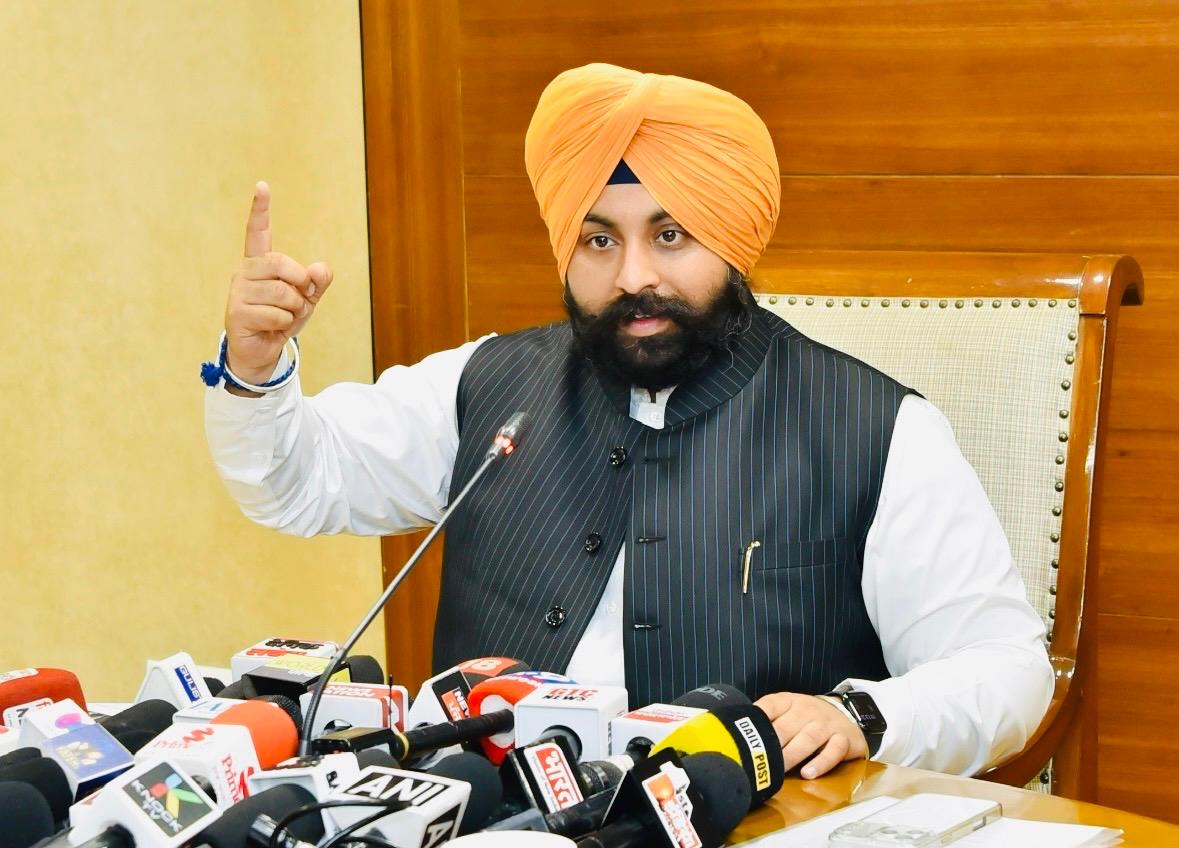
Hailing the achievement as a defining milestone of the state’s “Shikhiya Kranti”, Punjab Education Minister Harjot Singh Bains credited the transformative reforms initiated under Chief Minister Bhagwant Singh Mann for the historic performance.
Addressing a press conference at Punjab Bhawan, Bains said the results demonstrate how focused policy interventions, structured mentoring and improved infrastructure have elevated the standard of government schools. He noted that five students from his constituency Sri Anandpur Sahib also cleared the highly competitive exam.
“Education standards are measured by outcomes. On this parameter, Punjab is today among the top-performing states in the country,” the Minister asserted. To further strengthen the momentum, the state government will organise a special three-week residential training camp to prepare qualified students for the next stage — JEE Advanced
From Modest Homes to National Success Stories
Behind the impressive numbers lie deeply inspiring human stories. Bhavishya, a Grade 12 Non-Medical student from School of Eminence, Amritsar, secured an outstanding 98.182 percentile despite belonging to a family with an annual income of just ₹1.5 lakh. His father runs a small mobile repair shop while his mother works as a tailor.
Similarly, Dilkhush Jha from Bathinda, whose father is a labourer and whose family income is ₹1.2 lakh annually, scored 95.091 percentile through self-study and PACE support.
Priyanka Sharma of School of Eminence, Sangrur, scored 96.44 percentile while simultaneously preparing for NEET. Harmandeep Sharma of Chhajli secured an impressive 98.75 percentile without any private tuition, relying entirely on school mentoring and PACE resources.
Palak Kaur from Amritsar, who lost her father and is raised by her mother on an annual income below ₹1 lakh, scored 90.11 percentile. Kajal from SAS Nagar, aspiring to pursue Computer Science at Indian Institute of Technology Madras, secured 92.66 percentile despite her family earning around ₹80,000 annually. Pardeep from SAS Nagar, son of a factory labourer, achieved 93.11 percentile.
“These are children of labourers, tailors, security guards and small workers. Their dreams of Indian Institute of Technology Bombay, Indian Institute of Technology Delhi and BITS Pilani are now within reach,” Bains said.
Notably, 134 girls are among the qualifiers, signalling growing gender equity in STEM education within government schools.
PACE Portal and Structured Coaching Narrow the Gap
The Minister attributed the breakthrough to the Punjab Government’s structured two-year preparation model under the PACE (Punjab Academic Coaching for Excellence) initiative. The programme offers:
-
Free high-quality coaching through the PACE portal
-
Summer and winter residential camps
-
Regular mock tests and performance analytics
-
Digital learning tools
-
Mentorship support from expert faculty and partner institutions
Bains emphasised that the results represent only Phase 1 of JEE Mains and expressed confidence that the final tally would increase further after the second attempt.
“No other state government has achieved this scale of success through its government schools,” he said, congratulating the students, their parents and teachers. With 305 qualifiers in a single year and rising participation of students from economically weaker sections, Punjab’s Shikhiya Kranti appears to be reshaping the narrative around public education — turning classrooms into launchpads for national-level success.