




Listen To This Post
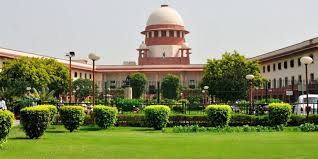
New Delhi: The Supreme Court on Thursday stayed the operation of the University Grants Commission (Promotion of Equity in Higher Education Institutions) Regulations, 2026, observing that the framework appeared “vague and capable of misuse” and could have “dangerous impacts” if allowed to operate in its present form. The regulations had triggered widespread protests across university and college campuses nationwide.
A Bench comprising Chief Justice of India Surya Kant and Justice Joymalya Bagchi said the court’s intervention was necessary to prevent deep social fissures. “If we don’t intervene, it will lead to dangerous impacts. It will divide society and have grave consequences,” the Bench remarked while hearing a batch of petitions challenging the new UGC rules.
Issuing notices to the Centre and the UGC, the court posted the matter for further hearing on March 19. Solicitor General Tushar Mehta accepted notice on behalf of the Union government.
While placing the 2026 Regulations in abeyance, the Bench invoked its plenary powers under Article 142 of the Constitution to revive the UGC’s 2012 Regulations on the issue. This interim measure ensures continued grievance redressal for caste-based discrimination. Still, it also prompts questions about the long-term legal and policy implications of reverting to previous regulations amid ongoing debates.
During the hearing, the CJI underlined the importance of unity and social harmony within educational institutions. “Unity of India must be reflected in educational institutions. After 75 years, are we becoming a regressive society? Students come from the South and the North-East, carrying their culture, and someone alien to it starts commenting on them. There are inter-caste marriages, and we have all lived together in hostels,” he observed.
The top court also expressed strong disapproval of any proposal to create separate hostels for Scheduled Caste and Scheduled Tribe students, saying it would undermine a collective sense of inclusion. “For God’s sake, don’t do that,” the CJI said, warning that such measures would further entrench divisions rather than promote inclusion.
The Bench clubbed three petitions filed by Vineet Jindal, Rahul Dewan and others with an earlier petition pending since 2019, noting that the issues raised earlier would have a direct bearing on the constitutional validity of the new regulations. “Since the issues raised in the 2019 plea shall have a bearing while examining constitutionality, let these petitions be tagged with the same,” the court ordered.
Indicating that a deeper review was necessary to build confidence in the process, the court proposed establishing a committee of experts to examine the language and scope of the regulations. “Prima facie, we find the language vague. Experts need to look into it so that it can be suitably modulated and not exploited,” the Bench said.
The judges also questioned why “caste-based discrimination” had been separately defined when the general definition of “discrimination” already covered all forms of discriminatory treatment. They further sought an explanation on why ragging had been omitted from the ambit of the new UGC Regulations.
Appearing for the petitioners, advocate Vishnu Shankar Jain argued that the 2026 Regulations treated students from the General Category as “presumptive offenders” and would vitiate the academic environment on campuses. He contended that the framework, by restricting caste-discrimination grievance mechanisms to Scheduled Castes, Scheduled Tribes and Other Backward Classes, excluded other students from institutional protection.
Notified on January 13, 2026, the UGC (Promotion of Equity in Higher Education Institutions) Regulations, 2026 apply to all higher educational institutions across the country. Regulation 3(c) defines “caste-based discrimination” as discrimination “only based on caste or tribe” against members of the SC, ST and OBC categories. The stated objective of the regulations is to eradicate discrimination based on religion, race, gender, place of birth, caste or disability—particularly against disadvantaged and marginalised groups—and to promote equity and inclusion in higher education.
The 2026 framework mandates that institutions establish Equal Opportunity Centres and Equity Committees to implement policies for disadvantaged groups and to investigate discrimination complaints.
However, the petitioners argued that in its present “exclusionary form”, the regulations deny grievance redressal to persons belonging to non-SC/ST/OBC categories, even if they face caste-based discrimination. They urged the court to direct that caste-based discrimination be defined in a caste-neutral, constitutionally compliant manner so that protection is extended to all individuals subjected to such discrimination, irrespective of their caste identity.
The Supreme Court’s interim order has effectively paused the implementation of the new UGC regime, reopening a broader debate on how equity, inclusion and anti-discrimination safeguards should be framed without deepening social divides within India’s higher education system.