




Listen To This Post
New Delhi: Nearly half a century after the landmark ruling in Bangalore Water Supply and Sewerage Board v. A. Rajappa dramatically expanded the meaning of “industry” under the Industrial Disputes Act, 1947, the Supreme Court of India has once again stepped into a debate that lies at the heart of India’s labour jurisprudence.
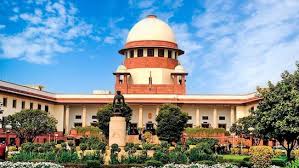
A nine-judge Constitution Bench led by Chief Justice Surya Kant has begun hearing arguments to determine whether the sweeping interpretation adopted in 1978 remains relevant in an economy that has undergone a profound structural transformation since then.
The issue before the court is not merely a technical question of statutory interpretation. It goes to the core of how India balances workers’ protections, economic reforms and the evolving role of the state in a liberalised economy.
The Legacy of the 1978 Judgment
The 1978 judgment authored by Justice V. R. Krishna Iyer remains one of the most influential rulings in Indian labour law. The court had then held that any systematic activity organised through cooperation between employer and employee for producing goods or services could fall within the ambit of “industry”, regardless of whether the organisation was profit-oriented.
The ruling significantly broadened labour protections by bringing a wide range of institutions — including hospitals, educational institutions and certain government departments — within the regulatory framework of the Industrial Disputes Act.
At the time, the decision reflected the ideological orientation of a state-led welfare economy, where labour protection was considered central to social justice.
A Changed Economic Landscape
However, India in 2026 is far removed from the India of 1978. The economic reforms initiated in 1991, built around liberalisation, privatisation and globalisation, fundamentally altered the structure of the economy.
During the hearing, Justice B. V. Nagarathna pointed precisely to this shift, observing that private entities now undertake many activities once performed by the state. Her remarks underscore the court’s central dilemma: Should the definition of “industry” remain expansive, or be recalibrated to a changed economic environment?
The answer has implications not just for labour law but also for governance. A very broad definition could extend labour regulations to sectors that today function in a different institutional context, while a restrictive interpretation may weaken worker protections.
The Labour Code Factor
The debate has also acquired urgency because India has recently undertaken a comprehensive restructuring of labour laws through new legislation such as the Industrial Relations Code, 2020.
These reforms aim to simplify and consolidate existing labour statutes, including provisions relating to industrial disputes. Whether the new framework alters the interpretation of “industry” under the original law is one of the key questions before the Constitution Bench.
If the court revises the definition, it could significantly influence how the new labour codes are implemented across sectors.
The Long Judicial Journey
The current hearing represents the culmination of a long judicial process. Over the years, conflicting rulings by different benches of the Supreme Court created uncertainty over the scope of the term “industry”.
A three-judge bench in 1996 reaffirmed the expansive interpretation in a dispute involving a social forestry department. However, a subsequent judgment in 2001 expressed reservations, triggering a chain of referrals that ultimately led to the present nine-judge Constitution Bench.
In 2017, a seven-judge bench led by then Chief Justice T. S. Thakur concluded that the issue had “serious and wide-ranging implications” and required reconsideration by an even larger bench.
A Question Beyond Law
The case highlights a broader tension within India’s development model. Labour protections designed for a state-dominated economy must now coexist with a dynamic private sector and a rapidly evolving services industry.
If the Supreme Court chooses to retain the expansive interpretation, it would reaffirm the judiciary’s longstanding emphasis on social welfare and worker rights. On the other hand, a narrower definition could signal judicial recognition of the economic realities of a liberalised market economy.
Either way, the verdict will not only redefine a statutory term but could reshape the contours of labour relations in India for decades to come. In that sense, the case is not just about the meaning of a word in a law passed in 1947. It is about how India reconciles constitutional commitments to social justice with the imperatives of a modern, globally integrated economy.