




Listen To This Post
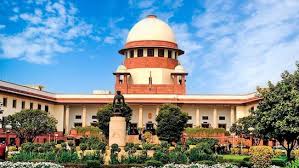
New Delhi: Noting that substantial questions of law were involved, the Supreme Court of India on Monday stayed the Delhi High Court order that had suspended the sentence and granted bail to expelled BJP leader Kuldeep Singh Sengar in the 2017 Unnao rape case, pending the hearing of his appeal against conviction.
A three-judge Special Vacation Bench led by Surya Kant, and comprising Justices J.K. Maheshwari and A.G. Masih, observed that the matter required careful consideration and stayed the operation of the high court’s December 23, 2025 order.
“The matter requires consideration. We are inclined to stay the order. While the general principle is that once a person is released, he should be heard, in view of the peculiar facts — where the convict stands convicted in a separate offence — we stay the operation of the Delhi High Court’s order dated December 23, 2025. Consequently, the respondent shall not be released pursuant to the said order,” the Bench said.
The top court issued notice to Sengar on a petition filed by the Central Bureau of Investigation challenging the high court’s order, and directed him to file his response within four weeks. Notice was also issued on a separate petition filed by advocates Anjale Patel and Pooja Shilpkar challenging the suspension of sentence.
The Supreme Court’s intervention came after Solicitor General Tushar Mehta, appearing for the CBI, urged an immediate stay on the high court’s order, which had triggered protests by the survivor and civil rights activists.
High Court Reasoning Under Challenge
The Delhi High Court had held that the aggravated offence provisions under Section 5(c) of the Protection of Children from Sexual Offences (POCSO) Act and Section 376(2) of the Indian Penal Code were not attracted in Sengar’s case. It had further ruled that Sengar could not be categorised as a “public servant” under the relevant legal provisions, and accordingly suspended his sentence.
Defending the high court’s order, senior advocates Siddharth Dave and K. Hariharan, appearing for Sengar, had argued that a penal statute cannot import definitions from another statute.
The high court had noted that Sengar — who is serving life imprisonment in the rape case — had already undergone more than seven years and five months of incarceration. It suspended his sentence during the pendency of his appeal against the December 2019 trial court conviction, subject to strict conditions.
These included furnishing a personal bond of Rs 15 lakh with three sureties of the same amount, a prohibition on entering within a five-kilometre radius of the survivor’s residence in Delhi, and a restraint on contacting or threatening the survivor or her mother. Any violation, the high court had said, would lead to automatic cancellation of bail.
Custodial Death Case Keeps Sengar in Jail
Despite the high court’s order, Sengar has remained in jail as he is also serving a 10-year sentence in a separate case relating to the custodial death of the survivor’s father, in which he has not been granted bail. His appeal in that case, seeking suspension of sentence on the ground of long incarceration, is also pending.
The Unnao rape case and other connected matters were transferred from Uttar Pradesh to Delhi by the Supreme Court in August 2019 to ensure a fair trial.
With Monday’s order, the Supreme Court has effectively halted Sengar’s release, underscoring that the legal questions raised by the Delhi High Court’s interpretation warrant closer scrutiny.