





Listen To This Post
New Delhi: In a quiet but significant revision within 24 hours, the White House has updated its fact sheet on the proposed India–US interim trade deal, altering key language and removing several references that did not appear in the original Joint Statement issued by the two governments.
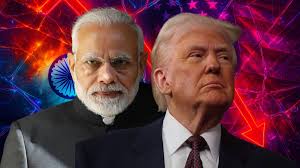
On February 6, India and the United States released a Joint Statement following discussions between Prime Minister Narendra Modi and US President Donald Trump, outlining the broad contours of an interim understanding. However, on February 9, the White House issued a more detailed fact sheet that included specific commitments either absent from or differently framed in the joint declaration.
That fact sheet has now been quietly revised.
Softer Language on $500 Billion Purchase
One of the most notable changes concerns India’s proposed purchase of American goods. The earlier version stated that India would “commit” to buying $500 billion worth of US products. The updated document now says India “intends” to purchase those goods—significantly softening the obligation implied in the earlier wording.
Digital Services Tax Reference Dropped
The earlier fact sheet had asserted that India would “remove its digital services tax.” That line has now been entirely deleted from the revised version, bringing the US document closer to the language of the February 6 Joint Statement, which had made no such reference.
Pulses Removed, Farm Access Still Broader
There has also been a change regarding agricultural imports. The previous fact sheet mentioned that India would import pulses from the United States. In the updated version, pulses are no longer mentioned.
Even so, the US fact sheet continues to refer to broader agricultural market access than what was explicitly recorded in the Joint Statement. It states that India has agreed to “eliminate or reduce tariffs” on US industrial goods and a wide range of farm products, including dried distillers’ grains (DDGs), red sorghum, tree nuts, fruits, soybean oil, wine and spirits.
The February 6 Joint Statement had clearly specified that imports of US red sorghum would be restricted to animal feed use. This condition is not mentioned in the White House fact sheet.
Agricultural provisions remain politically sensitive in India, where tariff protections and farm imports are closely scrutinised.
Tariff Rollback and Energy Linkage
The US document also states that during a phone call between President Trump and Prime Minister Modi, Washington agreed to remove the additional 25 per cent tariff imposed on Indian imports. According to the US version, the decision was linked to India’s commitment to halt purchases of Russian oil.
President Trump subsequently signed an Executive Order withdrawing the additional tariff and reducing the reciprocal tariff on India from 25 per cent to 18 per cent.
India, however, has consistently maintained that its energy sourcing decisions are guided by national interest and energy security considerations.
Negotiations Under Scrutiny
The differences between the February 6 Joint Statement and the revised White House fact sheet—and the speed with which corrections were made—are likely to come under scrutiny as negotiations move toward a broader bilateral trade agreement.
The episode underscores the sensitivities surrounding trade, agriculture and energy diplomacy at a time when both governments are attempting to frame the interim pact as a stepping stone toward a comprehensive economic partnership.