




Listen To This Post
Instead of chasing isolated operatives, the focus shifted to dismantling entire modules—from cross-border handlers and financiers to couriers, arms suppliers and local facilitators. This intelligence-led, systems-based approach marked a decisive break from reactive policing.
Chandigarh: By 2025, Punjab was facing a transformed internal security landscape where terrorism no longer operated as a standalone threat. Pakistan-based handlers, Khalistani extremist elements, drug traffickers and organised crime syndicates had converged into a single, mutually reinforcing ecosystem. Terror modules were increasingly funded through narcotics, executed via local gangsters, and coordinated using encrypted digital platforms—making detection far more complex than conventional militancy of the past.
Punjab Police responded by fundamentally recalibrating its strategy. Instead of chasing isolated operatives, the focus shifted to dismantling entire modules—from cross-border handlers and financiers to couriers, arms suppliers and local facilitators. This intelligence-led, systems-based approach marked a decisive break from reactive policing.
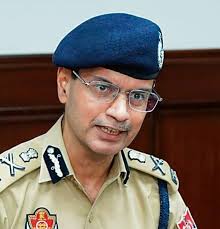
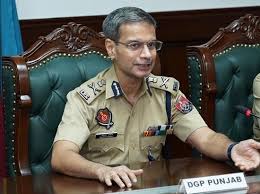
Explaining this shift, Gaurav Yadav, Director General of Police, Punjab, said: “Terrorism today is no longer just about ideology. It is fuelled by drugs, powered by organised crime and enabled by technology. Our strategy has been to hit the entire chain — funding, logistics, communication and local support — so that these networks collapse from within.”
Breaking the Terror–Drug–Gang Pipeline
Investigations revealed that heroin trafficking had become the primary financial backbone of terror activity in Punjab. Drone drops along the international border were not only feeding addiction but also funding arms purchases, safe houses and recruitment. Recognising this, Punjab Police integrated counter-terror and anti-narcotics operations, ensuring that every drug seizure translated into disruption of terror financing.
Divulging details on action against terrorists, DGP Yadav said that the Internal Security Wing has busted a total of 19 modules with the arrest of 131 persons this year and recovered nine rifles, 188 revolvers/pistols, 12 improvised explosive devices (IEDs), 11.62 kg RDX, 54 hand grenades, 32 detonators, four rocket propelled grenades, one sleeve of disposed rocket launcher, two timer switches, three walkie-talkie sets and eight remote controlled devices from their possession.
Highlighting the state’s relentless fight against drugs under the “Yudh Nashiyan Virudh” campaign launched on March 1, 2025, DGP informed that Punjab Police registered 29,784 FIRs and made 39,867 arrests, resulting in the recovery of the highest ever 2,021 kg of heroin in one year. Apart from recovering a big haul of heroin, police have also 26 kg of ICE, 698 kg of opium, 35,000 kg of poppy husk, 55.78 lakh intoxicant pills/capsules and Rs 16.81 Crores of drug money from the possession of arrested drug smugglers, he said.
Recounting the achievements of the Punjab Police against gangsters in 2025, the DGP said that the Anti-Gangster Task Force (AGTF), along with field units, has succeeded in busting 416 gangster/criminal modules, arresting 992 gangsters/criminals, and recovering 620 weapons and 252 vehicles used in criminal activities from their possession.
He informed that the AGTF has further upgraded its technical capabilities with the Punjab Artificial Intelligence System (PAIS 2.0), which now supports voice analysis, among other state-of-the-art features. The DGP said that there has been a sustained focus on issuing Red Notices and Blue Notices, and on coordinating with CBI and other central agencies for the extradition and deportation of foreign-based criminals, resulting in the issuance of 11 Red Notices and 2 Blue Notices this year. Anmol Bishnoi was geo-located by the Punjab Police, which shared information with the Central Agencies, resulting in his deportation, he said, while adding that Parminder Singh alias Pindi, involved in terror activities has been deported in 2025 and two other criminals who were country-hopping (Sukhdev Kumar alias Manish Bedi and Sajan Masih alias Goru) were tracked across countries and arrested in Mumbai.
Under the state-wide anti-drugs campaign, thousands of traffickers were arrested, large quantities of heroin were seized, and properties worth hundreds of crores were attached. Financial investigation units were embedded into NDPS cases to track hawala channels, shell accounts and digital money trails, choking the flow of funds at source.
Parallelly, organised crime networks—often used as terror proxies—were dismantled. Foreign handlers increasingly relied on gangsters for extortion, targeted killings and intimidation to insulate extremist operatives. Punjab Police cracked hundreds of gangster modules, seized sophisticated weapons, and worked closely with central agencies to track overseas fugitives, resulting in deportations and international alerts against key operatives. The combined assault on drugs and gangs significantly weakened terror logistics.
Technology, Intelligence and Preventive Policing
A defining element of Punjab Police’s success was its response to technology-driven threats. Drone-based arms drops, encrypted messaging platforms and cyber-enabled financial transactions had become routine tools of cross-border networks. The police countered this through enhanced border surveillance, anti-drone systems, real-time intelligence sharing with the BSF, and advanced cyber-forensics to monitor encrypted communication and dark web activity.
These efforts produced tangible results—terror modules were neutralised before attacks could materialise, large arms caches recovered, and digital evidence established clear links between narcotics proceeds and terror planning. Preventive measures, including de-addiction programmes, community policing and youth outreach, further shrank the recruitment pool for both drug syndicates and extremist networks. By shifting from reactive containment to proactive disruption, Punjab Police succeeded in blunting a sophisticated threat operating far beyond the border. Still, they are deeply embedded within society, reasserting state authority and restoring public confidence.
DGP highlighted that the Punjab Police has conducted investigations scientifically and professionally to achieve a conviction rate of 88 per cent, which is amongst the highest in the country. In the current year, 5,901 cases out of 6,728 decided cases have been convicted, he said. He said that the “Safe Punjab” helpline emerged as a game-changer, registering 10,889 FIRs based on 28,952 tips, with a 38% conversion rate. Property worth ₹263 crores belonging to 548 smugglers was frozen under Section 68-F of the NDPS Act, he said. In the current year, heroin seizures in Punjab are nearly 2/3rd of the total heroin seizures in the country, he said, while highlighting that Punjab’s share in national NDPS arrests stood at 25%, with nearly 20% of all NDPS cases registered in the state.