




Listen To This Post
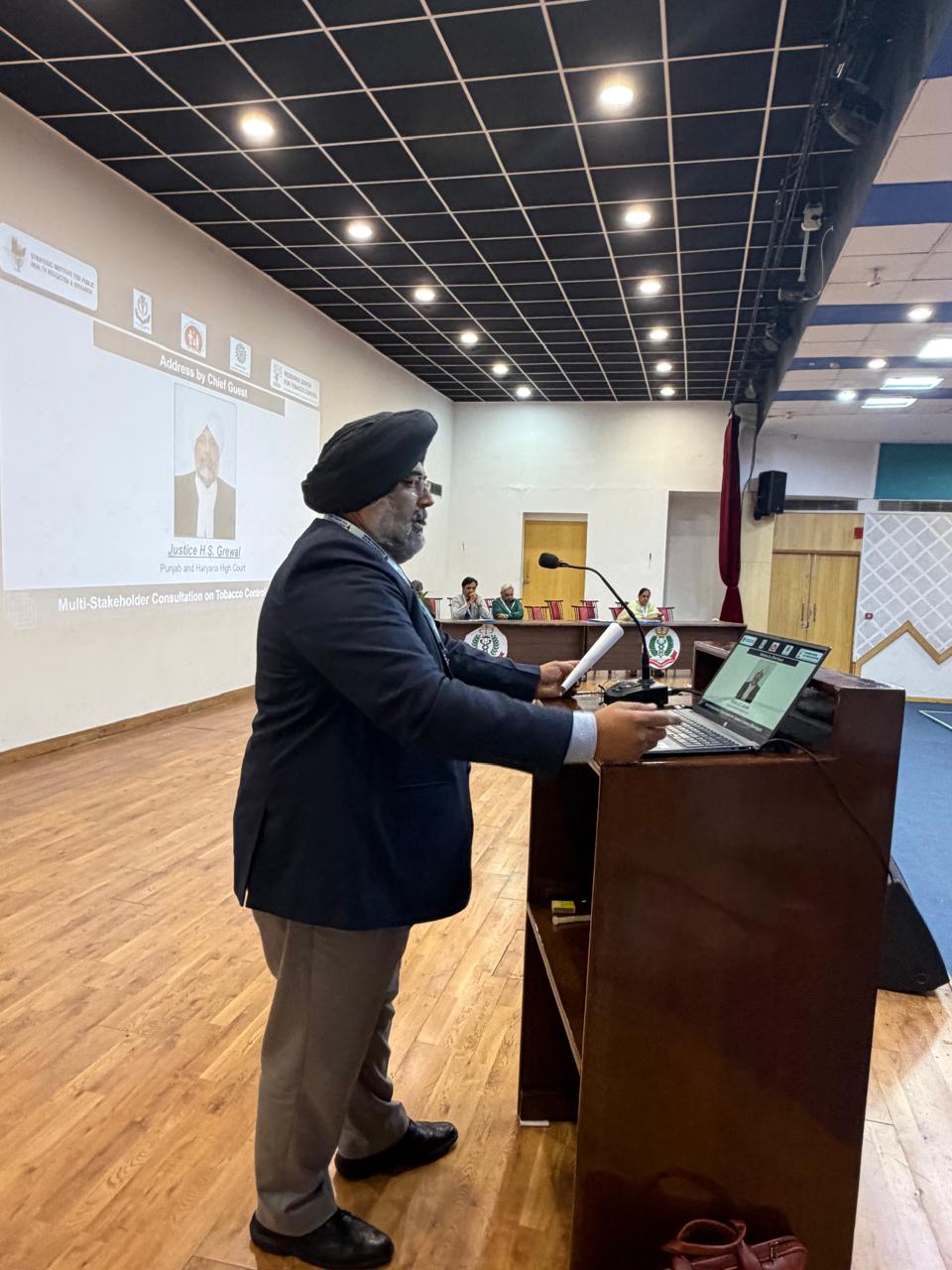
CHANDIGARH: Emphasising the urgent need for stronger institutional coordination to combat rising tobacco and nicotine addiction, the senior judge of the Punjab and Haryana High Court, Justice HS Grewal, on Saturday, said an active State-Level Coordination Committee in Chandigarh was essential for effective and comprehensive tobacco and nicotine control.
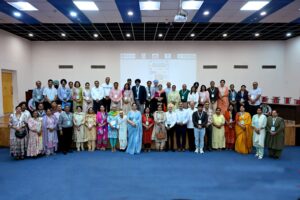
Addressing dignitaries, senior government officials, representatives of NGOs, academic institutions, healthcare professionals and civil society members during a programme organised in Chandigarh, Justice Grewal stressed that the coordination committee should meet regularly to ensure better implementation and enforcement of existing anti-tobacco laws.
“An active State-Level Coordination Committee in Chandigarh is a must for comprehensive tobacco and nicotine control, and there should be stronger enforcement of the existing legal provisions,” he said.
WHO’s theme for 2026 focuses on youth addiction
Dr Suman Singh, Director of Health Services (DHS), Chandigarh, elaborated on this year’s World No Tobacco Day 2026 theme announced by the World Health Organisation (WHO): “Unmasking the appeal – countering nicotine and tobacco addiction.”
Calling the theme “timely and urgent”, Dr Singh said the tobacco and nicotine industry was increasingly targeting children and adolescents through modern products such as:
- E-cigarettes
- Vapes
- Nicotine pouches
- Flavoured tobacco products
- Sleek gadget-like nicotine devices
“These products are intentionally designed to appear harmless, fashionable and socially acceptable,” she said.
Dr Singh warned that attractive packaging, fruit flavours, influencer promotion, digital marketing and easy online access were being strategically used to hook a new generation into nicotine addiction.
She said the Health Department was actively conducting raids on tobacco vendors and seizing illicit products under the National Tobacco Control Programme in coordination with other stakeholder departments.
Chandigarh must preserve smoke-free status: Mayor.
Saurabh Joshi said Chandigarh had been declared a Tobacco Smoke-Free City as far back as 2007 and stressed the need to preserve that achievement.
“It is our duty to maintain this status. The Municipal Corporation, being an important stakeholder, is fully ready to contribute,” he said.
The Mayor described the fight against tobacco as a battle against the manipulation and exploitation of young minds.
“This battle is not only against tobacco products — it is against manipulation, addiction and exploitation of young minds. We must ensure that our children inherit clean lungs, healthy minds and addiction-free futures,” he said. He further urged Chandigarh to emerge as a national leader in comprehensive tobacco and nicotine control.
Global nicotine addiction among children alarming: Experts
Dr JS Rana highlighted alarming global trends, stating that over 40 million children aged between 13 and 15 years worldwide were already using tobacco products, while nearly 15 million adolescents were estimated to be using e-cigarettes.
“This is not merely a public health concern; it is a direct assault on the health, future and productivity of our youth,” he said, adding that Chandigarh must adopt a decisive and coordinated strategy against emerging nicotine products.
WHO adviser addresses stakeholders through a video message
Dr Jagdish Kaur addressed the gathering through a video message and highlighted the significance of the WHO’s 2026 campaign theme.
She also referred to the month-long awareness campaign organised by the Strategic Institute for Public Health Education and Research (SIPHER), during which a mobile publicity van equipped with audiovisual facilities was deployed across Chandigarh for 15 days.
The campaign reportedly covered around 20 educational institutions as well as important public places in the city to spread awareness regarding the harmful effects of tobacco and nicotine products.
Push for a tobacco vendor licensing system.
Dr Rakesh Gupta said tobacco use continued to remain one of the leading preventable causes of disease and premature deaths globally.
He noted that adolescents and young people remained particularly vulnerable due to peer influence, easy accessibility of tobacco products and lack of awareness about health risks.
Dr Gupta said SIPHER would request the Municipal Corporation of Chandigarh to examine the possibility of introducing a tobacco vendor licensing system similar to those implemented in some other Indian states.
He also raised concern over emerging nicotine products such as e-cigarettes, already banned in India under the Prohibition of Electronic Cigarettes Act 2019, and oral nicotine pouches, which he said were illegal under the Drugs and Cosmetics Act.
Experts stress stricter enforcement of tobacco laws
Other prominent speakers at the programme included:
- Prof Sonu Goel
- Dr Sheeba Grewal
- Dr Ikreet Singh
- Dr Aastha Bagga
- Rajeev Kumar
The experts stressed the need for stricter enforcement of:
- COTPA 2003
- The Prohibition of Electronic Cigarettes Act, 2019
They particularly emphasised stronger implementation by police and enforcement agencies.
The discussions also focused on:
- The correlation between tuberculosis and tobacco use
- Youth participation in tobacco control campaigns
- Tobacco-Free Educational Institution (ToFEI) guidelines
- Regulation of emerging nicotine products
The multi-stakeholder approach emphasised
Among the other guests of honour were:
- Arun Verma
- Dr Anil Kumar
Participants collectively stressed that tackling tobacco and nicotine addiction required a coordinated multi-stakeholder approach involving government departments, educational institutions, healthcare professionals, civil society and law enforcement agencies.
The event concluded with a renewed call for stronger public awareness, stricter enforcement of anti-tobacco laws and proactive measures to protect young people from nicotine addiction and industry-driven marketing strategies.