





Listen To This Post
CHANDIGARH: The Punjab and Haryana High Court on Friday declined to interfere in the ongoing municipal election process, holding that the electoral exercise had already reached an advanced stage and that the petitioners had approached the court “very late in the day”.
A Bench comprising the Chief Justice and a Justice dismissed the petitions challenging the decision to hold the upcoming civic polls using ballot papers rather than Electronic Voting Machines (EVMs).
However, the court granted liberty to the petitioners to challenge the election process later through election petitions after the conclusion of the polls.
HC cites the advanced stage of the election process.
Delivering operative oral directions in open court, the Bench made it clear that the timing of the petition and the advanced stage of the election process were decisive factors behind its refusal to intervene.
“It is now too late in the day for us to pass any orders or issue any writ since the election program was published as early as May 13. The election program of municipal elections has progressed to an advanced stage, where the last date of withdrawal of candidature was May 19,” the Bench observed.
The order came barely four days before the elections to the Municipal Corporations, Municipal Councils, and Nagar Panchayats in Punjab.
Dispute over shift from EVMs to ballot papers
The controversy arose after the Punjab State Election Commission decided to conduct the municipal polls using traditional ballot papers rather than EVMs.
The petitioners had challenged the move, describing it as a return “to a bygone era” and arguing that courts had repeatedly upheld the credibility and constitutional validity of EVM-based voting.
Heavy reliance was placed on the Supreme Court judgment.
The petitioners argued that any attempt to undermine confidence in EVMs weakened democratic processes and should be “nipped in the bud”.
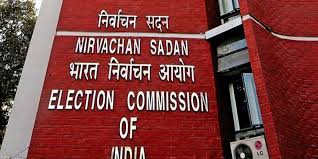
ECI had said EVMs were already on their way to Punjab
Significantly, during the previous hearing, they had informed the High Court that EVMs requisitioned for the Punjab civic polls were already “in transit” from Punjab.
Appearing for the ECI, counsel had submitted that the commissioning process for the machines could be completed in “just one day”.
The ECI had also stated that the only requirement pending was for the Punjab State Election Commission to specify the delivery location and identify the officer authorised to receive the machines.
According to the ECI, the machines were dispatched after the Punjab authorities allegedly showed reluctance to lift them from Rajasthan on their own.
Punjab opposed the plea’s maintainability.
The Punjab government, however, opposed the petitions primarily on the ground of maintainability.
had argued that once the election notification had been issued, judicial interference in the electoral process was impermissible under settled legal principles laid down by the Supreme Court.
The court was also informed that the printing of ballot papers had already commenced, making any last-minute changes to the voting system impractical.
State Election Commission cites logistical hurdles.
The Punjab State Election Commission maintained that even if EVMs became available immediately, it would still require 15 to 18 days to complete deployment-related formalities, including commissioning and preparation for polling.
According to the SEC, with less than a week remaining before elections, conducting polls through EVMs was no longer feasible.
Polls to proceed as scheduled
With the High Court refusing to intervene, the municipal elections across Punjab are now expected to proceed as scheduled through ballot papers.
The elections are politically significant, as they come amid heightened competition between the ruling party and regional parties.
The court’s order effectively clears the way for the State Election Commission to continue with the existing poll arrangements without further judicial interruption before voting day.