


Listen To This Post
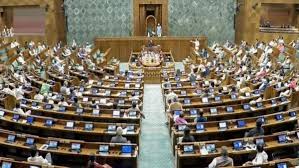
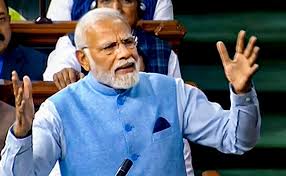
New Delhi: Prime Minister Narendra Modi on Thursday made a strong pitch in the Lok Sabha for the Constitution (131st Amendment) Bill and allied legislations, describing them as a defining moment for India’s parliamentary democracy and urging political parties to rise above differences to ensure their passage. Framing the legislative exercise as a “historic opportunity,” he called for collective action to reshape governance with greater inclusivity and sensitivity, adding that such moments test both society’s mindset and leadership’s ability to turn them into lasting national gains.
Framework for women’s reservation and structural reforms
The Constitution (131st Amendment) Bill seeks to operationalise the long-pending framework for women’s reservation in legislatures. At the same time, the accompanying Delimitation Bill and the Union Territories Laws (Amendment) Bill aim to extend its implementation to Union Territories such as Delhi, Puducherry and Jammu and Kashmir. Addressing the House during the debate, the Prime Minister emphasised that this legislative package is not merely procedural but part of a broader institutional reset that will shape the future character of Indian politics and governance. He avoided point-by-point rebuttals, focusing instead on the larger historical stakes and assuring members that detailed clarifications would follow.
Women’s participation and political message
At the heart of Modi’s argument was the urgent need to expand women’s role in decision-making. Stressing that nearly half of the country’s population must have a rightful place in policymaking, he noted that such inclusion had been delayed for decades. He also issued a clear political signal, pointing out that women voters have historically held accountable those who opposed reservation, and warned that resistance to the current framework could carry long-term electoral consequences. According to him, the issue led to reduced political friction in the 2024 elections, largely due to a growing consensus across parties.
Grassroots transformation and call for unity
Highlighting the transformation underway at the grassroots, Modi referred to the emergence of lakhs of women leaders through Panchayati Raj institutions over the past few decades, describing them as politically aware and assertive stakeholders who now seek representation at higher levels. He linked this shift to the broader vision of “Sabka Saath, Sabka Vikas,” asserting that true development must combine economic growth with social equity and participatory governance. In a concluding appeal, the Prime Minister urged Parliament to act in unison, stating that the decision would not belong to any one party but to the nation’s democratic legacy, and that collective ownership of the reform would strengthen India’s institutional future.