


Listen To This Post
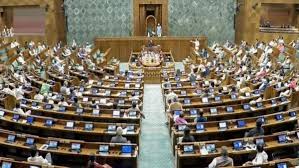
New Delhi: The Centre’s proposed delimitation exercise—linked to the early rollout of 33% reservation for women in the Lok Sabha—is set to significantly reshape India’s parliamentary map, with northern states likely to see notable gains in absolute seat numbers.
While the government has not yet released full details, an initial reading of the draft Bills indicates a major structural shift in how seats will be allocated across states.
What the Proposal Says
The draft legislation outlines two key changes:
- Delimitation will be based on the 2011 Census, not the upcoming 2026 Census
- Lok Sabha strength will expand from 543 to 850 seats
Instead of maintaining existing proportional representation, the proposal suggests a population-based redistribution, meaning states will get seats directly in proportion to their population size.
How the Formula Works
- India’s 2011 population (~1.2 billion) ÷ 850 seats
- Each seat represents roughly 14 lakh people
- State population ÷ 14 lakh = estimated number of seats
This approach fundamentally alters the balance of representation across states.
Impact on Key Northern States
Punjab
- Current seats: 13
- Proposed (population basis): 19
- Gain: +6 seats
However, Punjab’s share of total Lok Sabha seats may decline slightly (from 2.4% to ~2.1%) due to overall expansion.
Haryana
- Current seats: 10
- Proposed: 18
- Gain: +8 seats
Haryana emerges as one of the biggest gainers, with its share rising from 1.8% to ~2.1%.
Himachal Pradesh
- Current seats: 4
- Proposed: 5
- Gain: +1 seat
A modest increase, though proportional allocation would have given it 6 seats.
Jammu and Kashmir
- Current seats: 5
- Proposed: 9
- Gain: +4 seats
A significant jump reflecting its population size.
The Uttar Pradesh Factor
The biggest impact is expected in Uttar Pradesh:
- Current seats: 80
- Proposed: 143
- Gain: +63 seats
Its share in Parliament would increase from 14.7% to nearly 16.8%, making it even more politically dominant.
Core Debate: Population vs Proportionality
The proposed shift has triggered a key political debate:
Population-Based Model (Proposed)
- Seats linked directly to population
- Benefits high-population states
- Changes historical balance of power
Proportional Model (Opposition View)
- Maintains current percentage share of states
- Prevents over-concentration of power
- Rewards states that controlled population growth
Why It Matters
This delimitation exercise is not just a technical adjustment—it could:
- Redefine political power equations across India
- Influence the federal balance between states
- Impact policy priorities and representation
- Shape the rollout of women’s reservation in Parliament
The Road Ahead
With draft proposals still under discussion, political consensus remains uncertain. Southern and some smaller states are expected to raise concerns over losing relative influence, even if their absolute seat count rises.
What is clear, however, is that this delimitation—if implemented in its current form—will mark one of the most significant restructurings of India’s parliamentary system since Independence.