



Listen To This Post
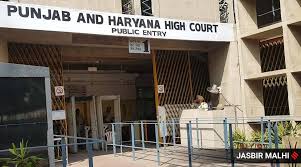
CHANDIGARH: Flagging serious deficiencies in the public healthcare infrastructure of and, the has directed both state governments to ensure that every district hospital is equipped with at least one CT Scan machine, one MRI machine and a functional Intensive Care Unit (ICU).
The High Court also ordered both states to urgently initiate recruitment to fill the massive vacancies in regular doctor positions, observing that the public health system was suffering from an alarming shortage of medical personnel.
HC expresses concern over the lack of basic facilities
The directions were issued by a Bench headed by Chief Justice while hearing a public interest litigation concerning the functioning of Malerkotla Civil Hospital.
The court noted that district hospitals in both Punjab and Haryana continue to lack even basic diagnostic and critical care infrastructure despite healthcare being a fundamental responsibility of the State.
Emphasising the constitutional obligation of governments towards public welfare, the Bench observed:
“Being a welfare State, where the health and well-being of citizens is one of the prime sovereign responsibilities of the State, the least that is required of the States of Punjab and Haryana is to provide at least one CT Scan machine and one MRI machine in every district hospital of both states.”
The Bench further directed that every district hospital must also have an ICU with adequate bed capacity based on the requirements of the respective district.
Court objects to the outsourcing of essential medical services
The High Court made it clear that such essential healthcare infrastructure should remain under government ownership and management and not be outsourced to private entities.
“The purchase and installation of the machines in both the States was required to be under the ownership, control and management of the staff of the district hospital concerned, and not controlled by outsiders,” the Bench observed.
The court had earlier questioned Punjab’s decision to outsource CT Scan and MRI services in civil hospitals, asserting that providing such facilities was part of the State’s sovereign responsibility.
Expressing displeasure, the Bench remarked:
“This court fails to understand why a private laboratory is required to be engaged when the State is duty-bound under its sovereign function of providing basic healthcare facilities.”
Court shocked over lack of ICU at Malerkotla hospital
During the hearing, the court expressed “surprise and shock” at the disclosure that Malerkotla district hospital lacked an ICU facility — a fact that Punjab did not dispute before the court.
The Bench observed that the affidavits submitted by both Punjab and Haryana failed to satisfactorily explain why several district hospitals still lacked critical facilities, such as CT and MRI machines.
The court noted that Punjab’s additional affidavits “did not explain in clear terms” the absence of such infrastructure, while Haryana’s affidavit reflected a similarly deficient situation.
Massive doctor shortage flagged
The Bench also expressed serious concern over the acute shortage of doctors in Punjab’s public healthcare system.
Referring to data submitted by the Punjab government, the court noted that the state had 3,665 sanctioned posts for Medical Officers (General) and 2,050 for Medical Officers (Specialist). However, a huge number of positions remained vacant.
“The extent of vacancies of regular medical officers in the State is to the tune of 2877 — 2042 regarding medical officer (general) and 835 as regards medical officer (specialist),” the Bench observed.
The court also criticised Haryana’s affidavit for failing to disclose vacancy figures for general and specialist medical officers separately.
Recruitment ordered immediately
Taking serious note of the manpower crisis, the High Court directed both state governments to “forthwith issue advertisements” for filling vacant regular posts of Medical Officers and Specialists.
Compliance reports have been sought from both states before the next hearing scheduled for July 6.
PIL on Malerkotla hospital triggered wider scrutiny
The observations were made during the hearing of a public interest litigation regarding the functioning of Malerkotla Civil Hospital.
What began as a case concerning one district hospital eventually led the court to examine broader structural deficiencies in public healthcare infrastructure across Punjab and Haryana.
The case has now spotlighted larger concerns about inadequate medical infrastructure, the outsourcing of essential diagnostic services, and chronic doctor shortages in government hospitals — issues that directly impact healthcare access for lakhs of people dependent on the public health system.