


Listen To This Post
The decision came after the Bench undertook a detailed scrutiny of the evidence during the hearing of the appeals, particularly examining a controversy surrounding the bullet allegedly used in the crime.
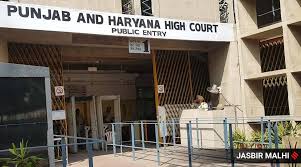
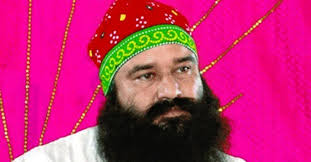
Chandigarh: More than seven years after Sirsa-based Dera Sacha Sauda chief Gurmeet Ram Rahim Singh was convicted and sentenced to life imprisonment for the murder of journalist Ram Chander Chhatrapati, the Punjab and Haryana High Court on Saturday set aside the conviction and acquitted him in the case.
The order was passed by a Division Bench comprising Chief Justice Sheel Nagu and Justice Vikram Aggarwal, which allowed Ram Rahim’s appeal challenging the trial court verdict. At the same time, the Bench dismissed the appeals filed by two other accused persons in the case.
Despite the acquittal in the murder case, Ram Rahim will remain in jail as he continues to serve sentences in separate rape convictions handed down earlier by a special CBI court.
With Saturday’s order, the High Court has overturned that conviction, though the detailed reasoning behind the acquittal will become clearer once the full judgment is released. The detailed judgment of the High Court was not immediately available.
The decision came after the Bench undertook a detailed scrutiny of the evidence during the hearing of the appeals, particularly examining a controversy surrounding the bullet allegedly used in the crime.
During the proceedings, the court physically inspected the fired “Lapua” soft-lead bullet that was recovered during the investigation. The projectile was said to bear the marking and signature of a forensic expert. However, the defence questioned how such markings could have been made if the plastic container carrying the bullet had remained sealed with intact AIIMS seals from the time it was recovered until it was opened before the trial court.
The central issue revolved around the defence argument that the integrity of the seals meant the contents of the container could not have been accessed before its opening in court. According to the defence, the bullet recovered from Chhatrapati’s body during the post-mortem examination was placed in a plastic container that was sealed with two AIIMS seals and remained intact throughout the chain of custody.
“If the seals are intact, how could anyone have access to the contents of the container?” the defence counsel argued, pointing to the apparent contradiction between the sealed condition of the container and the claim that the projectile had already been examined and marked by a forensic expert.
Senior advocates R. Basant and R.S. Rai, appearing for the defence, read from the record to highlight that the container was “duly sealed with two seals of AIIMS” and that both seals were intact when it was produced. They argued that this raised a fundamental question about how the forensic examination could have taken place earlier.
On the other hand, the prosecution maintained that the forensic examination had indeed been conducted and that the deposition of the Forensic Science Laboratory (FSL) expert before the trial court clearly established that the projectile had been opened and examined.
The prosecution argued that the expert had categorically stated during his testimony that he had examined the bullet and that his signatures and markings were present.
A counsel during the hearing also described the projectile as a Lapua bullet made of soft lead, an imported type of ammunition typically used for shooting purposes rather than ordinary firearms. It was argued that because of its soft-lead composition, any engravings or markings on the bullet might not remain visible over a long period of time.
Responding to the defence arguments, the prosecution pointed out that no objection regarding alleged prior access to the sealed container had been raised during the trial proceedings. It also emphasised that the FSL expert had denied suggestions during cross-examination that he had not examined the weapon or conducted test firing.
During the course of the hearing, the Bench itself examined the bullet and observed that “nothing is visible on these bullets.” The court sought clarification on whether the signature referred to in the forensic expert’s testimony was on the bullet itself or on the container carrying it.
In response, the court was informed that signatures were clearly present on the container. In contrast, the existence or visibility of any signature on the bullet could only be confirmed by the forensic expert. It was also noted that nearly 23 years had passed since the incident, which could affect the visibility of any markings on the soft-lead projectile.
The Bench was assisted during the hearing by several senior advocates, including R. Basant, R.S. Rai, Amit Jhanji, Ashwani Kumar and Gautam Dutt, along with counsel Jitender Khurana.
Senior counsel R.S. Bains represented the complainant in the case, while special public prosecutor Ravi Kamal Gupta and Akashdeep Singh appeared on behalf of the Central Bureau of Investigation (CBI).
The High Court’s order marks a significant development in a case that has remained in public focus for over two decades, ever since journalist Ram Chander Chhatrapati was shot in 2002 after publishing reports critical of the Dera Sacha Sauda chief. The trial court had convicted Ram Rahim in 2019 and sentenced him to life imprisonment, a verdict that he had challenged before the High Court.