







Listen To This Post
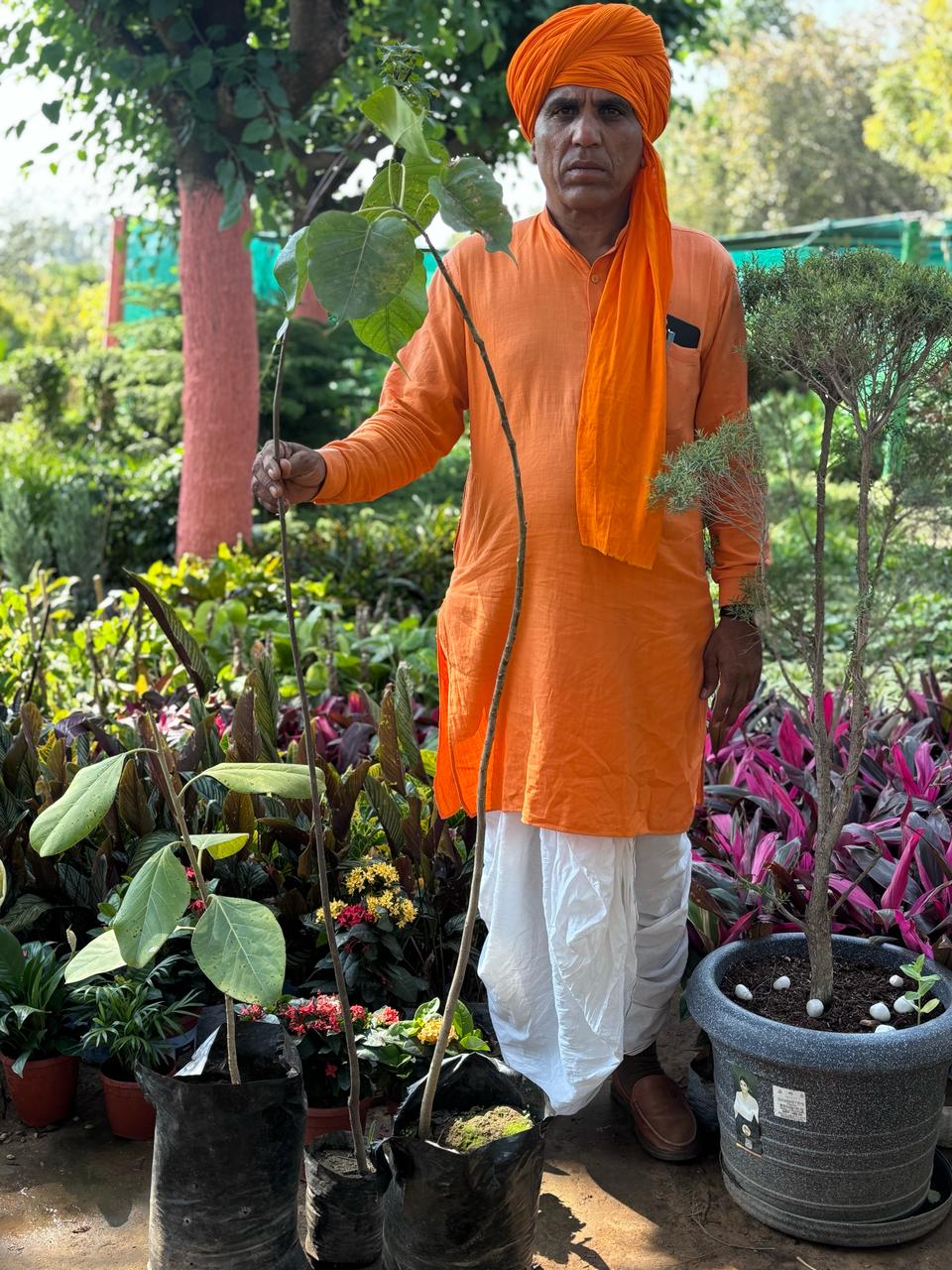
CHANDIGARH: In an era where environmental concern often remains confined to policy debates, a quiet yet powerful grassroots revolution has been unfolding for over three decades—led by a man known widely as Triveni Baba. From a small beginning in Haryana’s Bhiwani district, his mission of planting Triveni—a sacred combination of Banyan, Peepal and Neem trees—has today grown into a nationwide movement blending ecology, culture and spirituality.
From a Cremation Ground to a Green Revolution
The journey began nearly 35 years ago in the cremation ground of Saral village in Tosham. What started as a symbolic act—planting a Triveni to honour life and death—soon transformed into a sustained environmental campaign rooted in Indian traditions.
Triveni Baba’s dedication is extraordinary. For decades, there has rarely been a day when he has not planted a tree. Today, the results are visible across Haryana and beyond—schools, colleges, police stations, hospitals, government offices and villages are dotted with flourishing Triveni clusters. What began with a single plantation has multiplied into thousands, creating green spaces where none existed.
Blending Rituals with Environmental Responsibility
The uniqueness of this movement lies in how it integrates environmental action with everyday life and social customs. Triveni Baba has reimagined traditional rituals:
- Green weddings where couples plant trees instead of exchanging dowry
- Birth celebrations marked by planting fruit-bearing saplings
- Death rituals where families distribute plants instead of hosting feasts
This cultural shift has quietly transformed mindsets—turning tree plantation into a social responsibility rather than a symbolic act. In many homes, planting a tree on birthdays has led to the creation of small household orchards.
Women, Youth and Communities at the Core
A key pillar of the movement has been community participation, especially involving women and youth. Hundreds of rural women have been encouraged to plant fruit trees for themselves and their children, ensuring both environmental and nutritional benefits.
Over time, Triveni plantations have also become community spaces. Platforms built around many of these trees now serve as informal village meeting points—natural ‘dharamshalas’ where elders gather, disputes are resolved, and social bonds are strengthened.
Spiritual and National Integration Through Trees
Triveni Baba has also successfully linked environmental protection with spirituality and national identity. Inspired by the teachings of Swami Vivekananda, he believes that all religions ultimately emphasise the protection of nature.
His initiatives include:
- Planting “Nanak Triveni” in memory of Guru Nanak
- Creating Goodwill Trivenis in Mewat with support from religious leaders
- Honouring freedom fighters and martyrs through dedicated plantations
- Launching a campaign to plant Triveni in memory of over 25,000 soldiers martyred since 1947, beginning at the Western Command in Chandimandir
These efforts have turned tree plantation into a symbol of unity, faith and national pride.
A Vision Rooted in Simple Living Practices
Beyond plantation drives, Triveni Baba advocates five simple yet powerful steps for environmental conservation:
- Celebrate birthdays by planting trees
- Use water wisely
- Avoid plastic; adopt cloth or jute bags
- Conserve energy
- Prevent food wastage
These ideas reflect a practical, lifestyle-based approach to sustainability, making environmental protection accessible to ordinary citizens.
A Growing Legacy with a Global Vision
With public support, Triveni Baba has so far planted over five lakh Trivenis and nearly five lakh additional trees. His vision is ambitious yet grounded—to plant one crore trees and ten lakh Trivenis, and to take this uniquely Indian model of ecological harmony to the global stage.
Born in Bisalwas village of Haryana’s Bhiwani district, the 61-year-old environmental crusader has demonstrated that lasting change does not always come from policy corridors—it can grow quietly, tree by tree, in the hands of ordinary people. His journey stands as a reminder that when tradition meets purpose, even a simple act like planting a tree can evolve into a movement that reshapes society.