




Listen To This Post
The scale and pace of Haryana’s rising debt expose the fragility beneath the government’s claims of fiscal strength. In the Congress regime, Haryana’s debt stood at Rs 70,925 crore. Today, total debt has reached Rs 5,56,623 crore, a warning signal of structural fiscal imbalance.
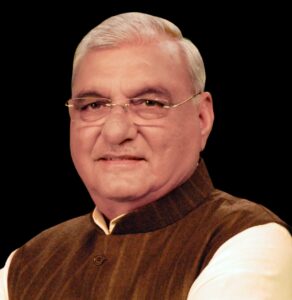
Written by BHUPINDER SINGH HOODA | THE NEWS DOSE.COM
Leader of Opposition, Former CM Haryana
New Delhi/Chandigarh, Updated At:12.10 PM MAR 10,2026 IST
The Haryana Budget for 2026–27, with a total outlay of Rs 2,23,658 crore, is presented as a milestone of growth and fiscal expansion. Yet, behind the headline figures is a troubling fiscal reality. This is not a budget powered by robust revenue growth or economic strength. It is sustained by unprecedented borrowing, shrinking fiscal flexibility, and declining capacity to invest in citizens’ welfare. The government increasingly relies on loans to run the state, while critical sectors such as education, health, agriculture, and employment generation remain underfunded.
The scale and pace of Haryana’s rising debt expose the fragility beneath the government’s claims of fiscal strength. In the last year of the Congress regime, 2014–15, Haryana’s debt stood at Rs 70,925 crore. Today, total debt has reached Rs 5,56,623 crore, including internal debt of Rs 3,91,435 crore, liabilities under small savings of Rs 50,000 crore, public sector enterprise debt of Rs 68,995 crore, and additional obligations of Rs 46,193 crore, such as pending electricity subsidies and unpaid dues.
This is an eight-fold increase in just over a decade. Such a rise in debt is not a sign of expansion, but a warning signal of structural fiscal imbalance. Haryana is no longer financing development through growth; it is financing governance through borrowing.
The most worrying aspect of this budget is that fresh borrowing no longer creates sufficient fiscal space for development. The government plans to raise new internal debt of Rs 76,250 crore this year. However, Rs 65,667 crore will be consumed by debt servicing obligations alone: Rs 36,101 crore toward principal repayment and Rs 29,566 crore toward interest payments. This leaves only Rs 10,593 crore from fresh borrowings for actual governance and developmental needs.
In simple terms, the government is borrowing primarily to repay past loans rather than to build new infrastructure or create opportunities. This is a classic symptom of a deepening debt trap, where debt feeds on itself and reduces the state’s ability to invest in its future, in the shrinking space for capital expenditure. After accounting for debt repayments and advance liabilities, only Rs 21,756 crore remains available for capital investment. This amounts to merely 9.7 per cent of the total budget.
Capital expenditure is the foundation of long-term economic growth. Capital expenditure is the foundation of long-term economic growth. It builds roads, irrigation systems, schools, hospitals, and industrial infrastructure. It generates employment and attracts private investment. When capital expenditure falls to such low levels, it weakens the state’s future growth potential and limits its ability to generate sustainable revenue. Every rupee spent on debt servicing is a rupee diverted away from public welfare. Rising debt obligations are steadily eroding the government’s capacity to invest in infrastructure, social protection, and economic expansion. Borrowings are increasingly being used not to create productive assets, but to finance existing liabilities and operational expenses. This is fiscally unsustainable and economically dangerous.
Even more concerning is the declining priority given to human development sectors. Education, which determines the future of Haryana’s youth, has been allocated Rs 22,914 crore. This is only 6.2 per cent of the total budget and 1.9 per cent of the state’s GSDP, while the National Education Policy recommends at least 6 per cent of GSDP for education. Haryana’s allocation falls far short of this benchmark. At a time when unemployment remains one of the state’s biggest challenges, underinvestment in education directly undermines the state’s ability to prepare its youth for future opportunities.
The situation in healthcare is equally alarming. The budget allocates Rs 14,007 crore for health, accounting for just 6.2 per cent of total expenditure and 1.1 per cent of GSDP. The National Health Policy, 2017, recommends that states allocate at least 8 per cent of their budgets and 2.5 per cent of GSDP to healthcare. Haryana’s allocation falls far below these standards. This shows a lack of commitment to strengthening public health infrastructure, improving access to healthcare, and protecting citizens from financial distress caused by medical expenses.
Agriculture, which supports nearly 65–70% of Haryana’s population directly or indirectly, has been allocated only 4.8% of total expenditure. This is inadequate for a sector that remains the backbone of the rural economy. Farmers face rising input costs, stagnant incomes, and increasing climate risks. They require greater investment in irrigation, crop diversification, technological support, and market access. Instead, agriculture remains a marginal priority in fiscal policy. This neglect threatens rural incomes, weakens broader economic demand, and deepens economic inequality.
The budget also fails to address Haryana’s most pressing structural challenge: unemployment. Haryana continues to record one of the highest unemployment rates in the country, particularly among youth. Yet the budget offers no credible roadmap to generate large-scale employment through industrial growth, MSME expansion, or support for entrepreneurship. Without job creation, economic growth remains incomplete and unequal.
Haryana was once among India’s leading states in terms of growth, investment, and infrastructure expansion. Fiscal discipline, investment-driven development, and forward-looking policies enabled the state to create jobs, strengthen infrastructure, and improve living standards. Today, that model appears to have been replaced by a borrowing-driven fiscal strategy that prioritises short-term survival over long-term sustainability.
A debt burden of Rs 5.56 lakh crore is not merely a number—it represents a heavy burden on future generations, constrained development spending, and increased vulnerability to economic shocks. A state cannot build lasting prosperity on mounting debt while neglecting investment in its people and productive sectors.
A responsible budget must strengthen fiscal sustainability, expand economic opportunity, and invest in human development. It must empower farmers, create jobs for youth, strengthen healthcare and education, and build infrastructure for future growth. The people of Haryana deserve a fiscal vision that secures their future, not one that mortgages it.